Gardening in January.

mushroom conservatory 039

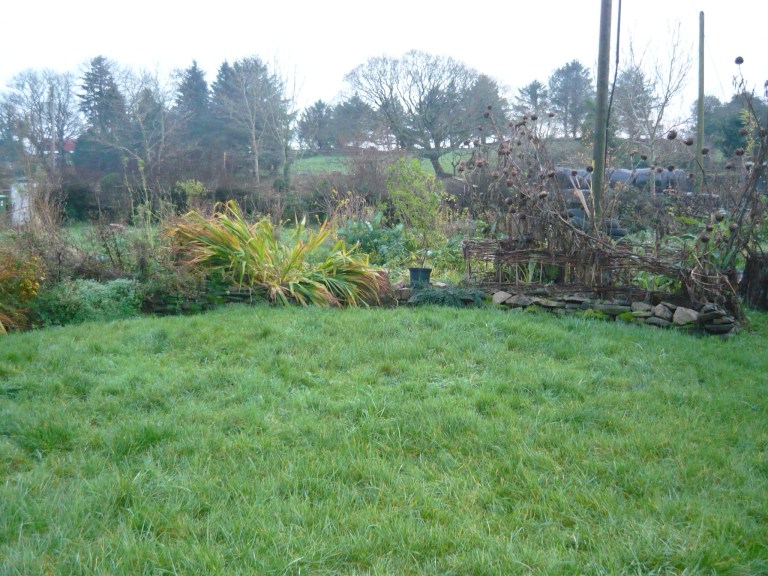
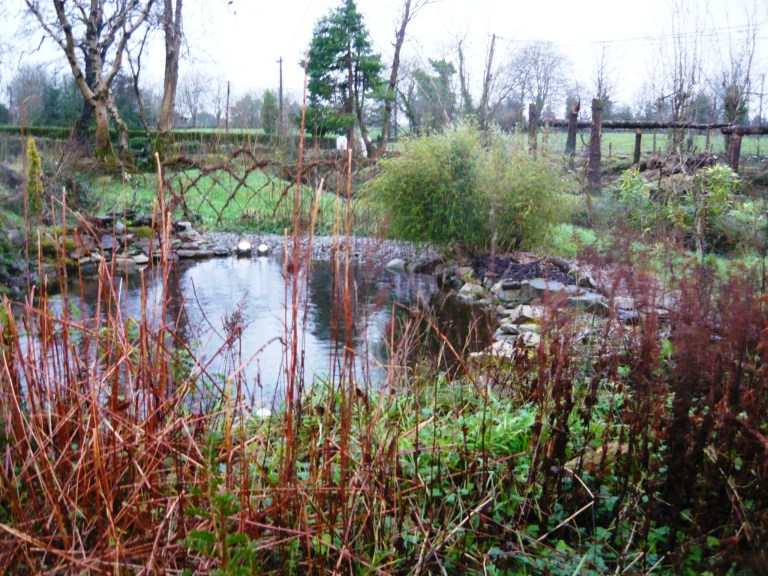
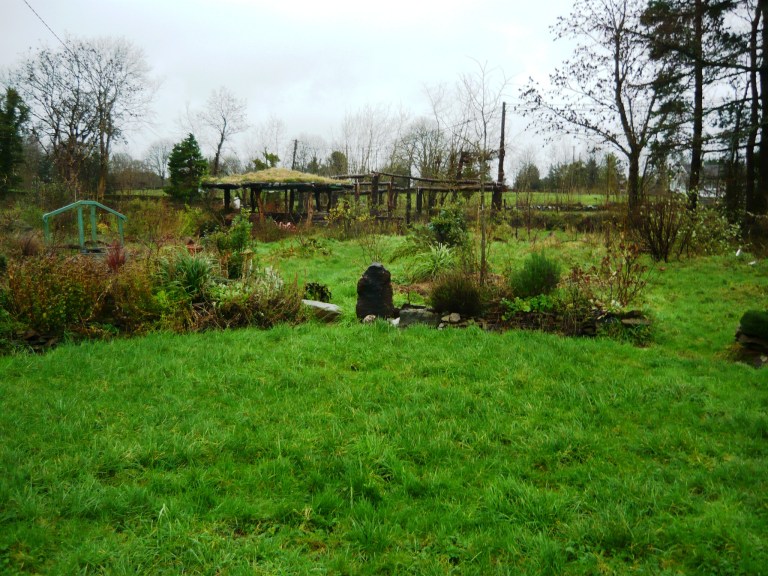
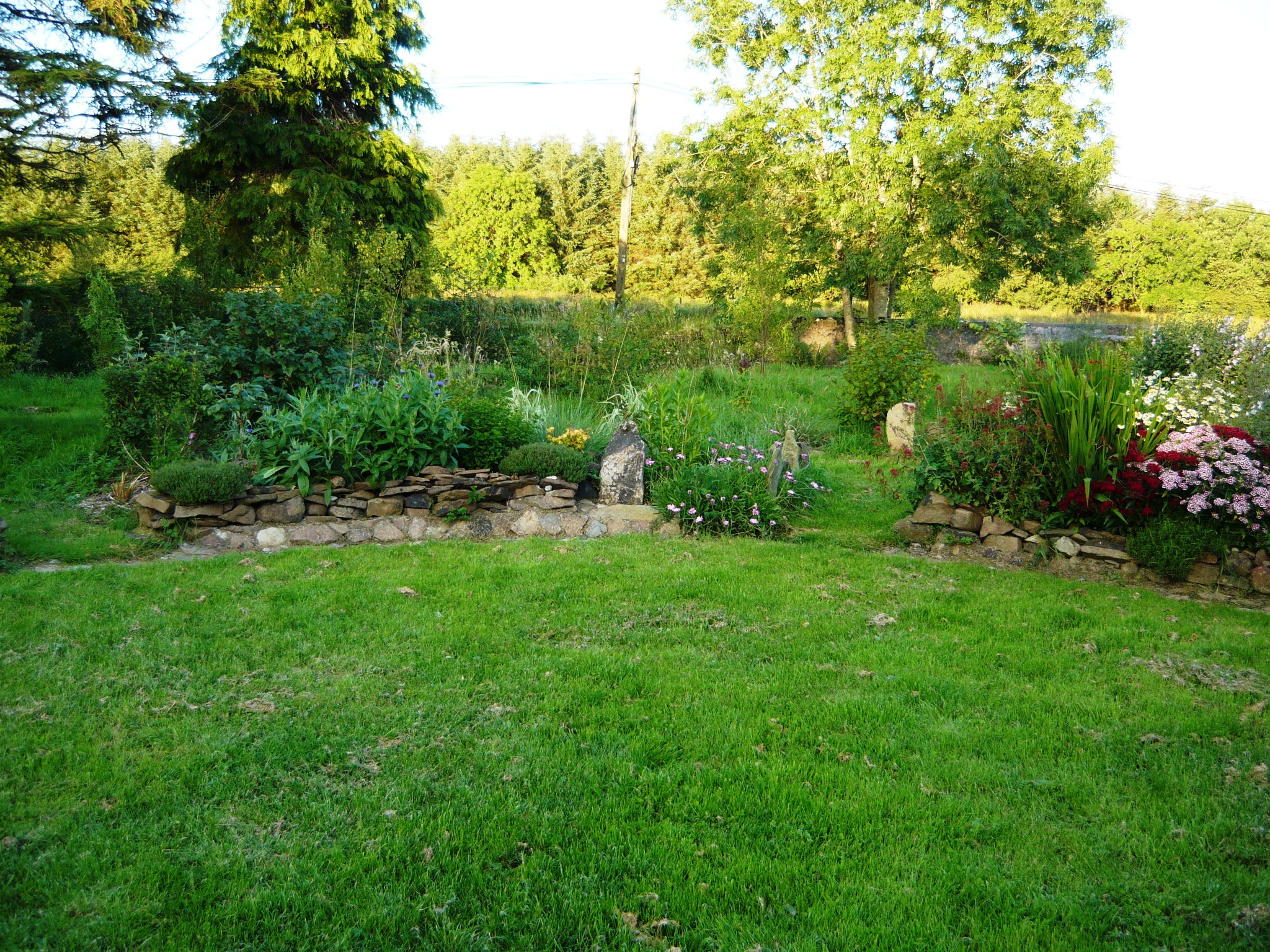
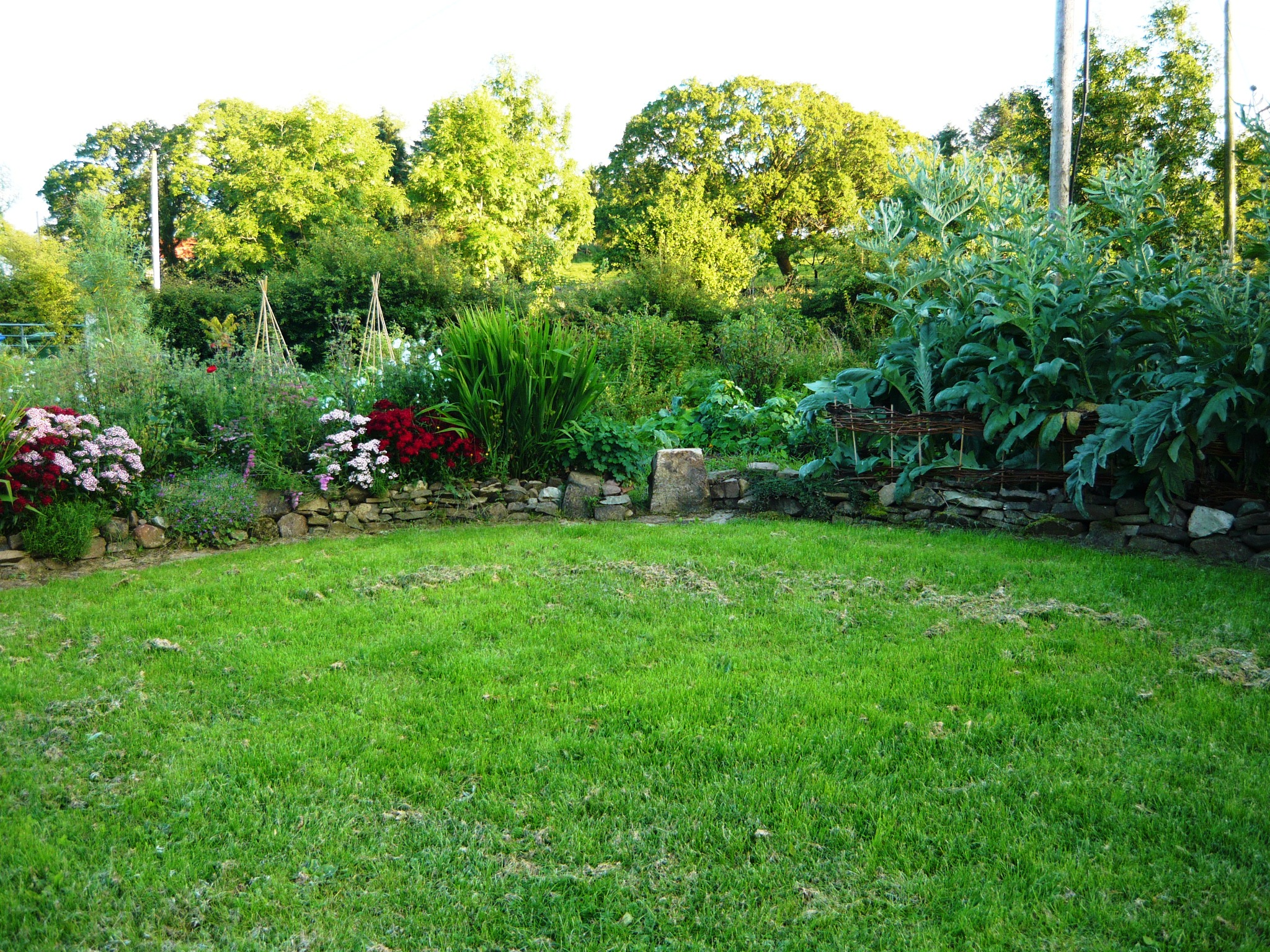
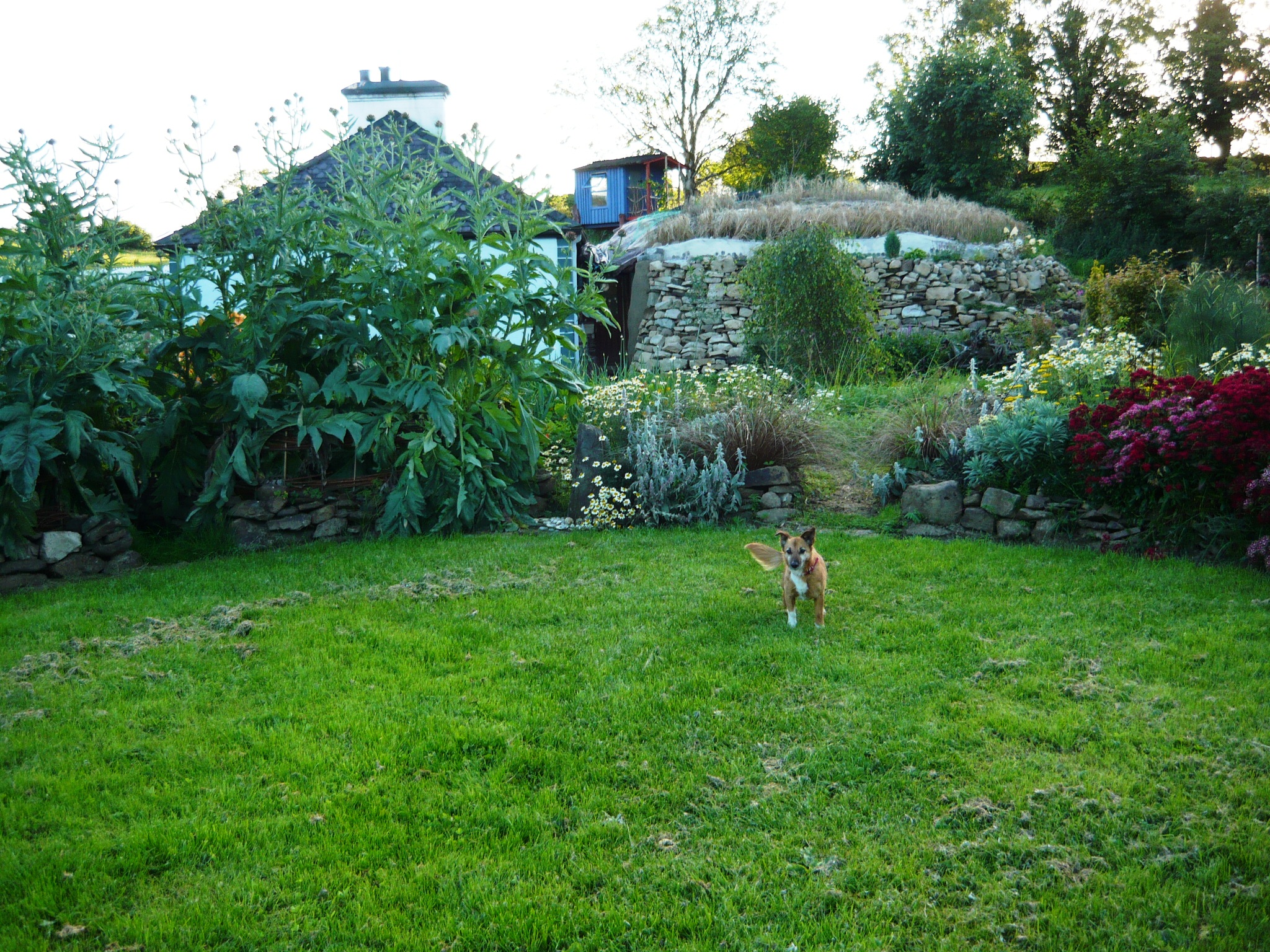
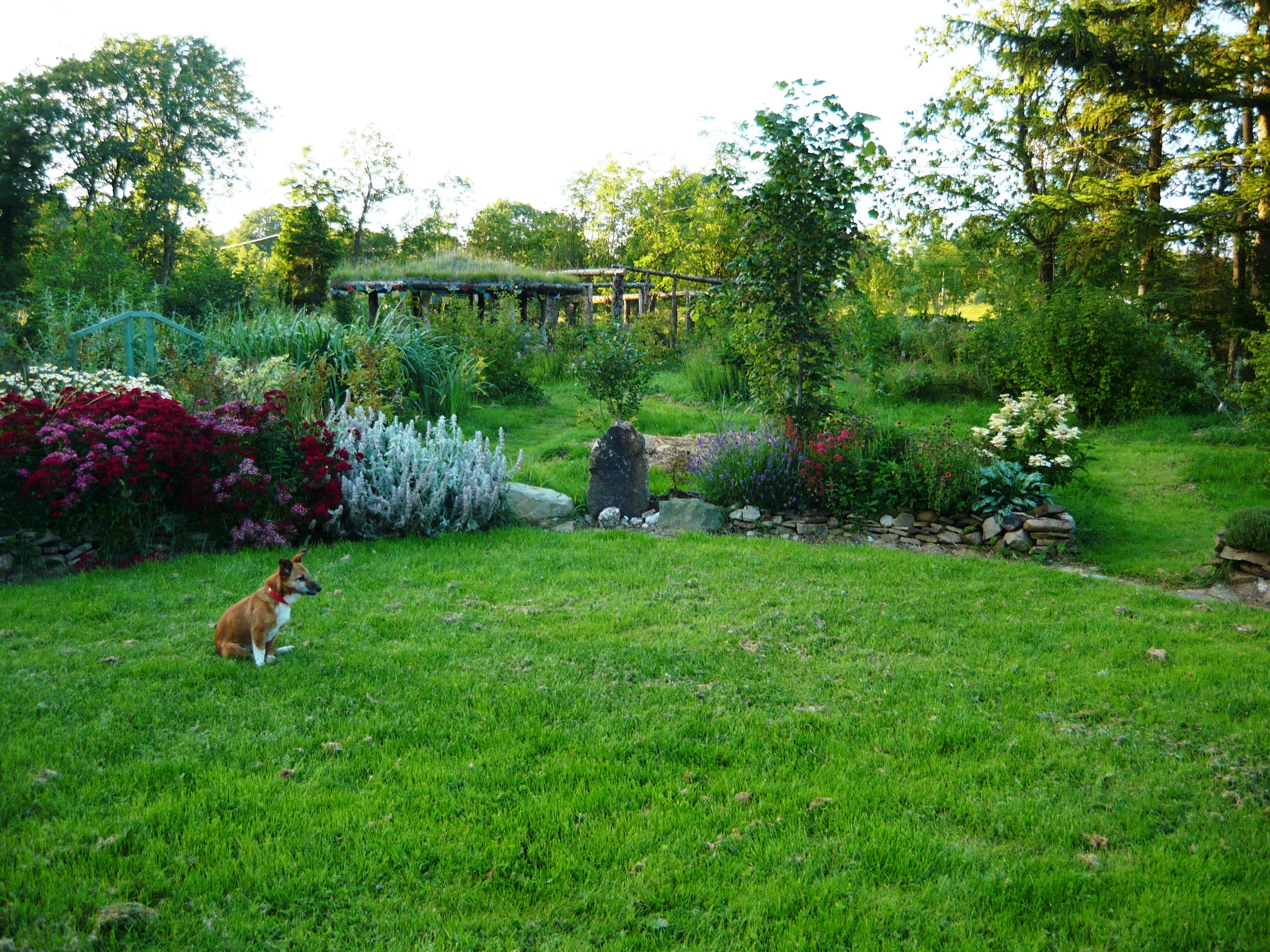
As we are almost a week into February, it is high time to sum up what happened in the garden last month. We had a lot of rain and storms and a little bit of frost, but we still managed to get out in the garden for a few days.  The birds had finished all the seeds in the seed heads left on our perennials, so we took some time cutting them back and tidying up the flower beds. At the same time we removed a lot of weeds, like couch grass and creeping buttercup that was threatening to colonize the beds and swamp our preferred inhabitants. Here you can see our main garden circle after being tidied up.  If you are a regular reader you know we take these pictures every month, to record how the garden changes and develops over time.

Read more

Even more mushrooms, hopefully!

Following on from our last post, we wish to tell you about two more ways of growing mushrooms in the average garden.

mushroom conservatory 008

If you have a compost heap it is possible to set up a colony of Oyster mushrooms. We choose the yellow variety as it is more tolerant to cold and will be easy to spot even when small because of its bright colour. We have a few very big heaps in our woodland with mostly brushwood and weeds and we picked the north, shady side of one of them to start our colony.

mushroom conservatory 007

We put some old silage we were given from a neighbour on top of the heap and scattered on the mushroom spawn mixed with saw dust and a little bit of sugar. As this is a big heap we used 180 grams of spawn. You could probably use more like 100 grams on an average compost heap.  We forked in the mixture and added a thick layer of straw on top of the spawn before finishing off with another layer of silage. All mushrooms need a damp growing site so we watered the heap in. Now we are confident that the rain will do the rest of the watering for us, but if we get any dry spells, our stream is conveniently located close to the heap.

mushroom conservatory 014

mushroom conservatory 017

mushroom conservatory 022

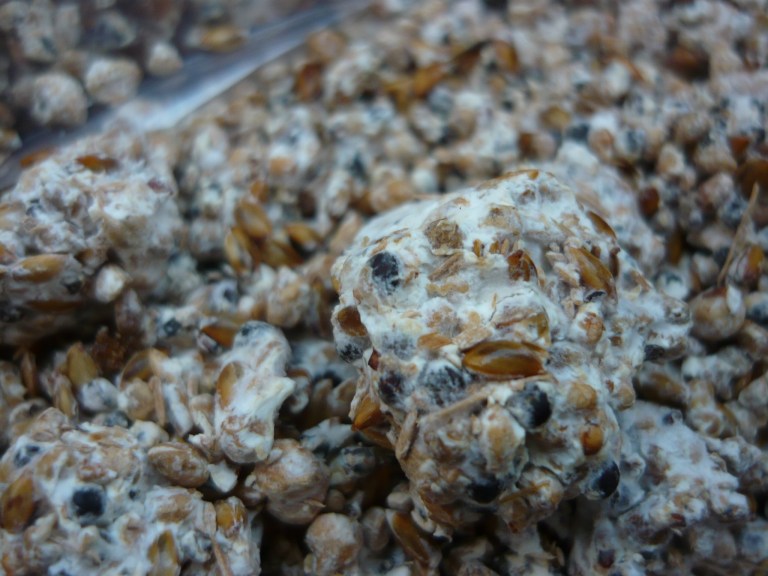
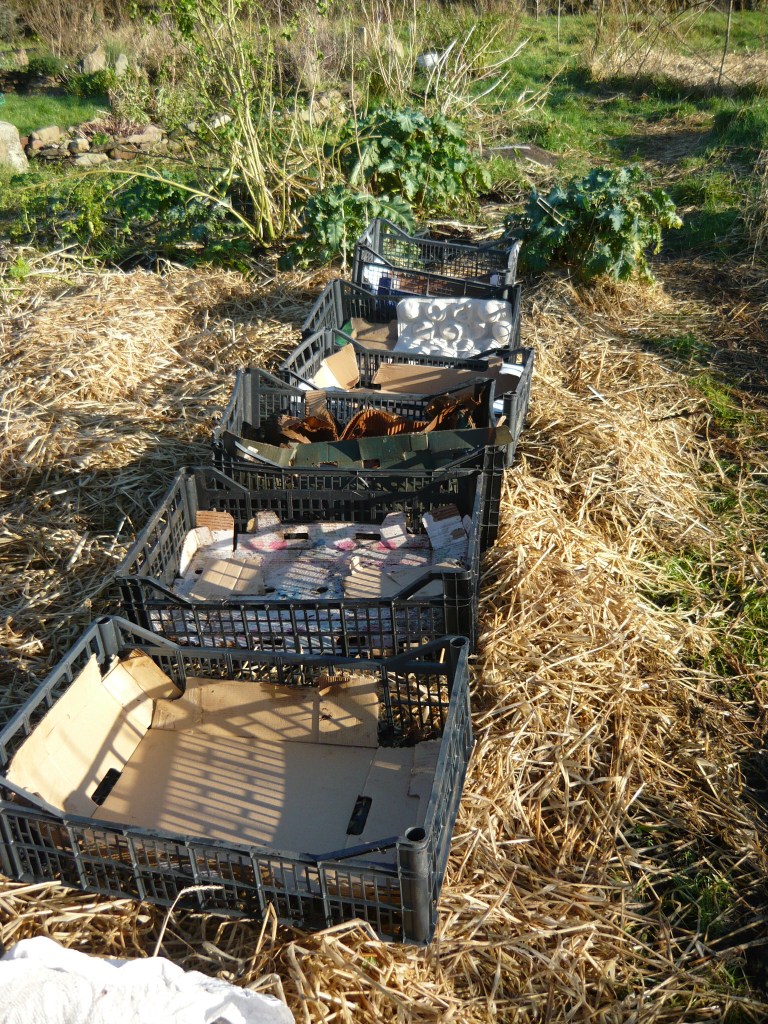
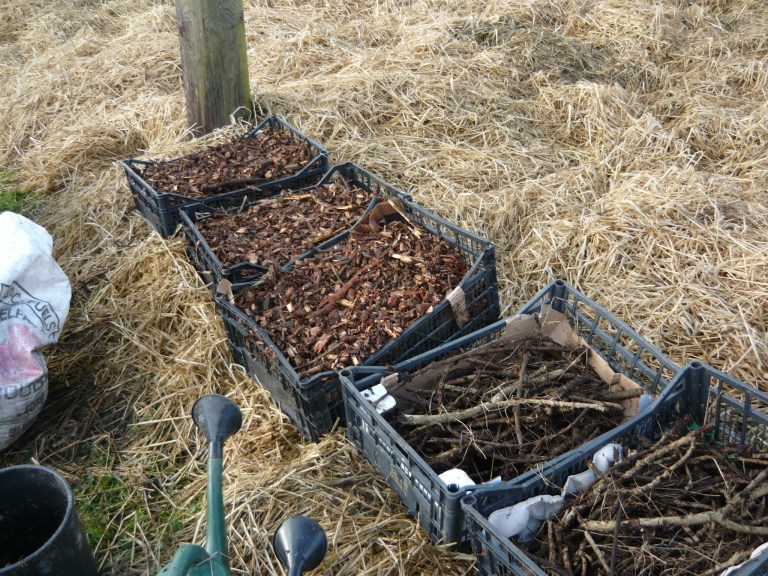
We also wanted to try out a couple of slightly more difficult varieties and looked at the ideas in James Wong’s excellent book, Grow for Flavour, for growing Lions mane and Shiitake. These varieties both like a vertical surface to grow on and they like hard wood chips as a medium. We adapted Mr .Wong’s ideas slightly and started off with some hard plastic crates we were given from our local supermarket. Putting down a layer of cardboard in each box to contain the woodchips and started filling them by putting down slightly larger half rotted twigs from a pile in the garden. Then it was time for filling the gaps with hard wood chips to create a level surface about half way up in each box that the spawn mixture could be scattered across.  Again we added sawdust and a sprinkling of sugar to kick start the spawn into action.

mushroom conservatory 024

mushroom conservatory 051

mushroom conservatory 043

mushroom conservatory 030

Shiitake spawn.

We filled the boxes to the top with wood chips and put on another layer of cardboard to insulate against the cold and create a dark, cosy environment for our mushrooms.

mushroom conservatory 053

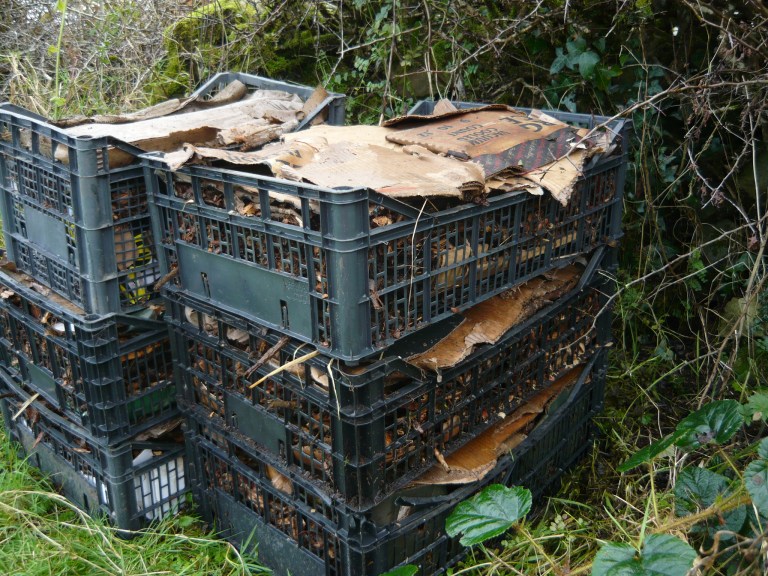
Now the boxes are stacked up and wrapped in some plastic for the next couple of months and hopefully the mycelium will start to form, and our boxes will fruit for years to come. If for any reason our colonies will not take off, it is easy to order some more spawn later in spring and add to our different created environments. It might be a bit of a gamble, starting this project in January, but we do not have many frosts here and all of our colonies are well protected from the cold. Only time can now tell if we will succeed. Hopefully it will only be a few months until we can start harvesting our very own gourmet mushrooms.

mushroom conservatory 058

Looking forward and back.

dec garden 035

We have reached a new year full of possibilities and projects. Yesterday we were delighted to harvest a large crop of Oca, Oxalis Tuberosa, also called New Zeeland yams, a tuber we tried growing for the first time. It was planted in our garden last spring after being pre sprouted in pots in late March. We tried red, yellow and orange tubers but the yellow ones rotted in their pots early on so only the others got planted out. In the summer the plants produced lots of green leaves with a lemony taste. We are very happy with our trial and will save a few, to plant again this spring. In their native South America they are second only to potatoes in popularity.

oca and bath 003

Planting in March.

harvest 038

Growing in August.

jan2 025

Harvest in January.

jan2 027

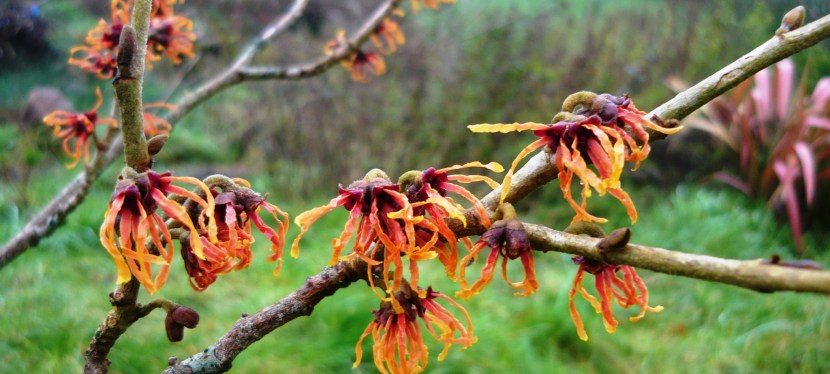
On these short wintery days the sun is always welcome and we try to spend some time in the garden every day, clearing out old foliage and weeds from the beds. We are planning to cover the whole vegetable garden in cardboard boxes and barley straw to stop weeds taking hold in the spring. Hopefully this will rot down just enough in time for planting vegetables later in the year.  Our witch hazel tree is looking beautiful at the moment, with spidery fragrant flowers on bare branches. It is always a welcome sight along with the hellebore, Christmas rose.

jan2 001

jan 004

jan2 015

Still braving the elements.

It is time to sum up last month in the garden, the words very wet comes to mind.  It was difficult to find the motivation to get out there and work when the ground was soggy and the sky was grey. We kept busy inside and also took some time for rest and reflection. Sometime that is what is needed in order to gather strength and renewed motivation. We are feeling very optimistic now about the garden in the coming year. Some plants will be moved about or planted for the first time and there is much work to be done on clearing weeds like creeping buttercup. We actually like many plants normally considered weeds, like nettles for their phenomenal nutritional and wildlife value. But some have to be controlled in order not to take over ground from weaker plants.

jan2 013

These are pictures of our circle at the end of December in the four directions of the compass. It is very green for this time of year, with the grass still growing. We are full of anticipation to see what the circle will look like later in the spring and summer as all our trees, shrubs and perennials will have another years worth of growth in them. If you wish to see how the circle develops over time you can take a look at the Elemental circle category on the blog, where all the monthly garden entries are collected.

dec garden 014

East

dec garden 016

South

dec garden 018

West

dec garden 021

North

We wish all our readers a happy and healthy new year, full of pleasant surprises and time to be spent outside in our beautiful nature. There is always so much to look at and to be delighted by. We are going to roast some newly harvested Oca tubers with fresh garlic and olive oil now, to celebrate the beauty of January and give thanks to our garden where beautiful things happen all throughout the year.

jan2 033

The beauty of November passing.


November 030

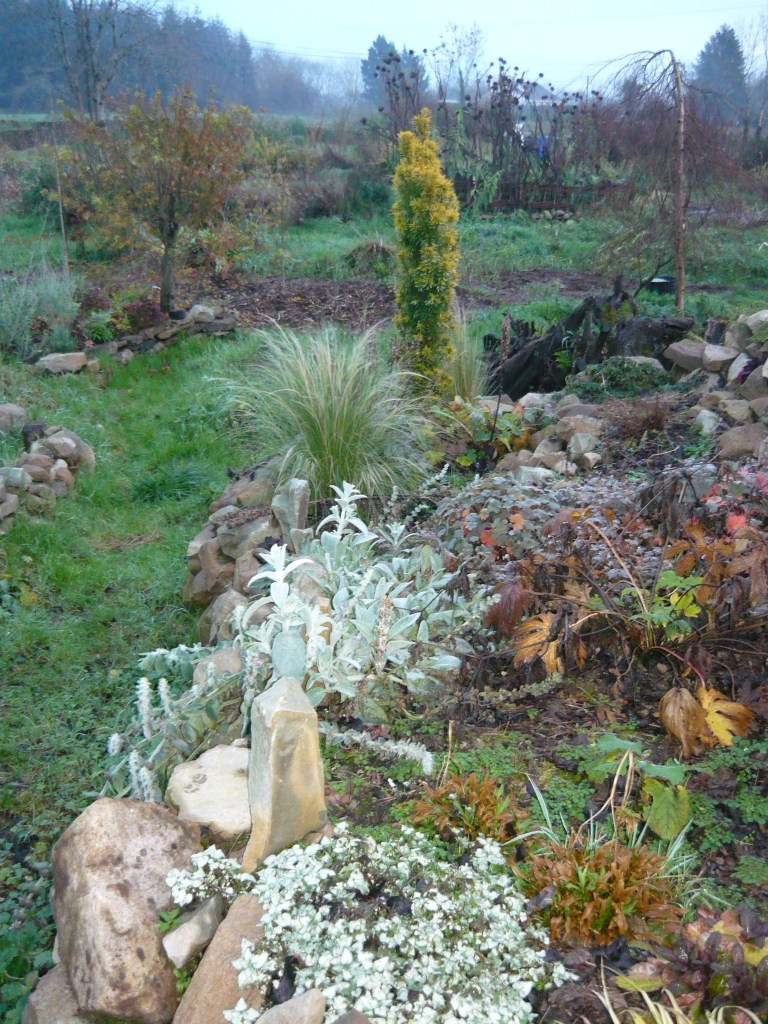
People often think of November as a dull, grey, wet and cold month. That November is something that has to be endured rather than enjoyed. We beg to differ. As the garden and nature in general slows down and moves towards a more restful time there is beauty everywhere. From the fireworks display of leaves and flowers to the stark forms of the remaining artichokes, if you look you will find it.

led 015

November 019

led 003

Spring is often seen as a joyful, bright and uplifting time but is it really so different from autumn? We believe all parts of the wheel of time should be celebrated, enjoyed and looked upon in awe. Without the plants dying back, withering and resting there would be no spring spectacle to behold.  No new leaves unfurling or apple blossom to marvel at.When the sun comes out and shines its low rays across all the colours in our garden in November, it feels like a miracle not very different from looking at the first butterfly or bumblebee of spring.

led 008

November 023

It has been very wet and windy over the last month in the West of Ireland and we have been busy indoors, finishing work on our extension, so the garden is in a state of some neglect. There is much planting, weeding and some moving of plants to be done. We always plant things as soon as we can and if something turns out not to thrive in its allocated position we move it later. A year of growth in the ground is almost always better than a year waiting around in a pot to be planted out. Our planting of ornamental grasses that we created in the spring is coming on nicely and is starting to fill the space.

grass bed 030

Spring

led 007

led 005

Autumn

Our paths are in need of attention. We put down a lot of mulched Leylandii and thatch from an old cottage when we established the garden but after two and a half years the paths are getting worn down, starting to break up and have some weeds creeping in. It is now time to move all this old, rotted down material and use it as mulch around plants all around the garden. We will dig out the main paths quite deep, put in some drainage pipes and replace the path with maintenance (quarry dust). This should last a lot longer than the thatch and mulch. On higher ground, where water logging is not a problem,  we are planning to just have cut grass.

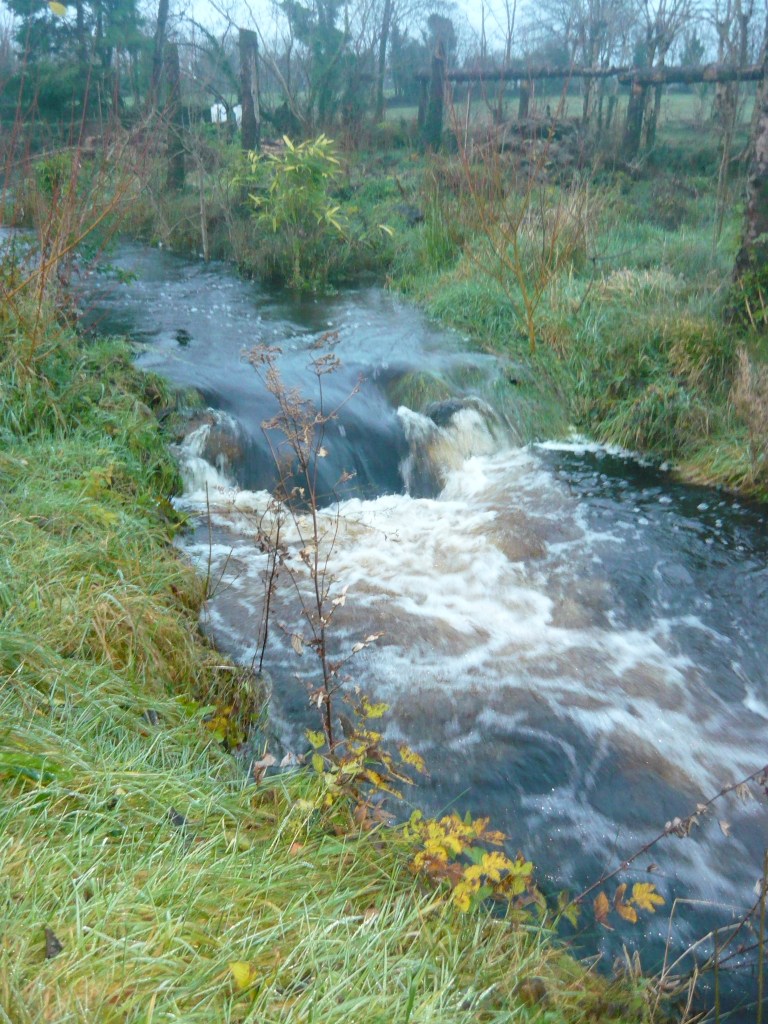
The rain over the last month has led to our stream being very full of water.
November 040

Every month we show pictures of the garden taken from our main circle in the four cardinal directions. You can see how the garden changes and evolves over the year in the category elemental circle. The artichokes have mostly died back now and will be cut down shortly, shredded and used at mulch back on the bed again. We are looking forward to what next month brings.

November 012

East

November 014

South

November 008

West

November 010

North

November 064

Roses in December?
Flowers in August.

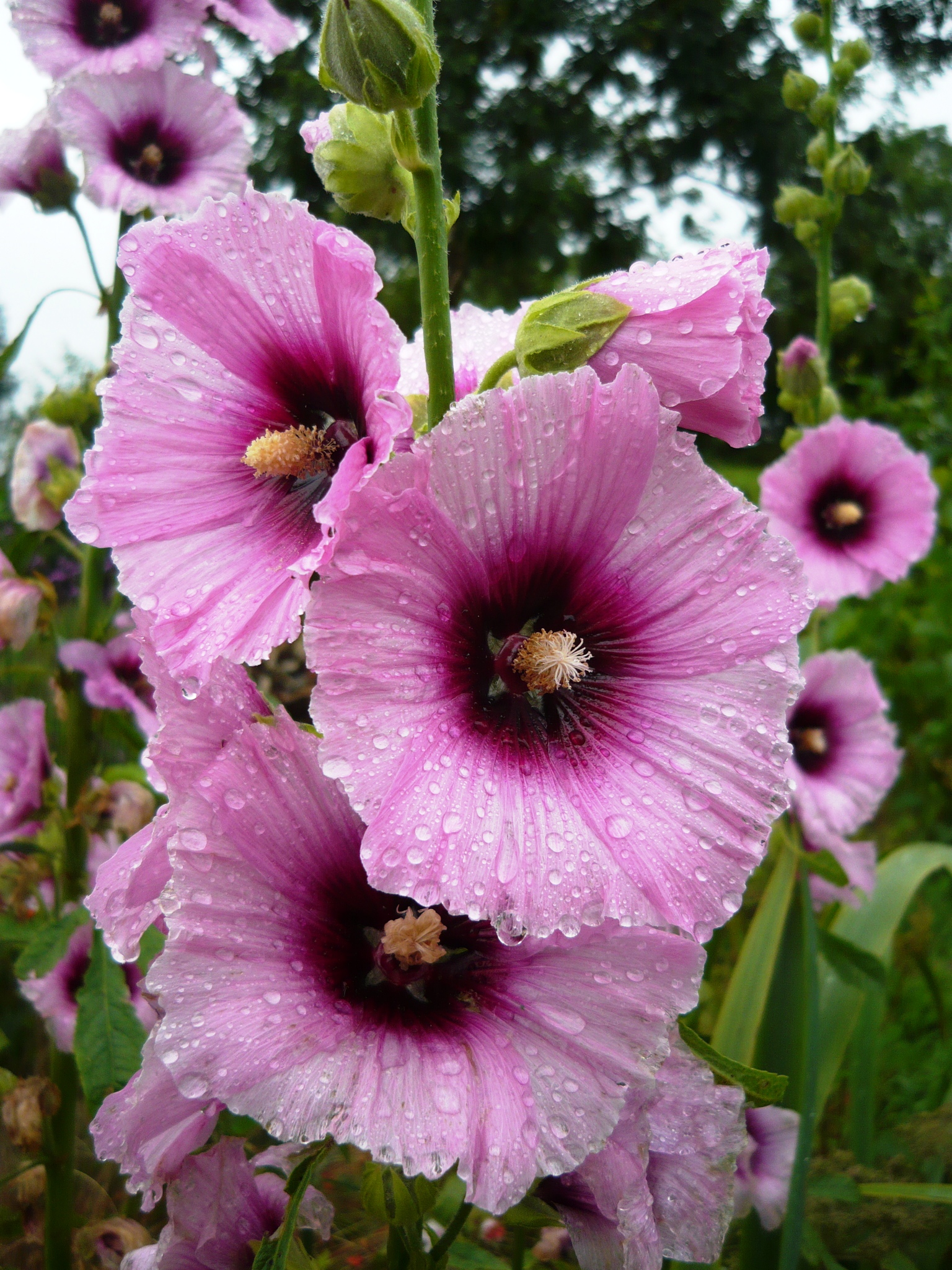
Hollyhock Halo

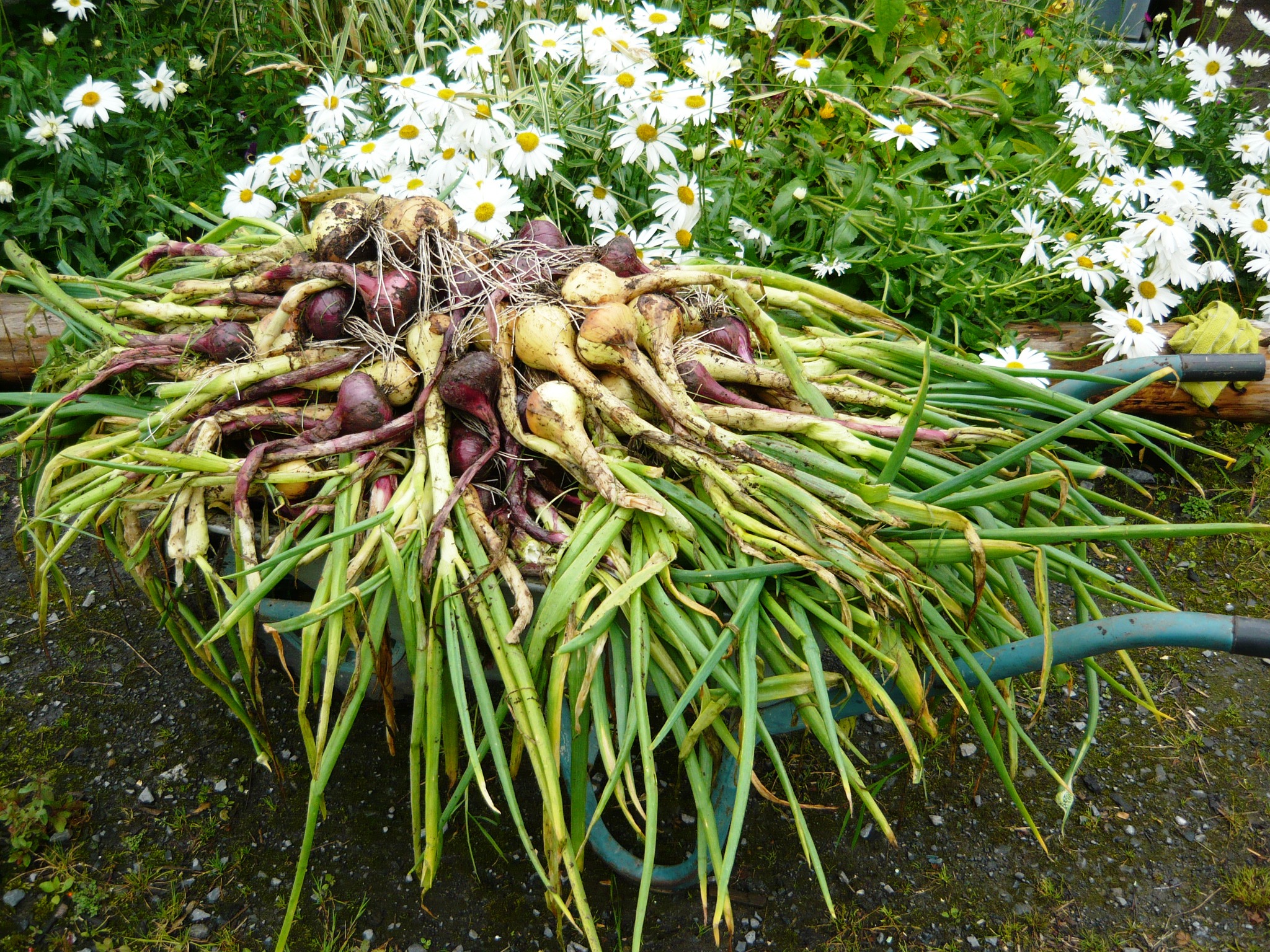
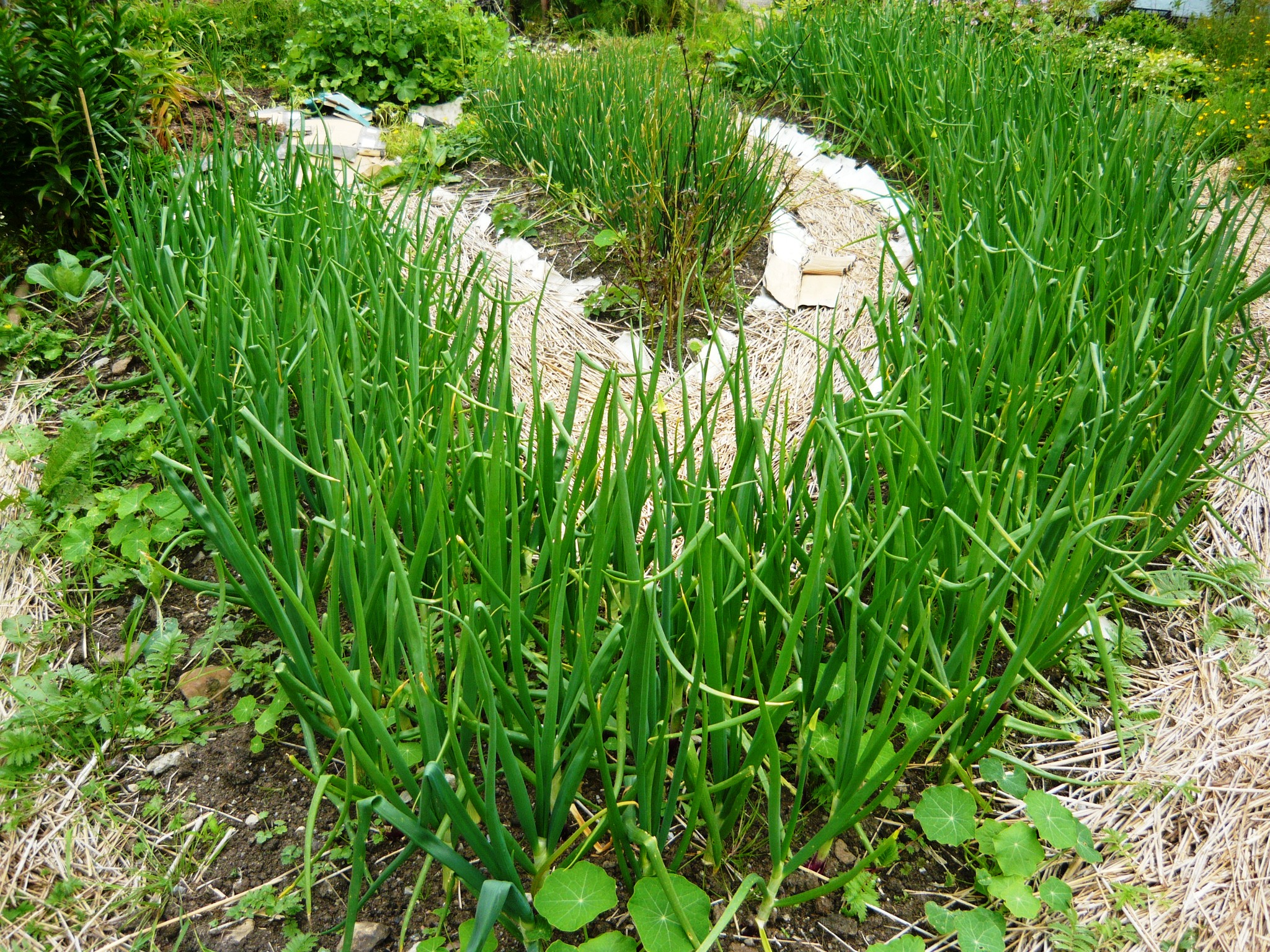
As August draws to a close we are thankful for all the lovely vegetables we have harvested this month, despite mostly ignoring the kitchen garden this summer. The onions are so tasty grilled or baked and we are enjoying them on a daily basis.

onions

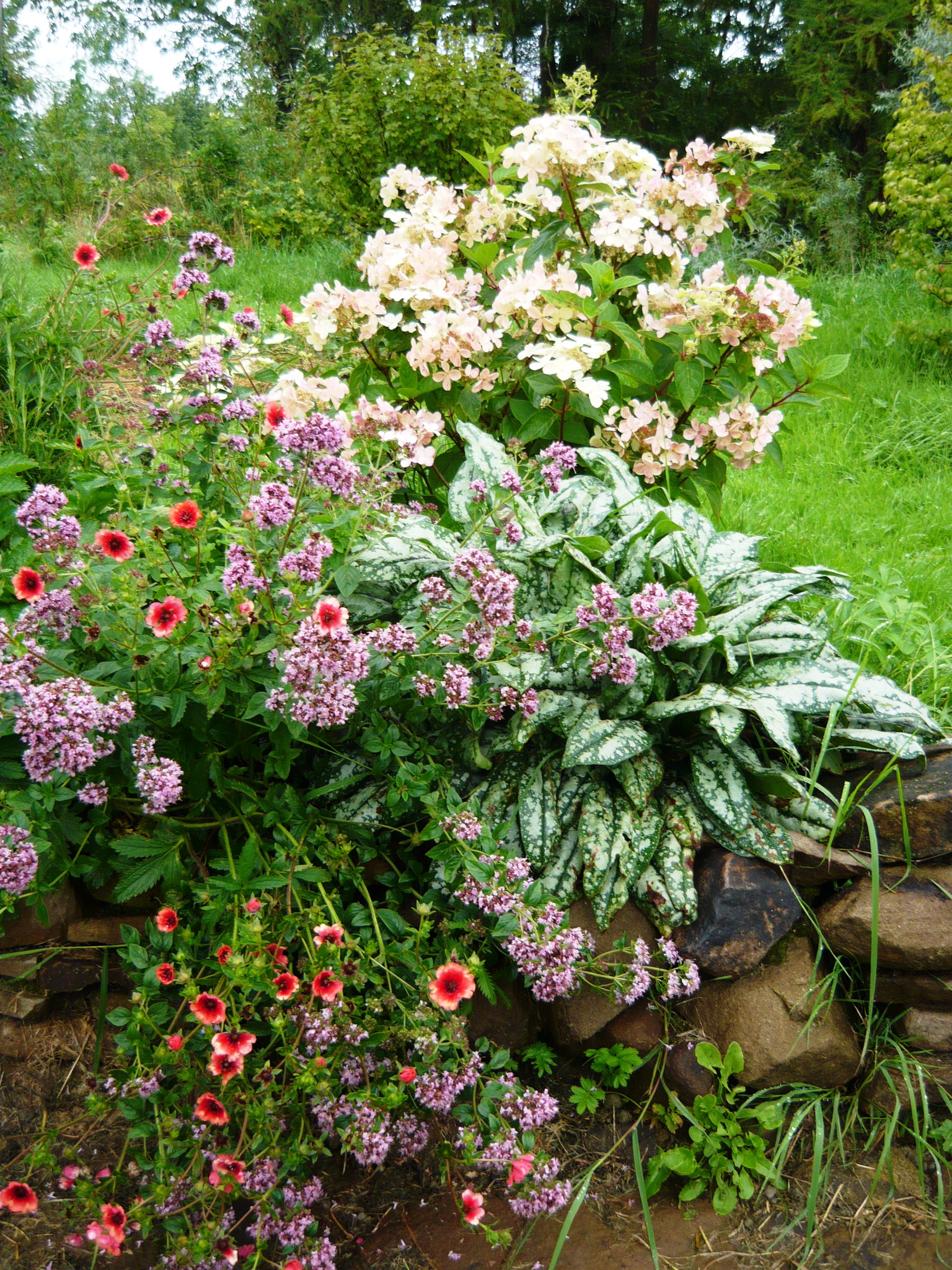
But to sum up August we would like to write about our flowers in the garden. We started most of them off as seeds two and a half year ago and we also bought quite a few of them as small perennial plants. Even if you are on a tight budget it does not take long to get your flowers growing big and strong. The first year, we invested in a few trailer loads of well rotted cow manure and it has really been worth while.  All our flowers and vegetables have really taken off and it is quite amazing how quick the garden has established. Each year we have added more flower beds and even the ones started last year are looking good. In autumn we do an all over weeding and add leaf mould to all the beds and that makes it easy to weed in the spring. Most beds do need another weeding in midsummer as the perennials are still establishing and filling in their allocated spaces.

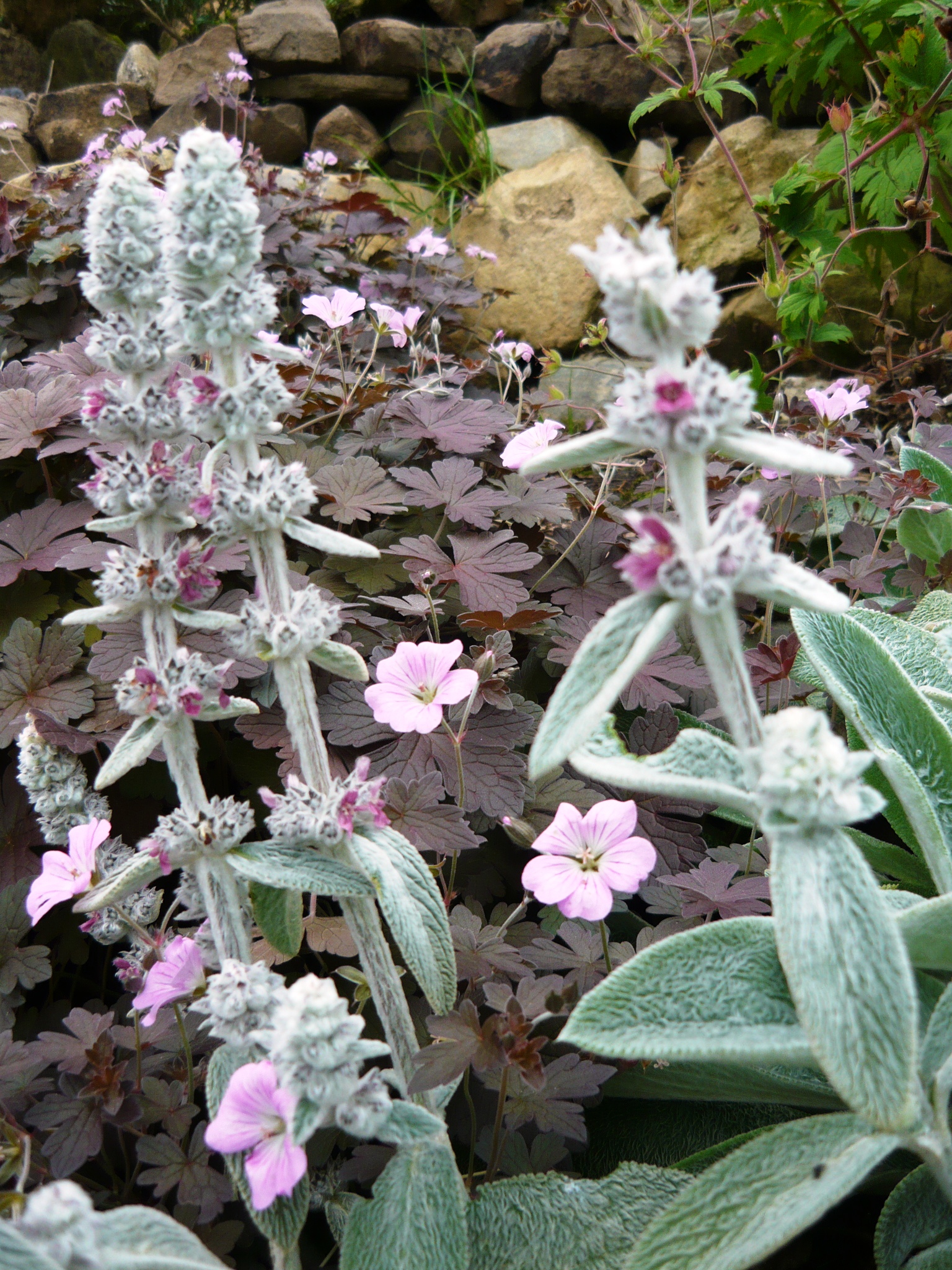
Lambs ear and geranium

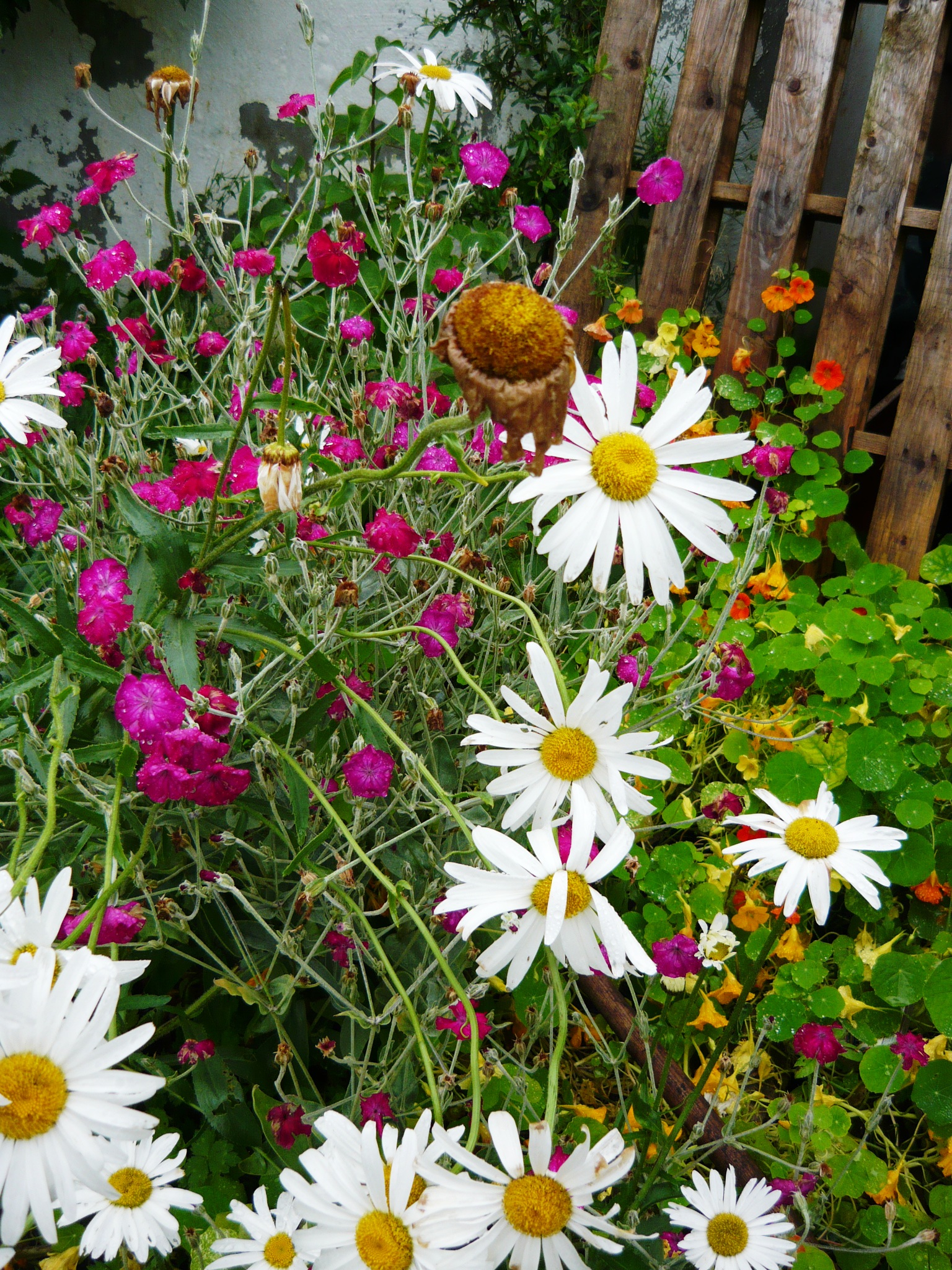
Flowers

In a couple of years we can start dividing the well established perennials and swap them with friends. We have already received lots of wonderful plants this way, shrubs, vegetables and flowers that had outgrown their spaces in friend’s gardens.

Gifted plants

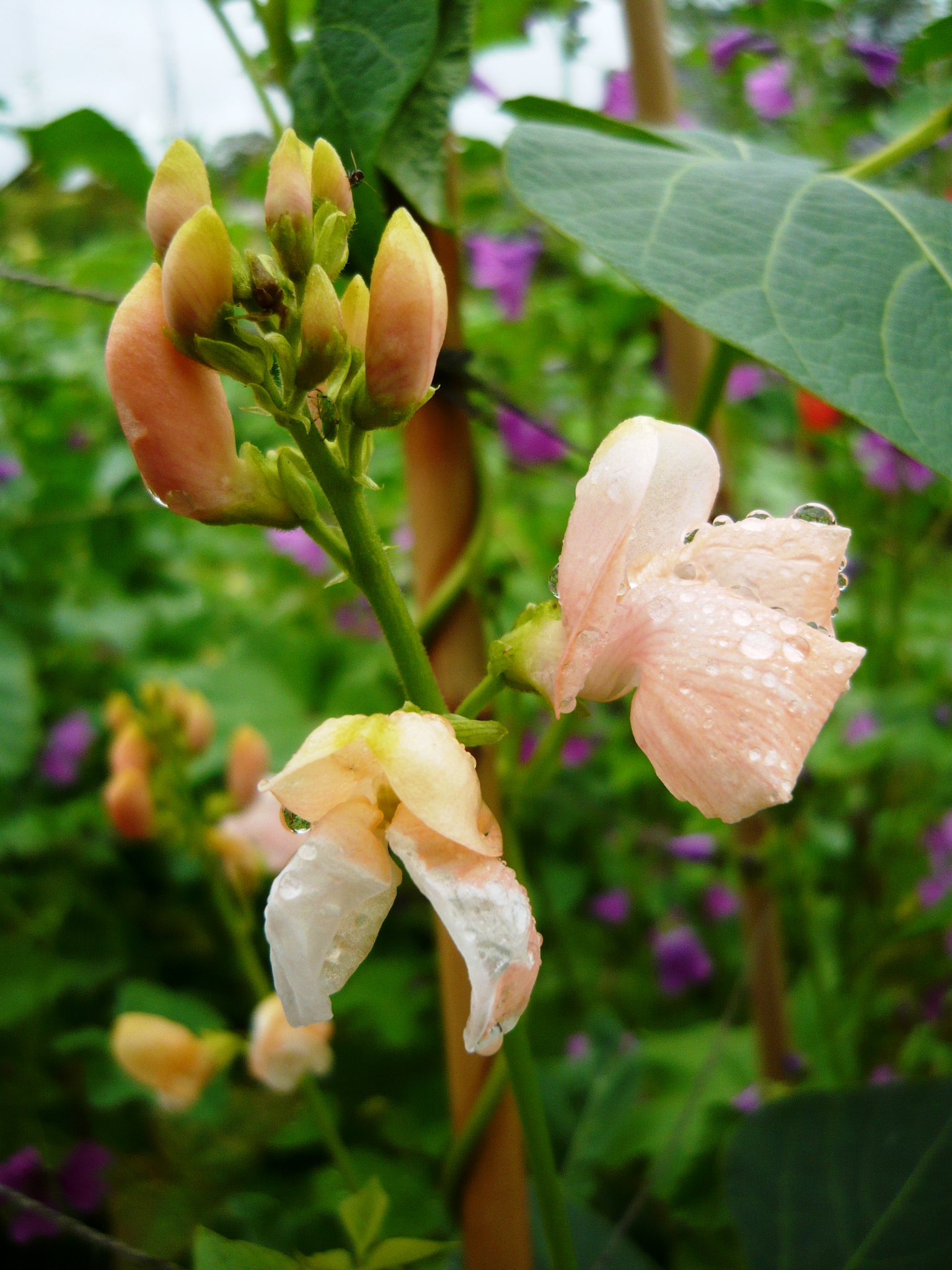
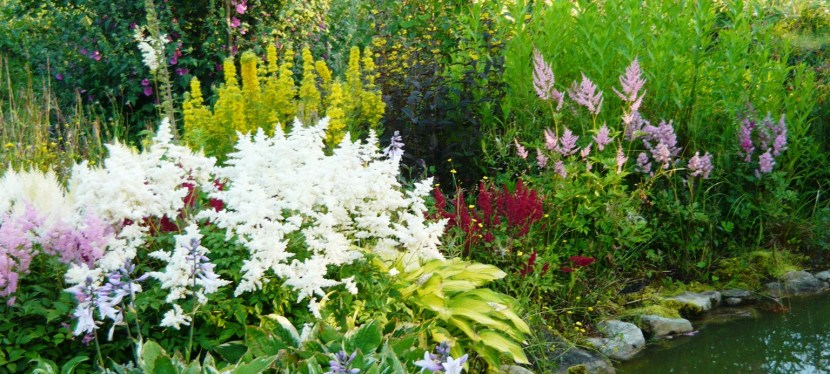
Flowers are lovely to look at and create a colourful wonderland to stroll about in but are also highly beneficial. We have many edible varieties as well as bee and butterfly favourites. We grow them together with our vegetables for both a practical and beautiful approach. This year we have had a very cold and rainy summer but there are still lots of flowers and vegetables performing well, although a bit later than usual. Some vegetables come with the added benefit of beautiful flowers, like the runnerbean that was first introduced to Europe as an ornamental.

Runnerbean

pond

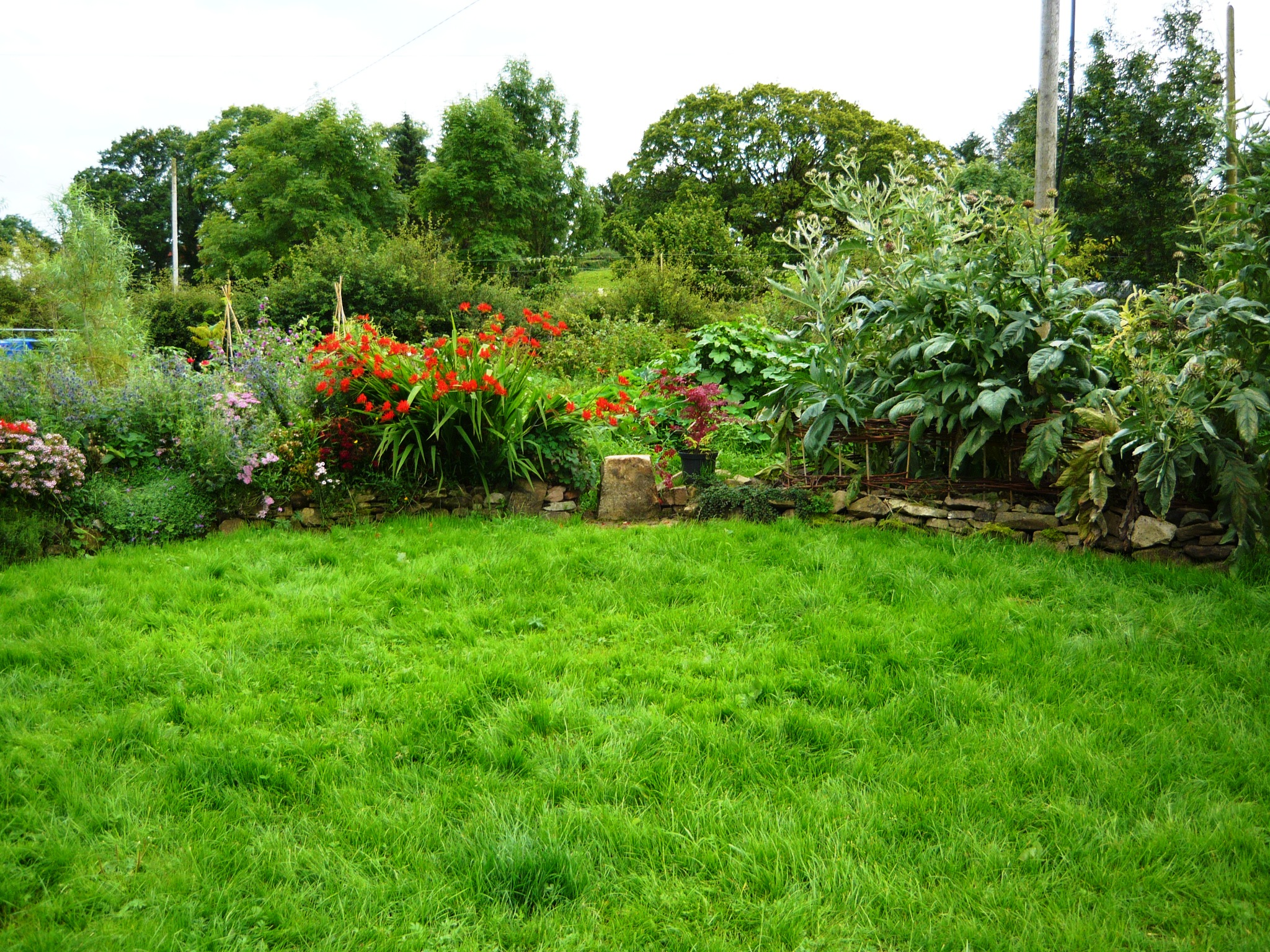
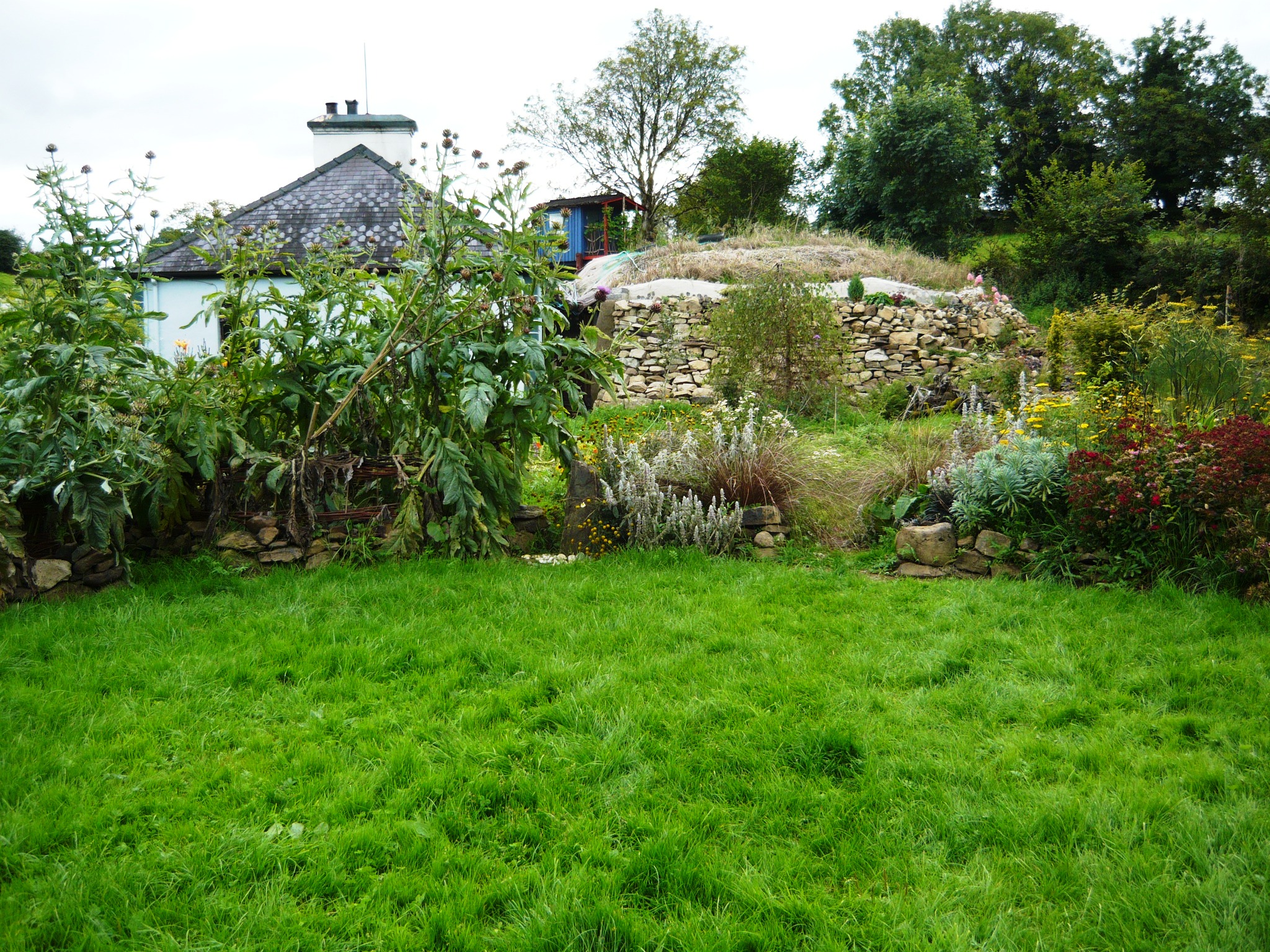
Our main circle has really put on a show this month with all the lovely red crocosmia in the south fiery section. The cardoons in the west have grown very tall and our willow fence we wove in early spring has prevented most of them from blowing over. We are happy with the grass bed we planted in the east section; most grasses have really taken off.

East

East

South

South

West

West

North

North

crocosmia

Cardoon

Grass garden

All in all, perennial, biannual and annual flowers give a garden almost instant appeal, and do not be afraid to experiment. If something outgrows its space or if too many weeds pop up in the bed, rearrange your plants to suit the space. Most perennials do not mind being moved, but you should wait until autumn or early spring, when they are dormant. Take some photos in the summer to remind you what the bed looks like as it makes it easier to adjust your plantings. We love all our colourful flowers and cannot imagine the garden without them. Collect and scatter seeds about where you want more flowers or plant them into seed trays to grow on a bit first, before planting out or giving to friends. Some people plan their colour schemes very carefully but we do not fall into that category. In our garden there are a lot of happy accidents and we think it all looks beautiful.

Verbena bonariensis

Fishmint

Herbs

Once in a blue moon.

garden july flags

We have reached the end of July and it is time to sum up a beautiful but rainy month in our garden.

garden july flowers

We have put in shrubs, trees and perennials since we started the garden in February 2013, at the time we moved in. We made the decision early on to start with the planting of the garden first and do only necessary renovations to the cottage in these first couple of years. Once you plant something it has a chance to grow and every year the garden changes and evolves. We are amazed at the rate with which our plants have grown and the garden looks very pretty and is already a beautiful and productive space, less than three years in. When we started out it was a field overrun with creeping buttercups and surrounded by a huge leylandii  hedge.

garden july gazebo

This month has been great for the garden as it has rained almost every day and our newly planted roses and climbers have really taken off. All the other plants have benefited as well but a little more sun would have more things in flower by now. We have spent our coffee and tea breaks in the gazebo…

garden july 106

garden july bridge

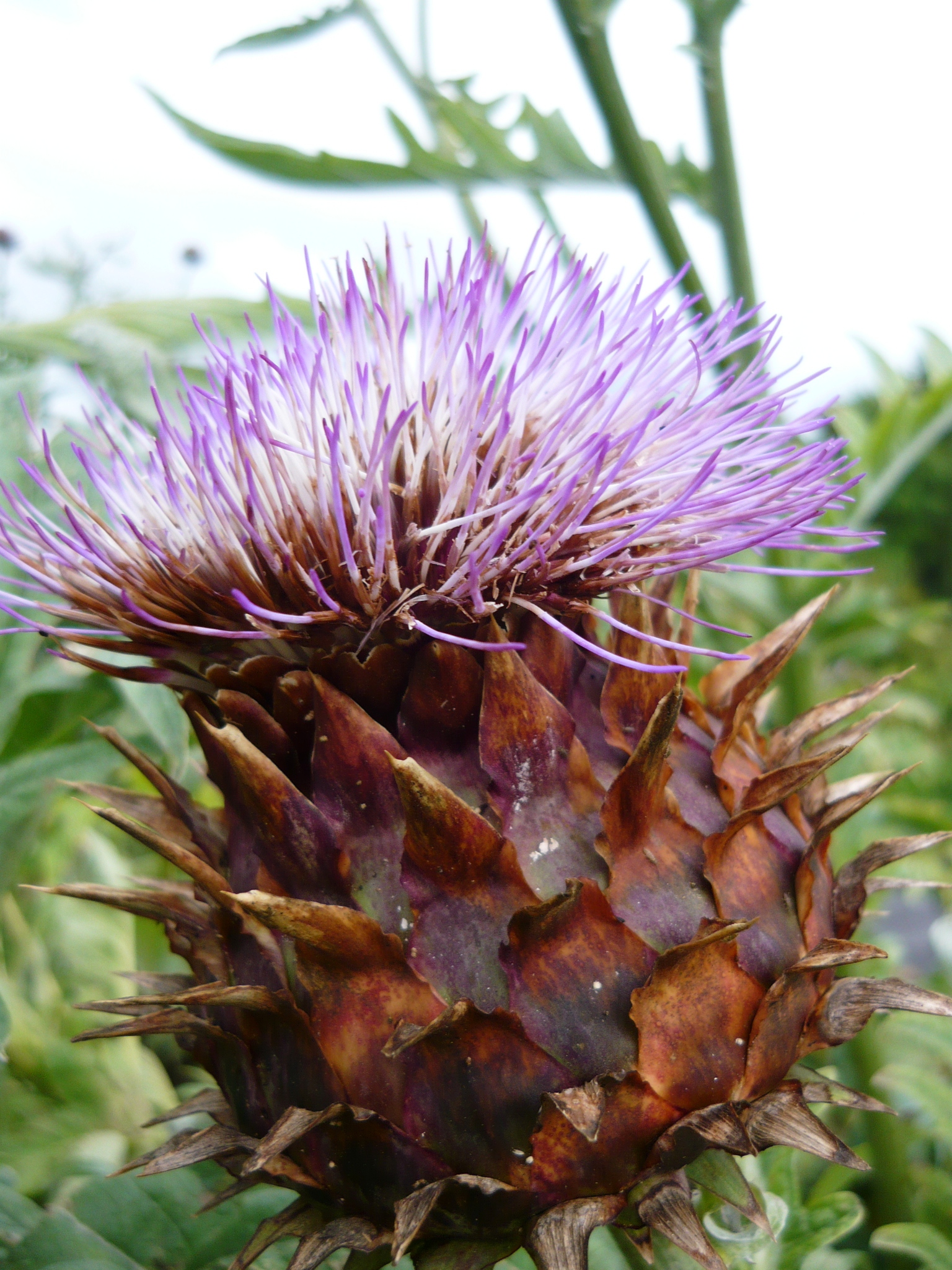
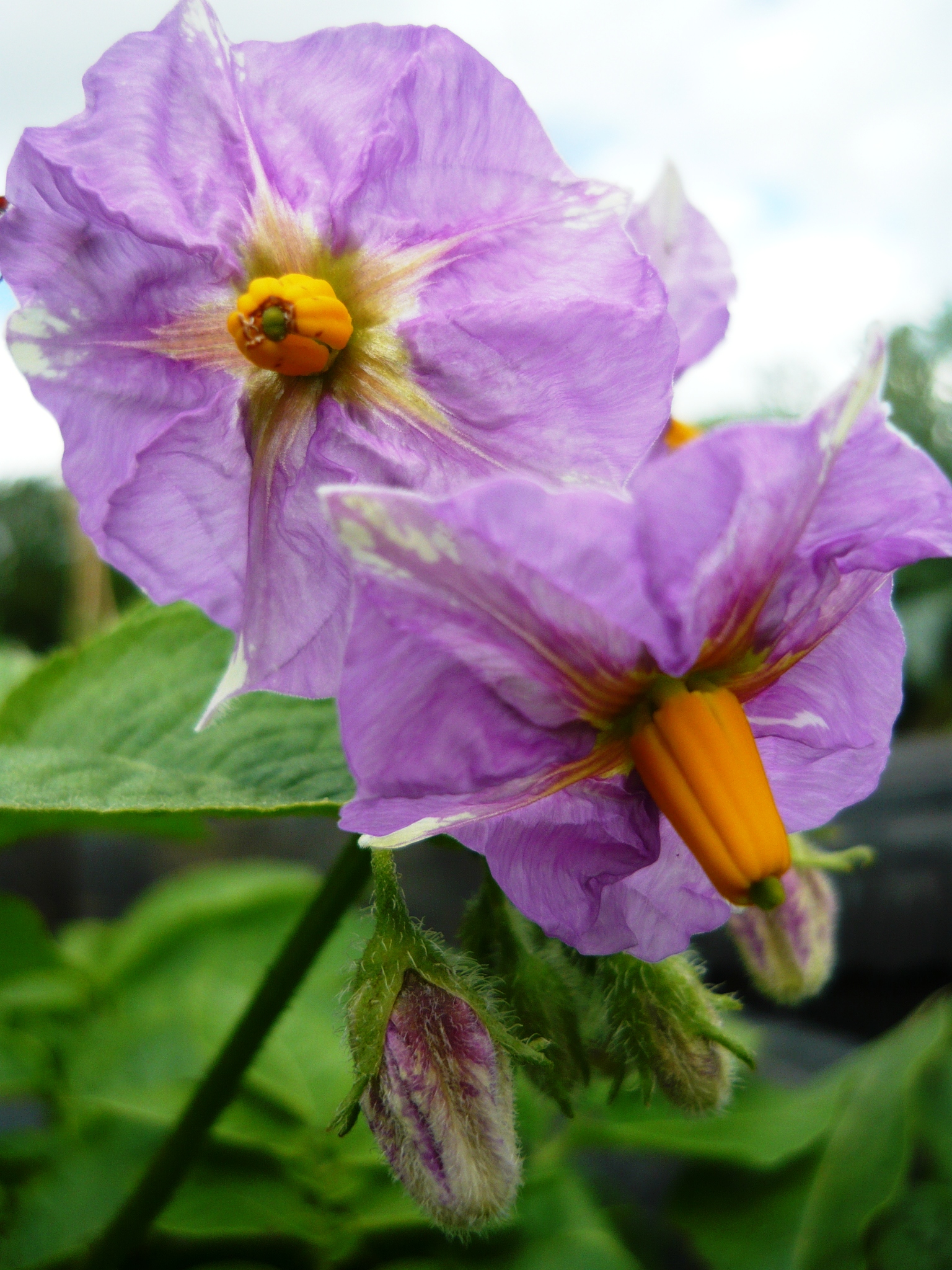
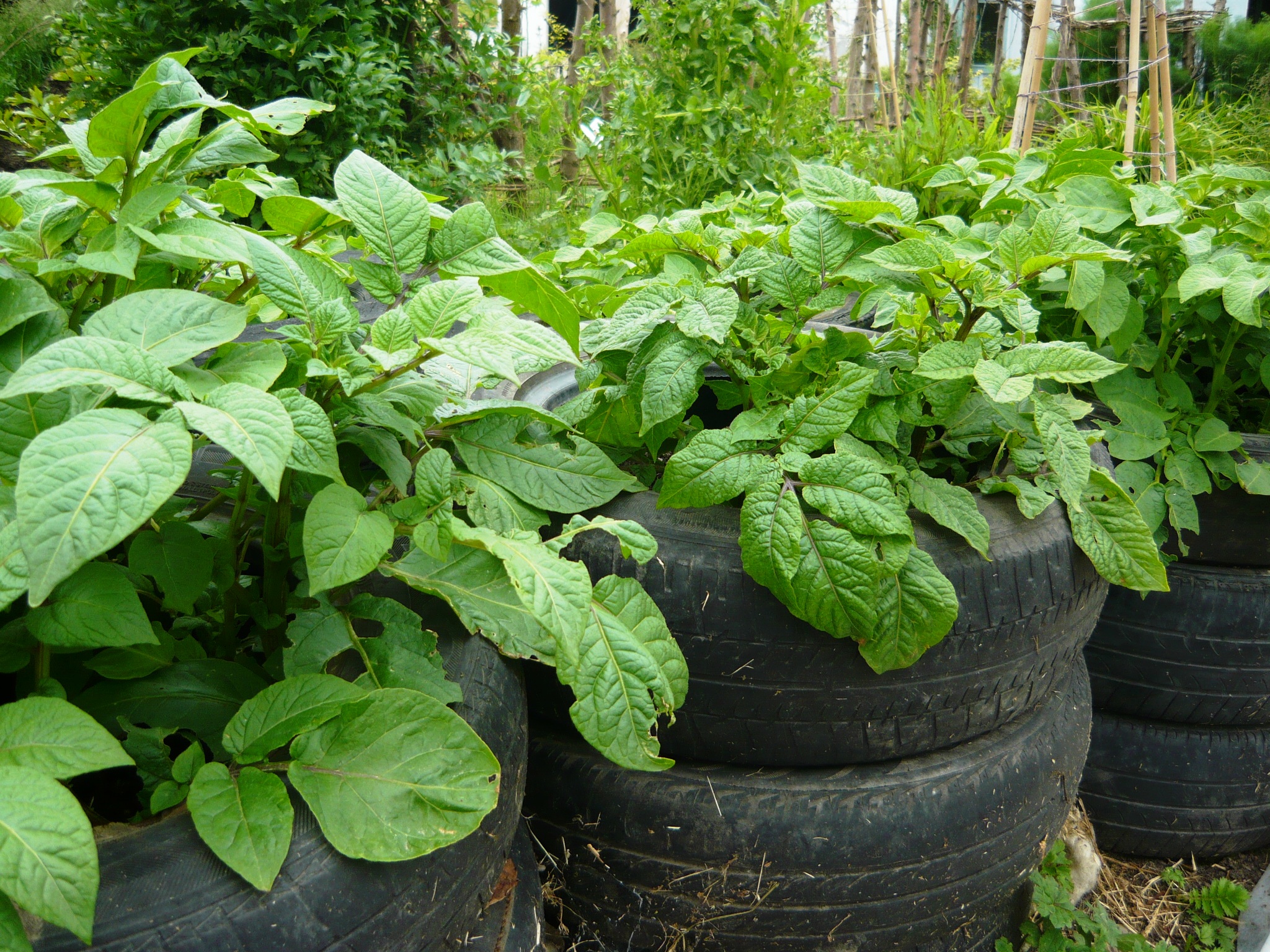
In the kitchen garden harvesting is in full swing with berries, onions, courgettes and peas for picking every day and our potato tower stacks growing very high. We were surprised when we first saw the beautiful potato blossoms, very different in the two varieties we are growing. We enjoyed a very tasty addition to our dinner yesterday when the Artichokes were ready for eating.

artichoke

potato

purple potato

berries

Our circle looks lovely even though we have been busy the whole month with our renovations and extension. It has a lot of weeds growing amongst the flowers but we just pull them out as we pass by. Apart from that all we have managed to do is cut the grass a couple of times but as long as the structure is there in a garden a few weeds do not matter too much and they can be removed as and when the opportunity arrives. We are planning to tidy the whole garden up in autumn, when the grass and weeds slow down. You can see what happens to the circle throughout the months in the category ‘Elemental circle’. For now we are anticipating the fireworks soon to take place when the crocosmia, Lucifer open its buds. It is a red explosion, not easily forgotten.

july east

East

garden july south

South

garden july west

West

garden july north

North

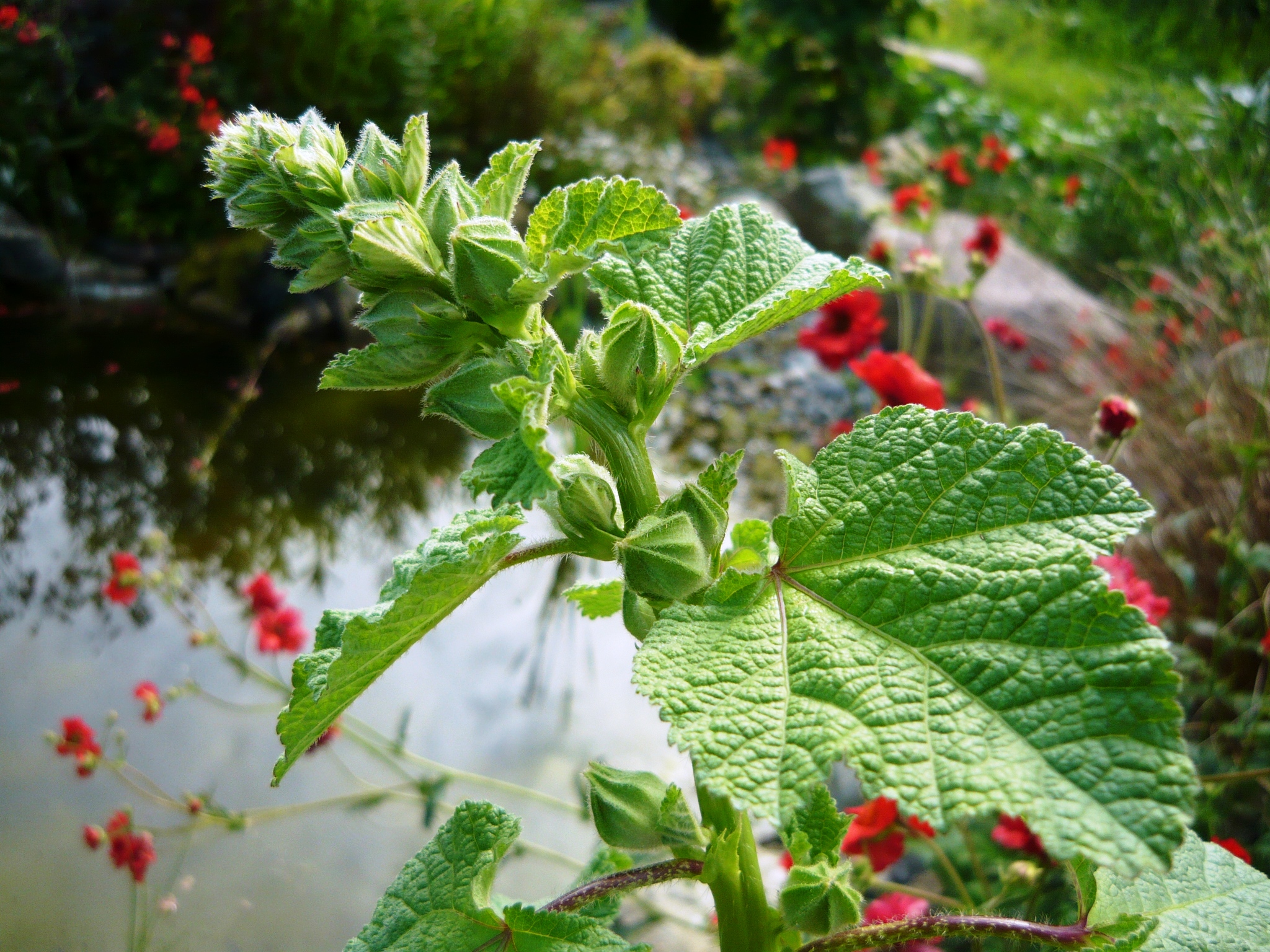
By the little wildlife pond the Angels fishing rods are just starting to open along with the single hollyhock called halo. Pure magic. All over the garden our mallows are now flowering. This evening we had a late walk around the garden, feeling thankful to be in this beautiful part of the world and looked at the full moon rising over the tree tops. A perfectly beautiful evening, once in a blue moon.

garden july angel

garden july mallow

garden moon

Flowers in June.

circle june 057

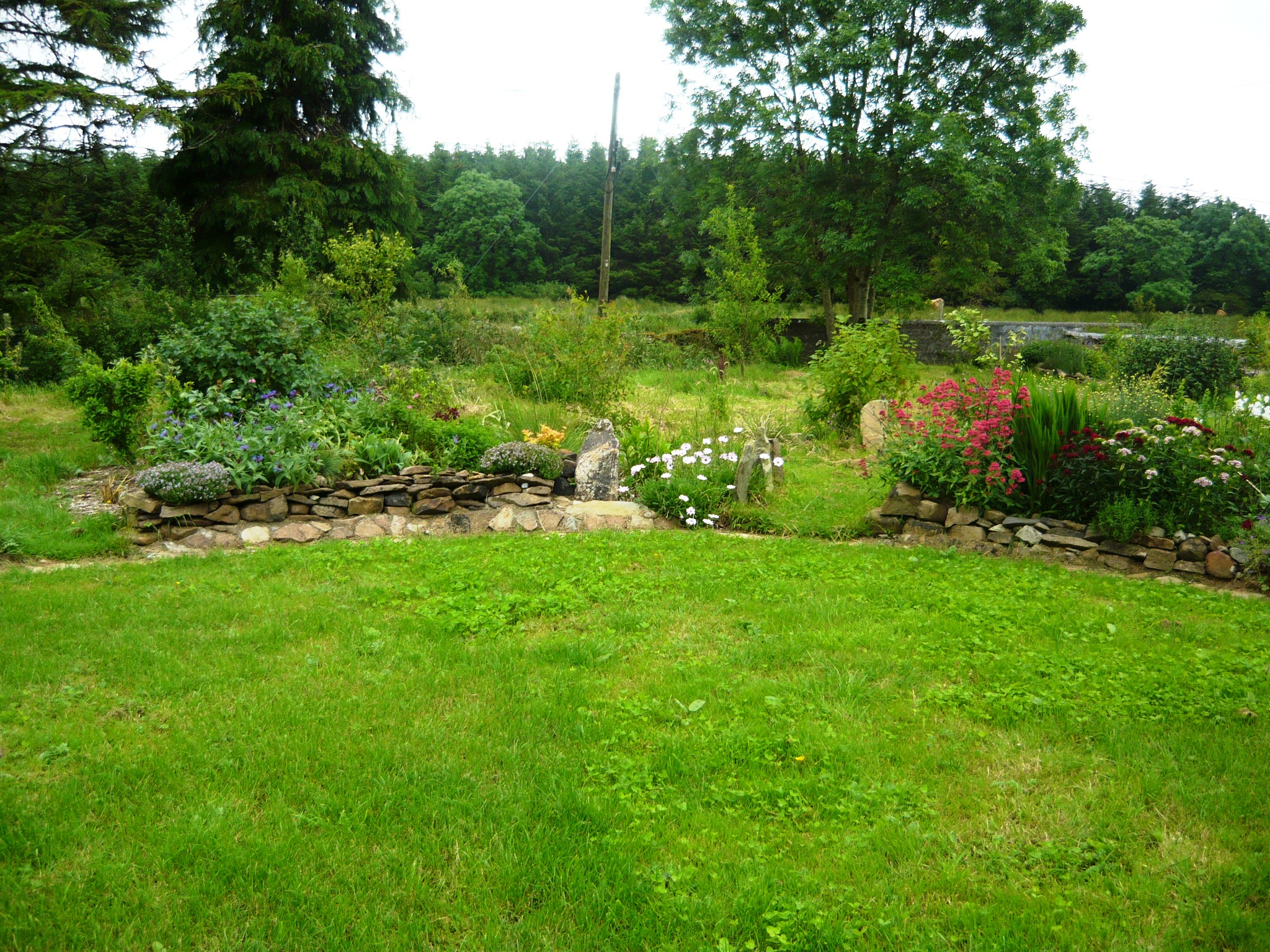
We have come to the end of June and it is time to sum up this glorious month in a few words and pictures. The nice warm weather has brought out some lovely shades of pink, blue, red, purple and yellow all over the garden. Not forgetting to mention green. Growth has been strong in the raised borders around our circle.

circle june red valerian

circle june 053

circle june green

circle june east

East

circle june 004

South

circle june 003

West

circle june north

North

The sweet Williams we sowed last year have overwintered and really show their colours this month. We particularly like this variegated one where the flowers start off pink and fade to white.

circle june sweet william

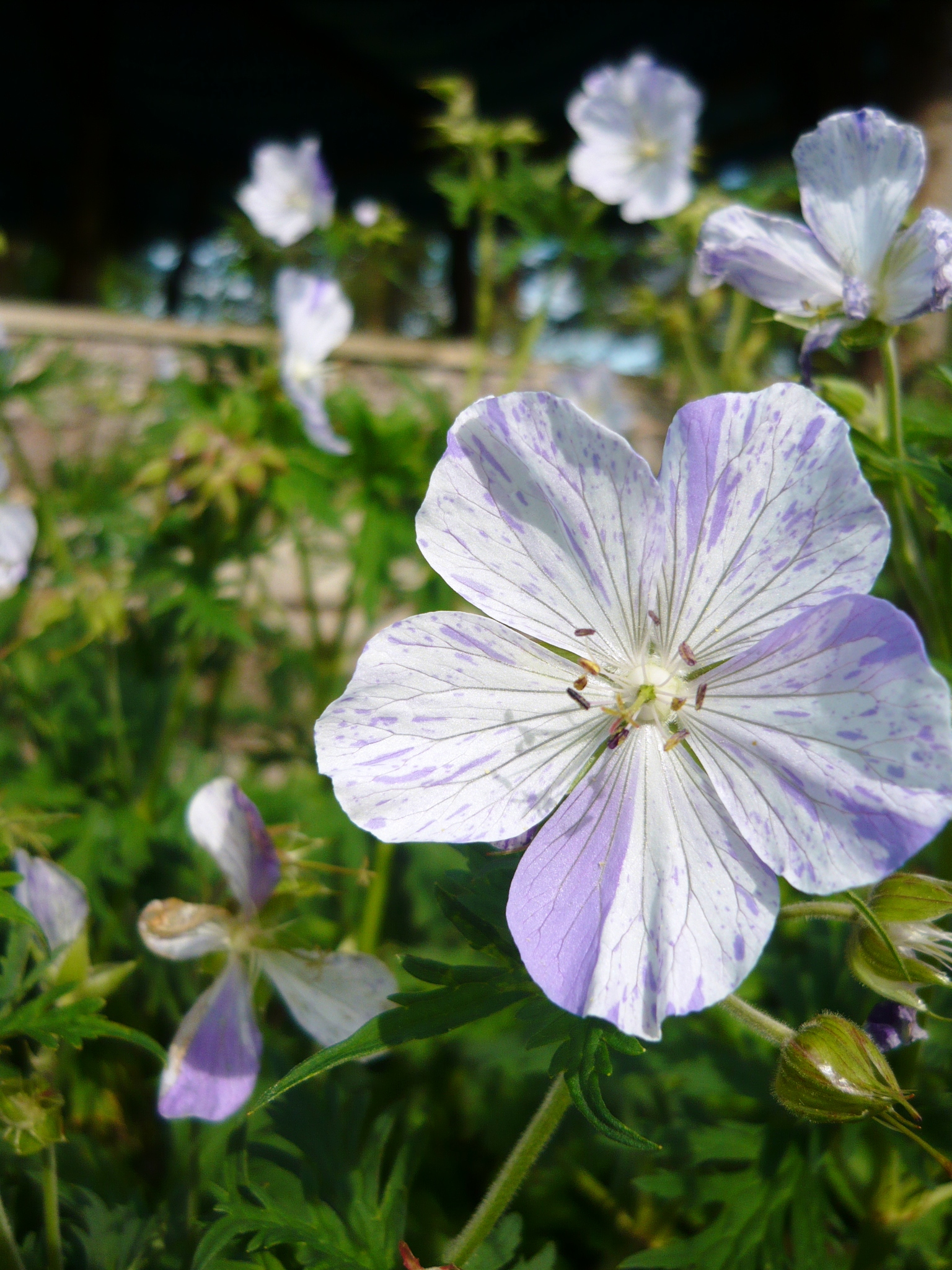
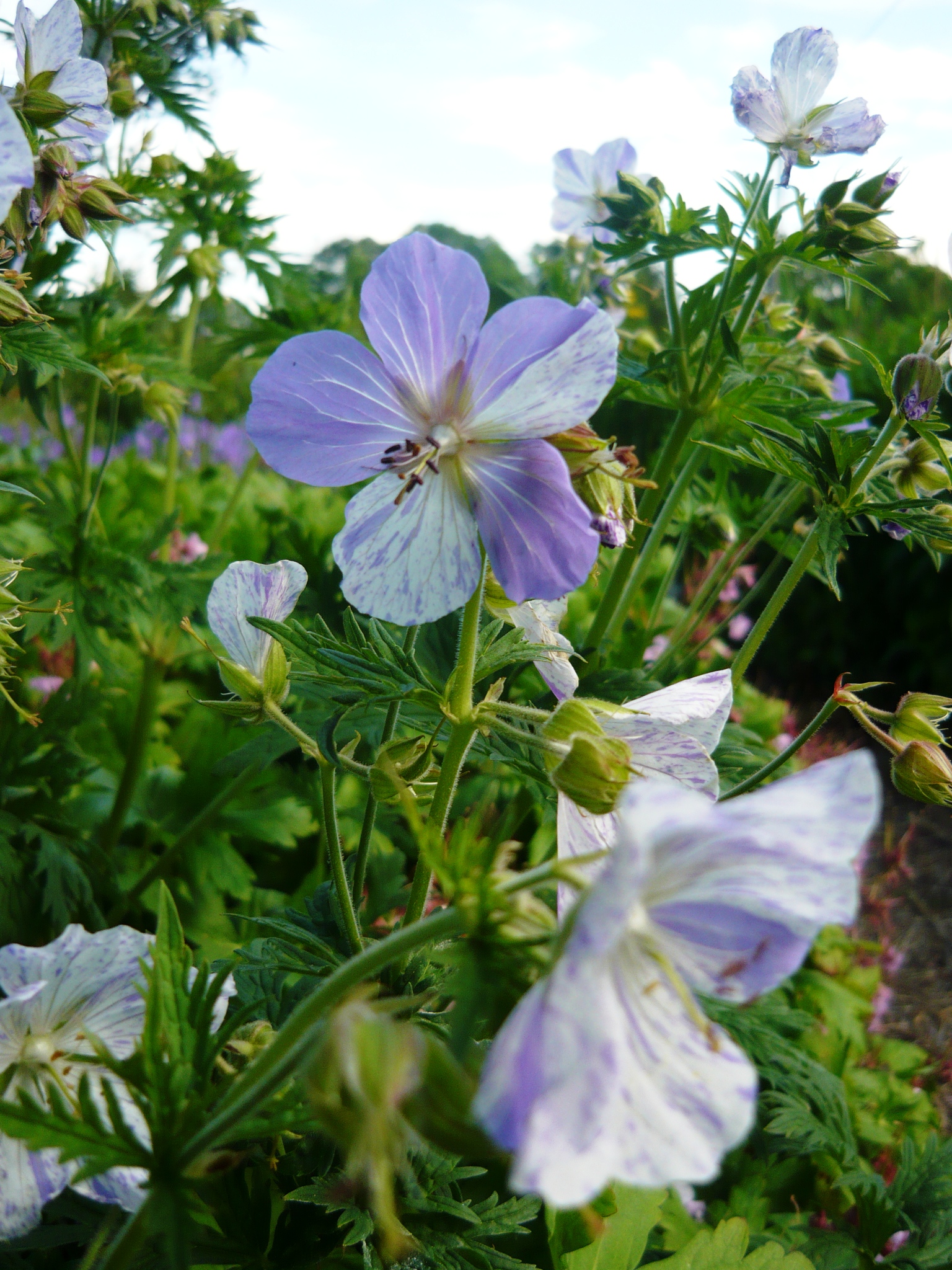
Another favourite in shade and sun are the beautiful hardy Geraniums we put in last year. If we have to pick a favourite it will have to be splish-splash that looks like it has been splashed by blue paint!

circle june splish splash

circle june splish splash 2

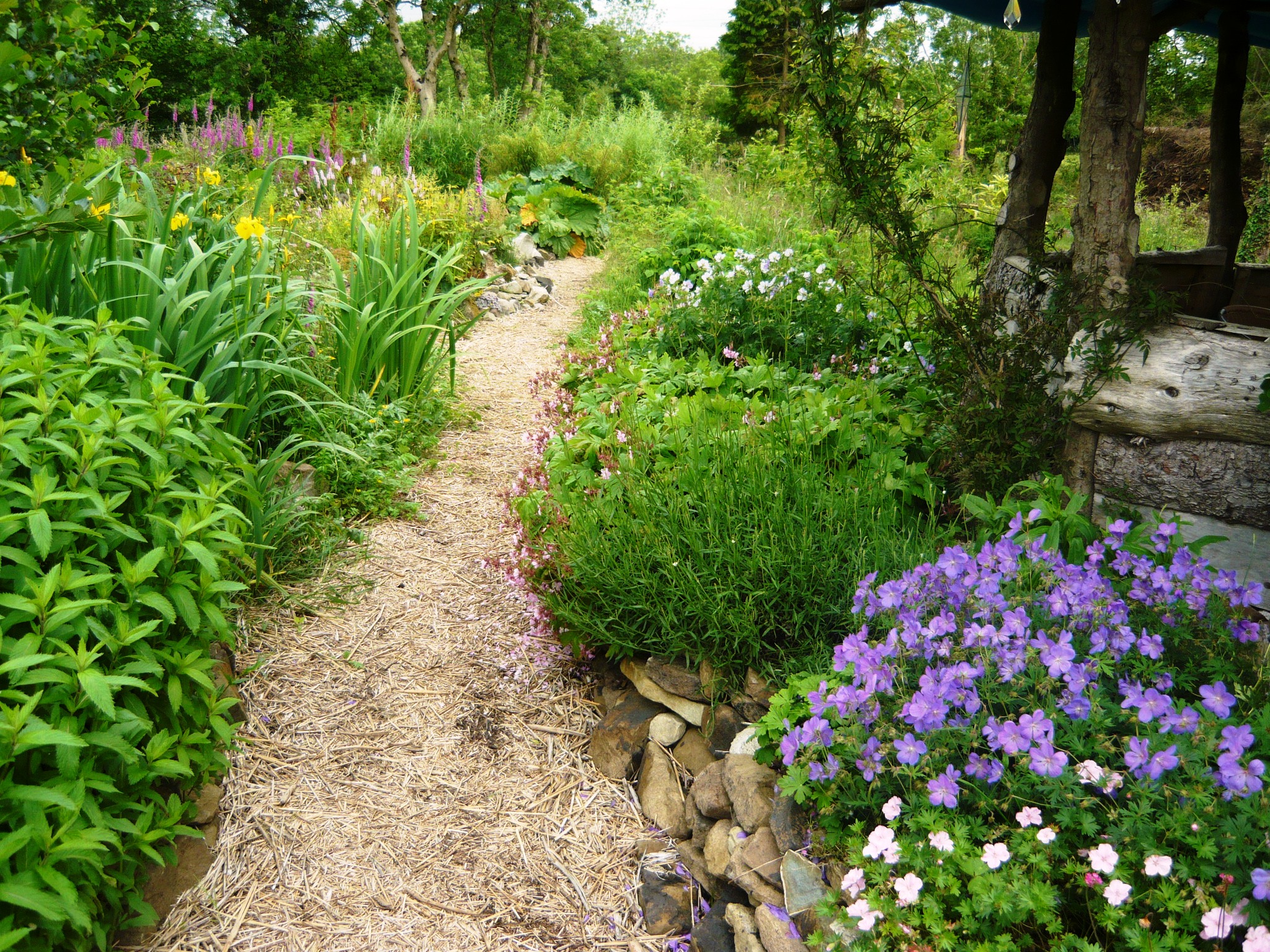
If you take the path down to our pond you are likely to see a few frogs on the way, most of them very, very small. At the pond a whole lot of foxgloves have taken hold, right next to our little fairy house. If you look in the water you can see a lot of dragonfly nymphs as well as many big beetles swimming up to the surface for air. A few newts are also about and a lot of whirly-gig beetles and pond skaters.

circle june path

circle june pond

As we have planted out all the vegetable seedlings we kept safe in our gazebo now, we have reclaimed this space as a lovely place to sit down with a cuppa or dinner. It is so peaceful sitting in there, listening to the little waterfall in our stream and smell the sweet Williams and roses. Two years ago we planted a 40 cm cutting from Future forests in Cork, a rosa multiflora  and now it is a billowing mass of fragrant flowers. This is a rose native to Asia and it has a status as an invasive species in some parts of the USA and Canada. It is very prolific so you might want to think twice before introducing it to a small garden. We like it because it has lovely leaves, flowers and hips for salads and teas. We also grow it in a restricted space where we prevent it from tip layering. We have not found any information to suggest it is invasive in Ireland.

circle june rose

circle june round house

circle june rosa

There is a lovely anticipation in the garden this time of year. So many different flowers are still to open their buds, like these hollyhocks, growing close to our smaller pond. We look forward to sharing them next month.

circle june hollyhock

June in the kitchen garden.

kitchen garden veg 026

It is the lightest time of year and things are moving on fast in the vegetable and fruit garden. We use a system with no-dig, raised beds for growing annual vegetables and our beds are now in their third year. We add mulch to them several times a year, and top them up with well rotted cow manure once a year. The earth worms then do the work for us and mix the newly added materials into the beds. We have made them 120 cm wide as it is possible to weed and harvest at that width without stepping onto the soil and compacting it. Our paths are about 30 cm wide but we would make them a bit wider if we did the beds over again as they get quite overgrown with floppy green vegetable leaves. Everything grows very well in our beds including weeds but we try to stay on top of them. Mulching helps a lot and we grow all our little plants in pots until they are big enough to out compete the weeds and stand a chance against the slugs. Onion sets are one of the few things we put straight into the beds.

kitchen garden 021

kitchen garden 039

kitchen garden veg 008

We planted our potatoes on Saint Patrick’s Day in the middle of March and they have now been earthed up five times and we are up to our forth layer of tyres. They are growing strongly and we can’t wait to dismantle the stacks to see how many potatoes we can find.

kitchen garden veg 029

kitchen garden 007

For growing peas and sunflowers we use some cut off big plastic bottles to protect the newly planted seedlings and it is working very well. There is less slug damage than other years and the bottles also protected them from the worst of the weather when they are small. We are planning to just leave them there and it also makes watering easy as you can just pour some water into each one.

kitchen garden veg 011

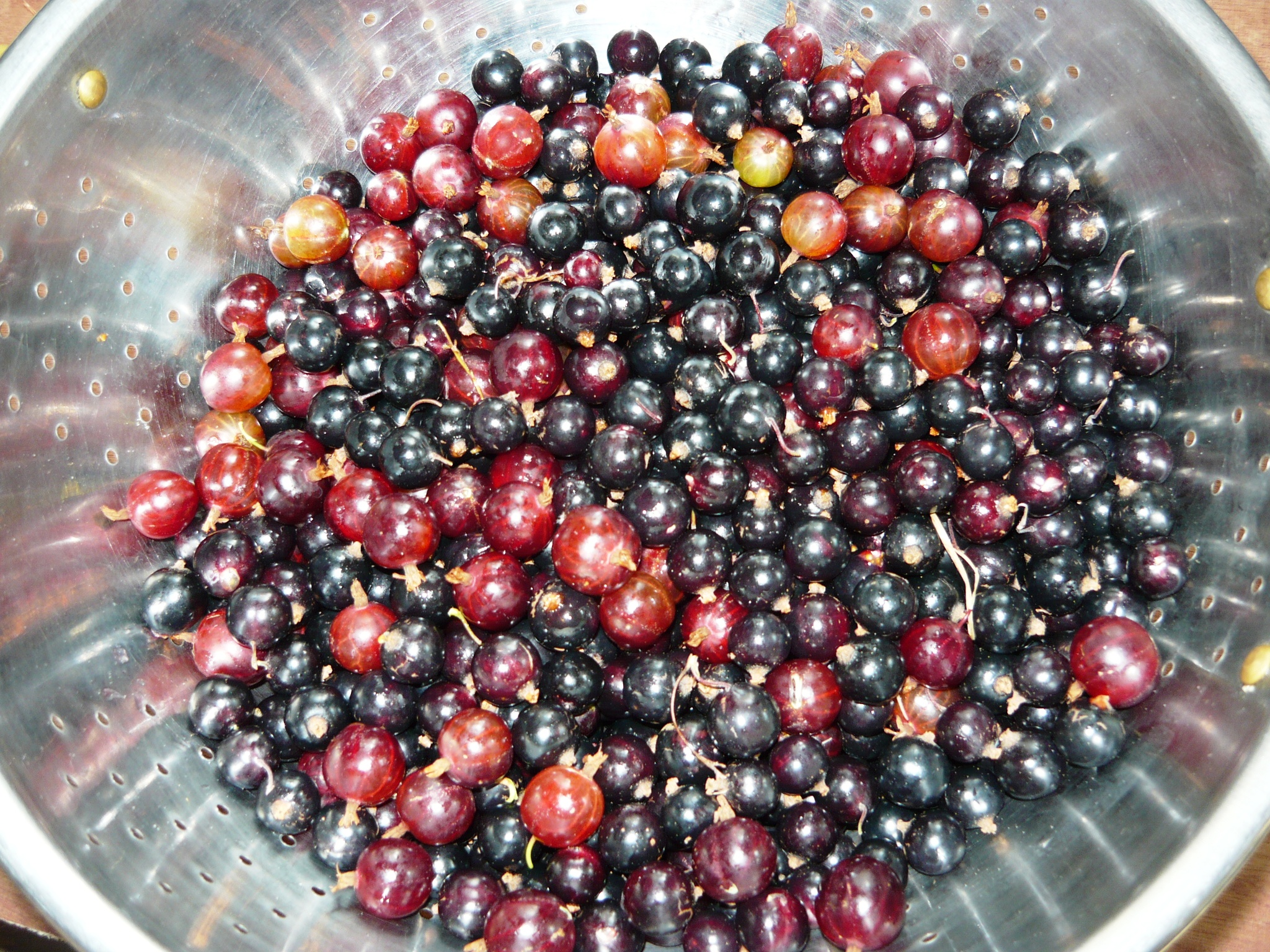
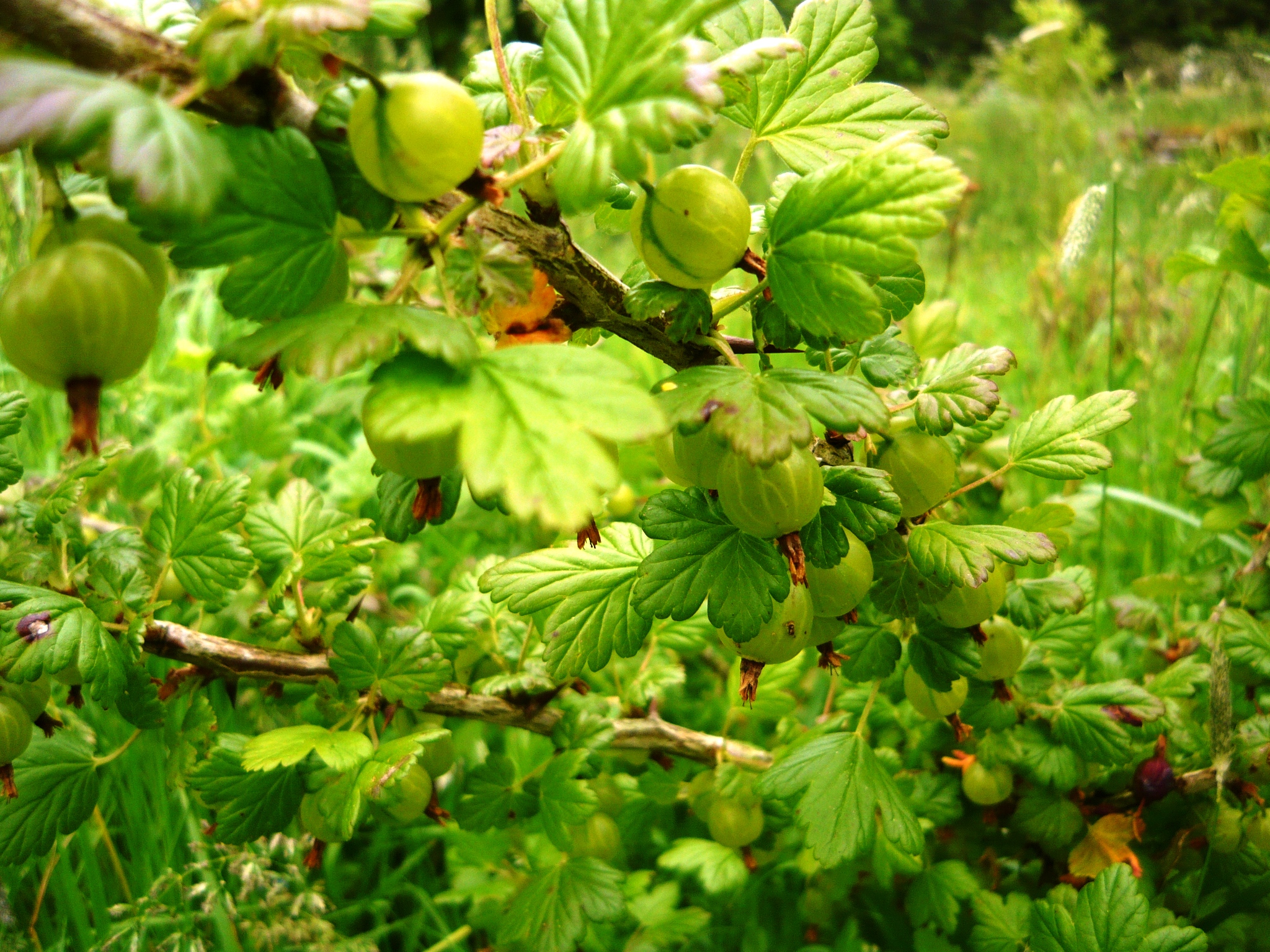
Our berry bushes have now been in the ground about two years and we have an amazing amount of berries this year. We have blueberries, raspberries, gooseberries and currants, as well as a lot of hybrids like jostaberries and tayberries.

kitchen garden 035

kitchen garden 036

kitchen garden 028

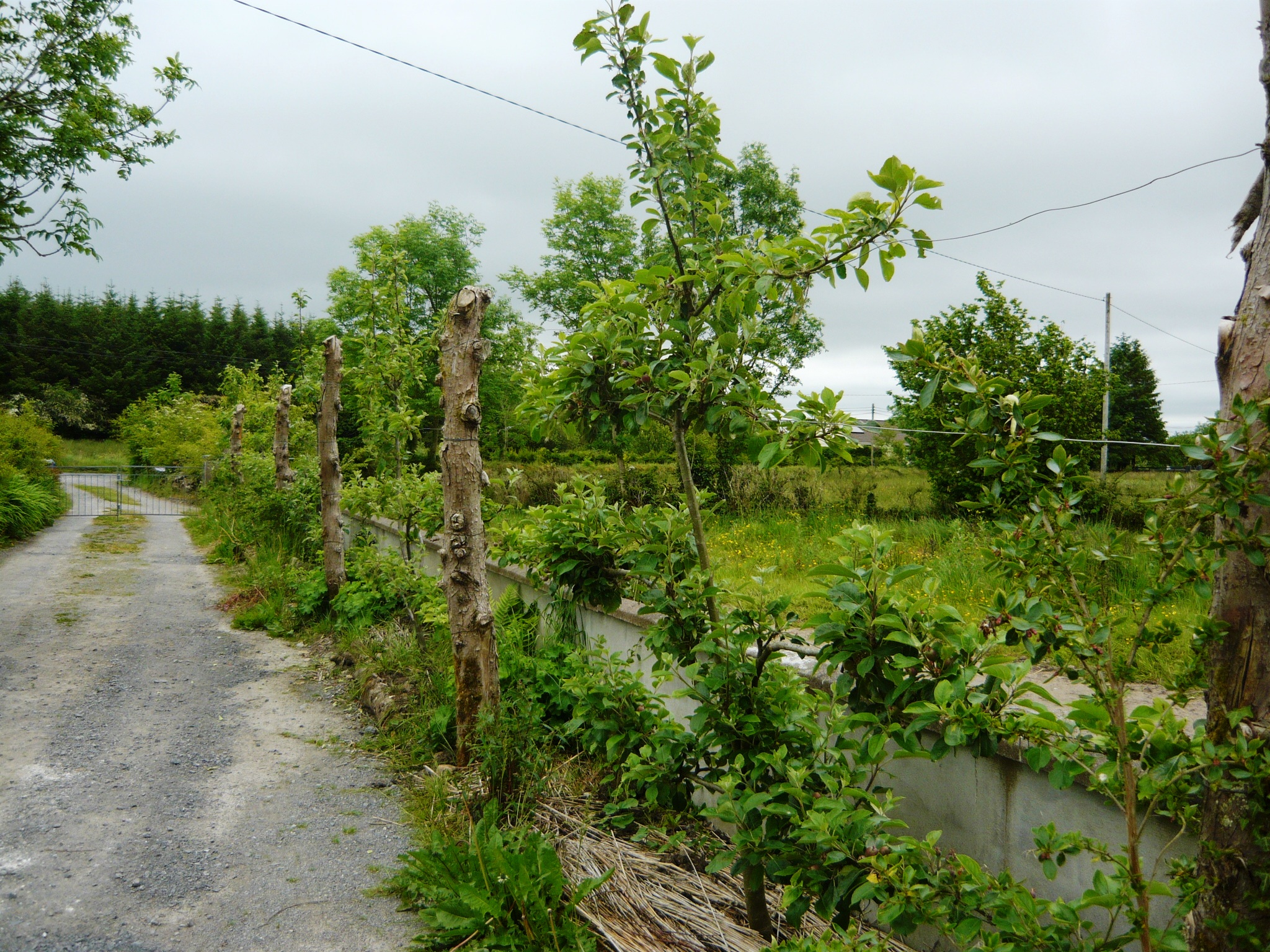
Along our drive a long row of Laylandii cypress was planted that blocked out all the light from the south and made it impossible to drive a car down it. We removed them and kept every fourth trunk in place and stretched wires in between them. We now have seven different varieties of apples planted there. We put in small trees and bent all the branches out to the sides to create espaliers and now, after only two years they are really filling in and starting to fruit. They look lovely but are also less prone to disease and take up a lot less space than it they were planted straight in the garden.

kitchen garden 047

kitchen garden 044

kitchen garden veg 042

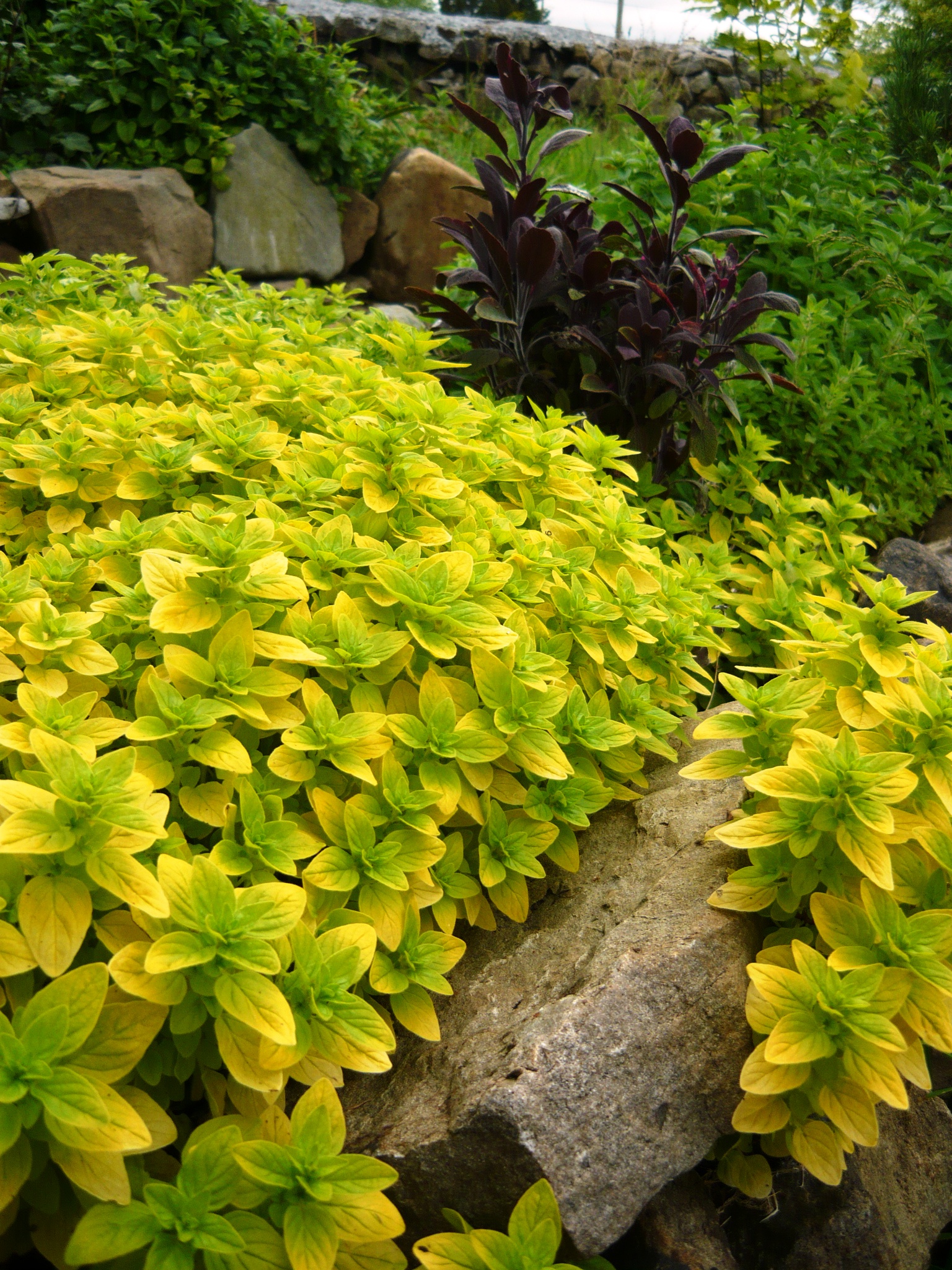
We are harvesting and using our herbs everyday for food and teas. It is a pleasure to spend time in the herb garden listening to the bees buzzing away and looking at the butterflies.

kitchen garden 062

kitchen garden 001

kitchen garden 069

We also grow perennial vegetables and are particularly happy with the sea kale that is flowering at the moment and has a great honey scent. The good king Henry is very tasty and the yellow flowers from the Turkish rockets are going into salads along with purple chive flowers. Our perennial Swedish ‘leeks’ are doing really well and we have harvested a lot of them in spring when the annual onions weren’t ready. They are just about to flower now and later the newly formed bulbils will be heavy enough to make the stems lean over and re root. Our cardoons and artichokes are making good use of the willow fence we built in winter.

kitchen garden 054

kitchen garden 059

kitchen garden 056

kitchen garden 023

All in all it is a beautiful and bountiful time in our kitchen garden.