April was an exciting month in the garden. We had snow and hail showers, brilliant warm sunshine and everything in between.


Recycled Eco Buildings and Wildlife Friendly Food Forest Garden. Mosaics and Glass Bottle Walls.

April was an exciting month in the garden. We had snow and hail showers, brilliant warm sunshine and everything in between.
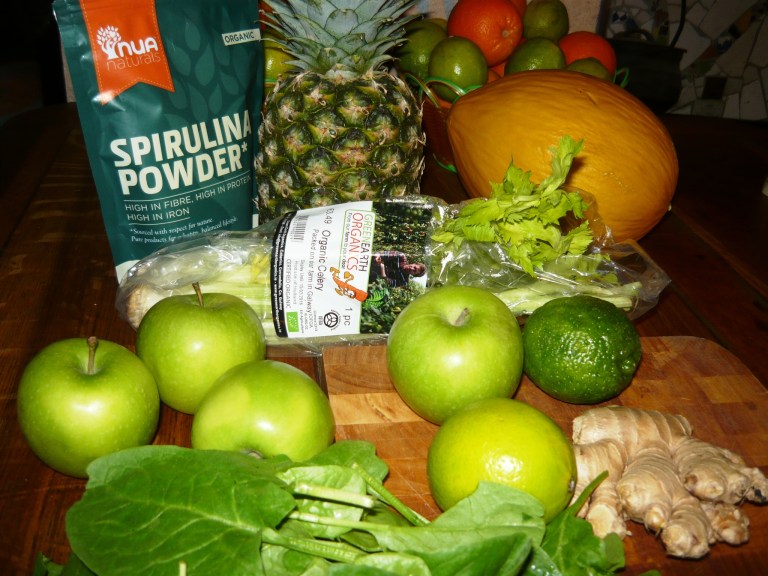
This time of year it is easy to feel a bit jaded and tired. There are lots of colds and flu’s moving around and quite a few rainy days. We felt it was time for a vitamin injection into our daily lives. About a week ago we went out and bought a high power smoothie mixer and we are so glad we did. Since then we have had so much fun, making up recipes for tasty and energy packed juices and smoothies. It has made all of us feel more energetic and happy. This type of mixer is different from a juicer in that it makes a drink from all the parts of the fruit or vegetable you put in. It crushes seeds, nuts, berries and peels into a smooth drink. We have been experimenting with adding things like; almonds, kale, avocado, hemp seeds, goji berries, cacao nibs, frozen berries from the garden, apricot kernels, dried mulberries and sunflower seeds. The list of possible ingredients is endless. If you add seeds, berries and nuts that are dried it is good to soak then for a while before mixing for an even smoother drink.


As we are almost a week into February, it is high time to sum up what happened in the garden last month. We had a lot of rain and storms and a little bit of frost, but we still managed to get out in the garden for a few days. The birds had finished all the seeds in the seed heads left on our perennials, so we took some time cutting them back and tidying up the flower beds. At the same time we removed a lot of weeds, like couch grass and creeping buttercup that was threatening to colonize the beds and swamp our preferred inhabitants. Here you can see our main garden circle after being tidied up. If you are a regular reader you know we take these pictures every month, to record how the garden changes and develops over time.

Following on from our last post, we wish to tell you about two more ways of growing mushrooms in the average garden.
If you have a compost heap it is possible to set up a colony of Oyster mushrooms. We choose the yellow variety as it is more tolerant to cold and will be easy to spot even when small because of its bright colour. We have a few very big heaps in our woodland with mostly brushwood and weeds and we picked the north, shady side of one of them to start our colony.

We put some old silage we were given from a neighbour on top of the heap and scattered on the mushroom spawn mixed with saw dust and a little bit of sugar. As this is a big heap we used 180 grams of spawn. You could probably use more like 100 grams on an average compost heap. We forked in the mixture and added a thick layer of straw on top of the spawn before finishing off with another layer of silage. All mushrooms need a damp growing site so we watered the heap in. Now we are confident that the rain will do the rest of the watering for us, but if we get any dry spells, our stream is conveniently located close to the heap.


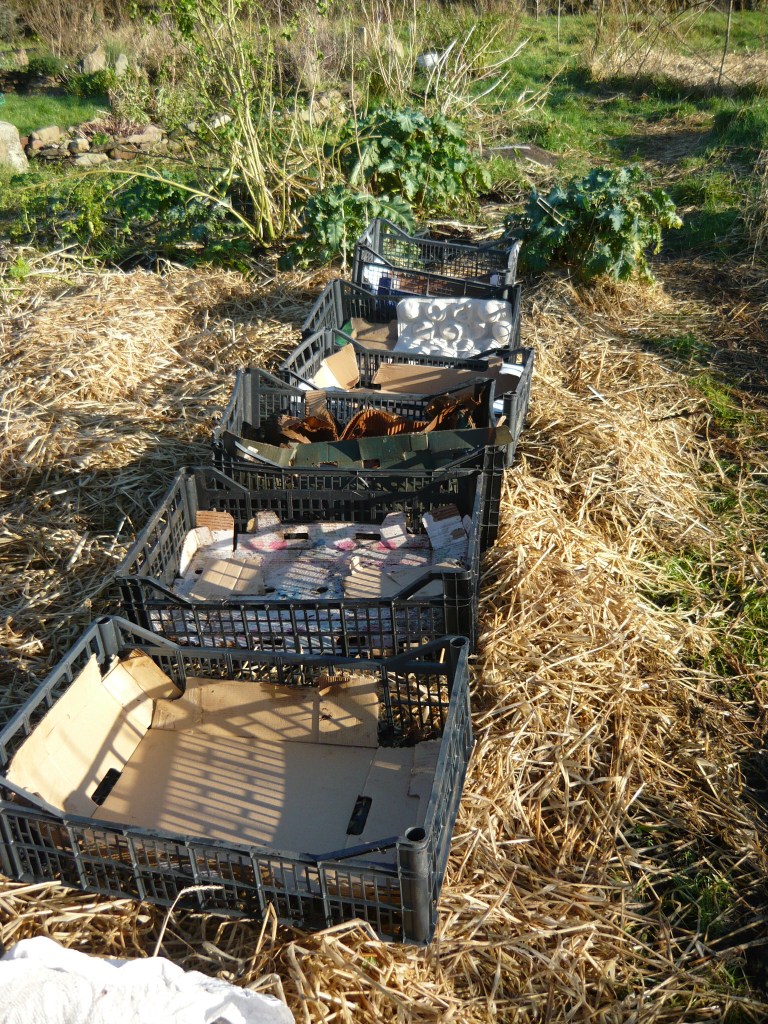
We also wanted to try out a couple of slightly more difficult varieties and looked at the ideas in James Wong’s excellent book, Grow for Flavour, for growing Lions mane and Shiitake. These varieties both like a vertical surface to grow on and they like hard wood chips as a medium. We adapted Mr .Wong’s ideas slightly and started off with some hard plastic crates we were given from our local supermarket. Putting down a layer of cardboard in each box to contain the woodchips and started filling them by putting down slightly larger half rotted twigs from a pile in the garden. Then it was time for filling the gaps with hard wood chips to create a level surface about half way up in each box that the spawn mixture could be scattered across. Again we added sawdust and a sprinkling of sugar to kick start the spawn into action.

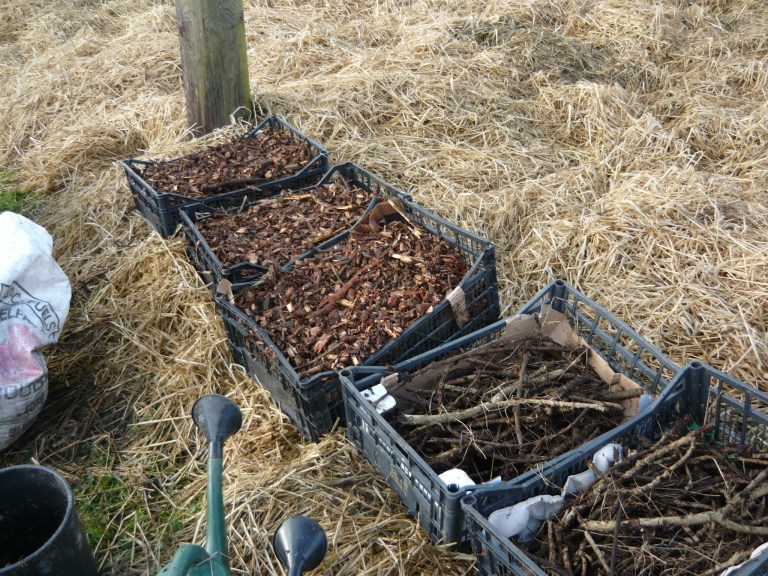

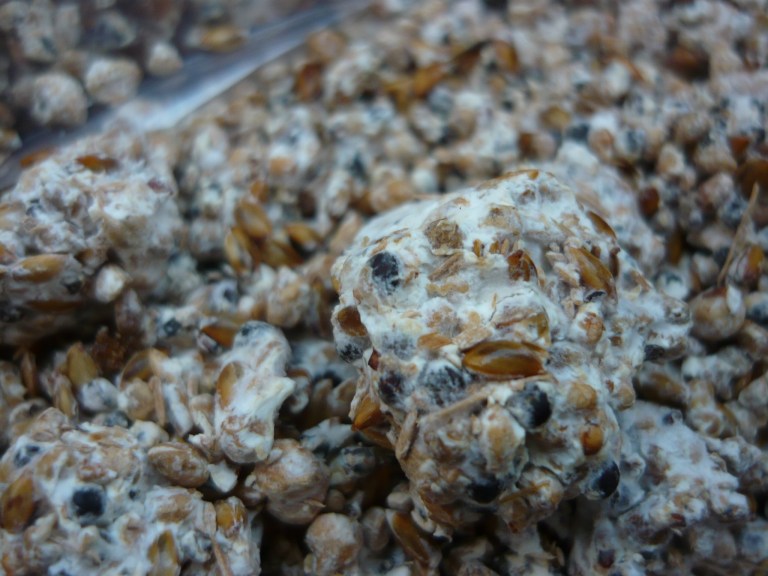
Shiitake spawn.
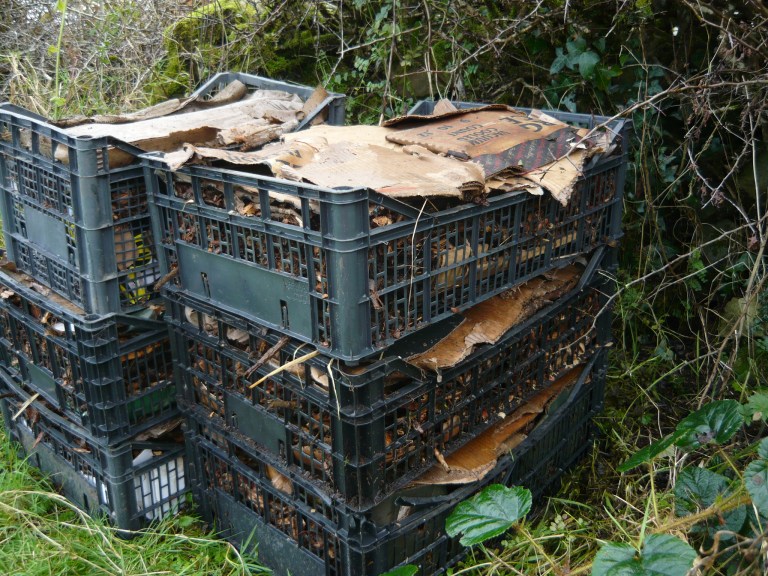
We filled the boxes to the top with wood chips and put on another layer of cardboard to insulate against the cold and create a dark, cosy environment for our mushrooms.

Now the boxes are stacked up and wrapped in some plastic for the next couple of months and hopefully the mycelium will start to form, and our boxes will fruit for years to come. If for any reason our colonies will not take off, it is easy to order some more spawn later in spring and add to our different created environments. It might be a bit of a gamble, starting this project in January, but we do not have many frosts here and all of our colonies are well protected from the cold. Only time can now tell if we will succeed. Hopefully it will only be a few months until we can start harvesting our very own gourmet mushrooms.

Yesterday we were very excited to find our recently ordered mushroom spawn in the mailbox. We had ordered five different varieties from a company in the UK. Today we got around to planting two of the varieties, King Oysters and Wine cap mushrooms, also called Garden giants.

We have reached a new year full of possibilities and projects. Yesterday we were delighted to harvest a large crop of Oca, Oxalis Tuberosa, also called New Zeeland yams, a tuber we tried growing for the first time. It was planted in our garden last spring after being pre sprouted in pots in late March. We tried red, yellow and orange tubers but the yellow ones rotted in their pots early on so only the others got planted out. In the summer the plants produced lots of green leaves with a lemony taste. We are very happy with our trial and will save a few, to plant again this spring. In their native South America they are second only to potatoes in popularity.

Planting in March.

Growing in August.

Harvest in January.

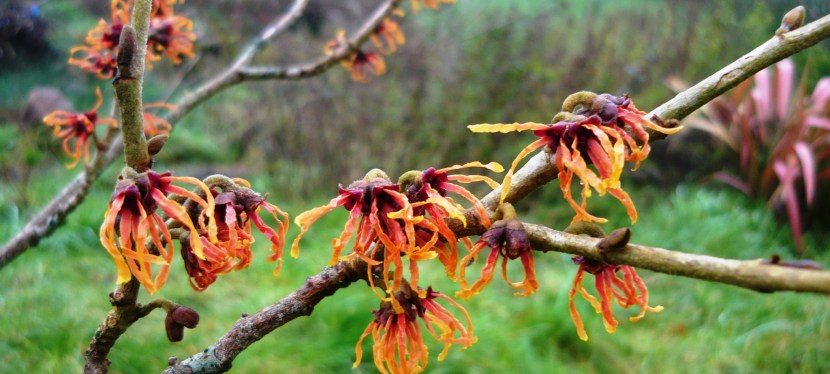
On these short wintery days the sun is always welcome and we try to spend some time in the garden every day, clearing out old foliage and weeds from the beds. We are planning to cover the whole vegetable garden in cardboard boxes and barley straw to stop weeds taking hold in the spring. Hopefully this will rot down just enough in time for planting vegetables later in the year. Our witch hazel tree is looking beautiful at the moment, with spidery fragrant flowers on bare branches. It is always a welcome sight along with the hellebore, Christmas rose.


Still braving the elements.
It is time to sum up last month in the garden, the words very wet comes to mind. It was difficult to find the motivation to get out there and work when the ground was soggy and the sky was grey. We kept busy inside and also took some time for rest and reflection. Sometime that is what is needed in order to gather strength and renewed motivation. We are feeling very optimistic now about the garden in the coming year. Some plants will be moved about or planted for the first time and there is much work to be done on clearing weeds like creeping buttercup. We actually like many plants normally considered weeds, like nettles for their phenomenal nutritional and wildlife value. But some have to be controlled in order not to take over ground from weaker plants.

These are pictures of our circle at the end of December in the four directions of the compass. It is very green for this time of year, with the grass still growing. We are full of anticipation to see what the circle will look like later in the spring and summer as all our trees, shrubs and perennials will have another years worth of growth in them. If you wish to see how the circle develops over time you can take a look at the Elemental circle category on the blog, where all the monthly garden entries are collected.

East

South

West
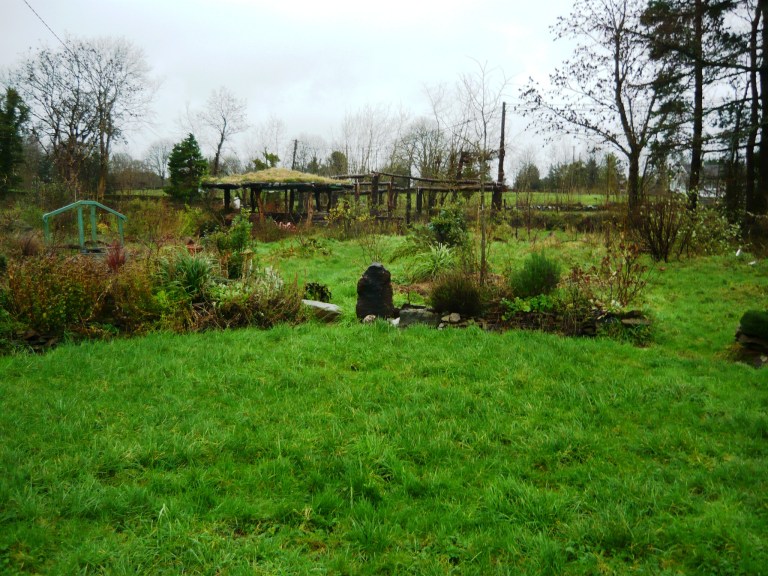
North
We wish all our readers a happy and healthy new year, full of pleasant surprises and time to be spent outside in our beautiful nature. There is always so much to look at and to be delighted by. We are going to roast some newly harvested Oca tubers with fresh garlic and olive oil now, to celebrate the beauty of January and give thanks to our garden where beautiful things happen all throughout the year.


You need an organic garden to attract a wide range of wildlife. But you also need wildlife to create an organic garden. We do not think one can exist without the other.

We have been living on our plot of land for almost three years now. When we first moved in we only made the house liveable, and concentrated most of our efforts on the garden. Our land was encircled by a huge thick laylandii hedge that blocked out all light and did nothing to support wildlife. We cut it down and replaced it with espaliered apple trees, oak and beech hedging and a lot of mixed trees and shrubs. It was a very important first step in attracting wildlife and we used the trunks for structures in the garden and all the smaller branches for mulch on paths and planting areas.
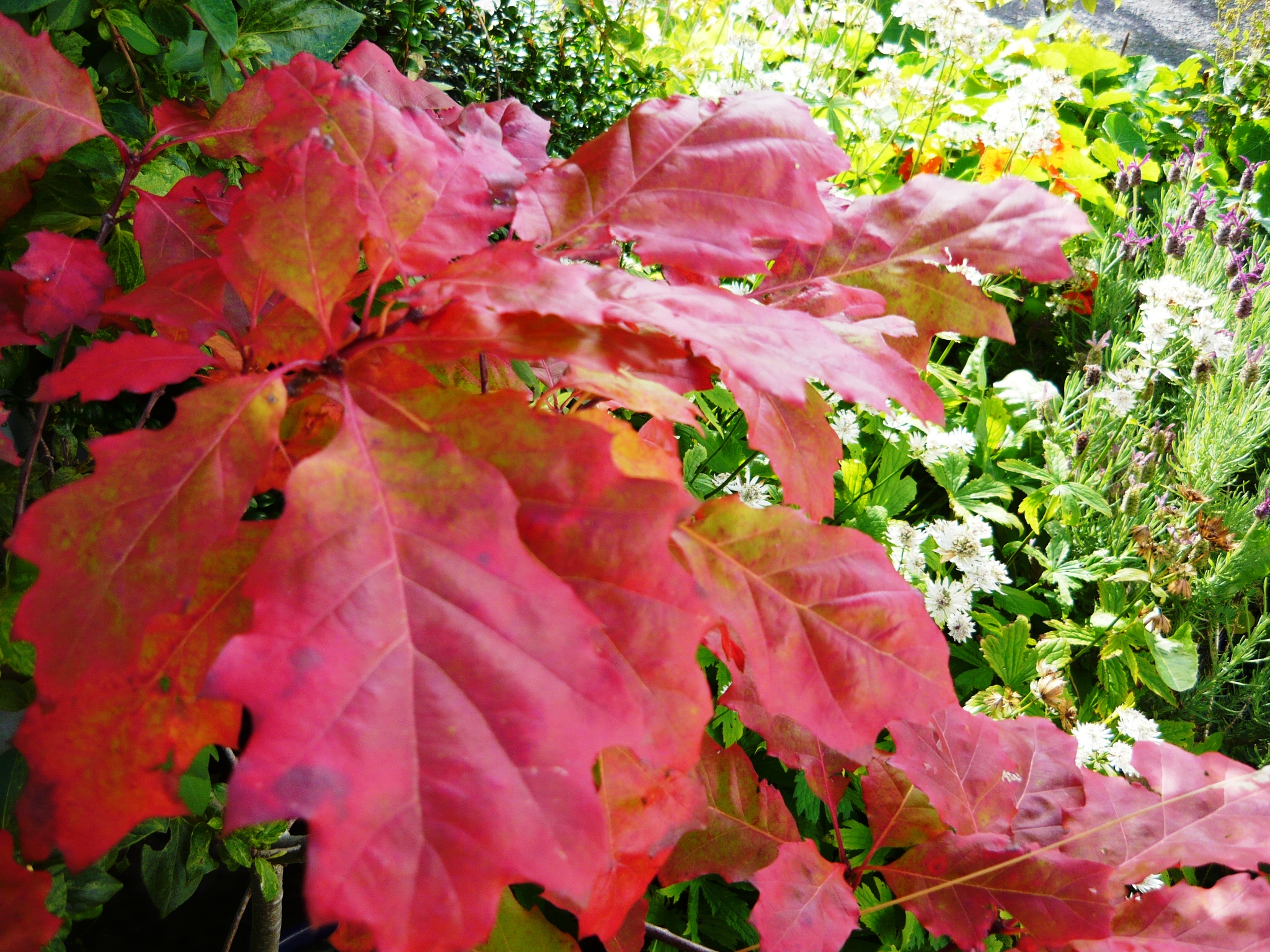
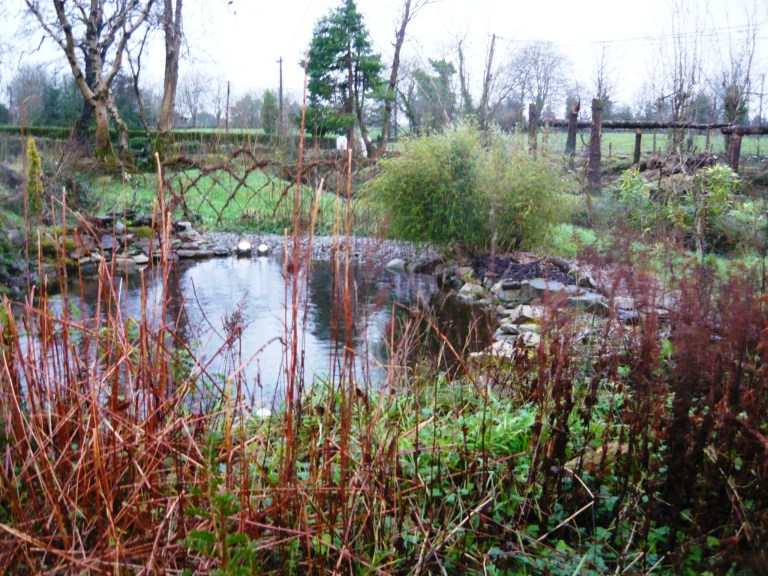
One of the first things we did was create a big wildlife friendly pond. We are very happy this year as at least one hundred young newts are living in it now, along with dragonfly-nymphs, water-beetles, frogs, toads and whirligig-beetles. On one side the pond has a pebbled beach, for easy access in and out of the water and on the other side it has a bog-garden filled with moisture loving flowers and plants where frogs and toads like to hop around. The pond has been dug right next to an old stone wall and it is a great place for many creatures to hide or hibernate.


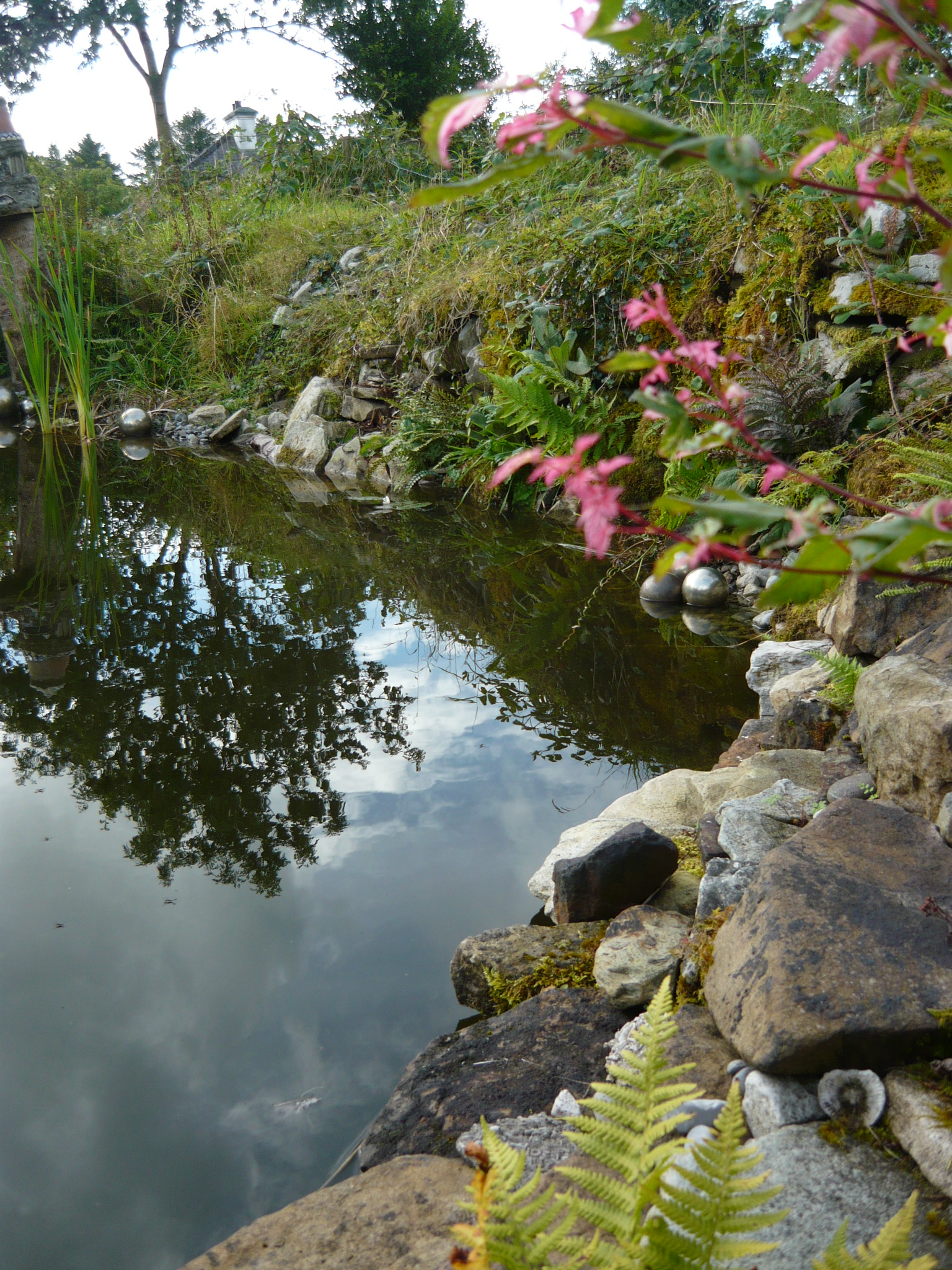
As every gardener knows, to successfully grow vegetables and flowers or just about anything, you need to avoid too many slugs, snails, greenfly and red spider mites, to name but a few. We do not wish to use any chemicals in our garden so the natural way to deal with these so called pests, is to attract as much beneficial wildlife as possible. We grow a lot of flowers and shrubs that pollinating insects like and when they are drawn to our garden because of the flowers, they also pollinate our crops. We encourage bats and birds by putting up nest boxes and feeding them all year around.
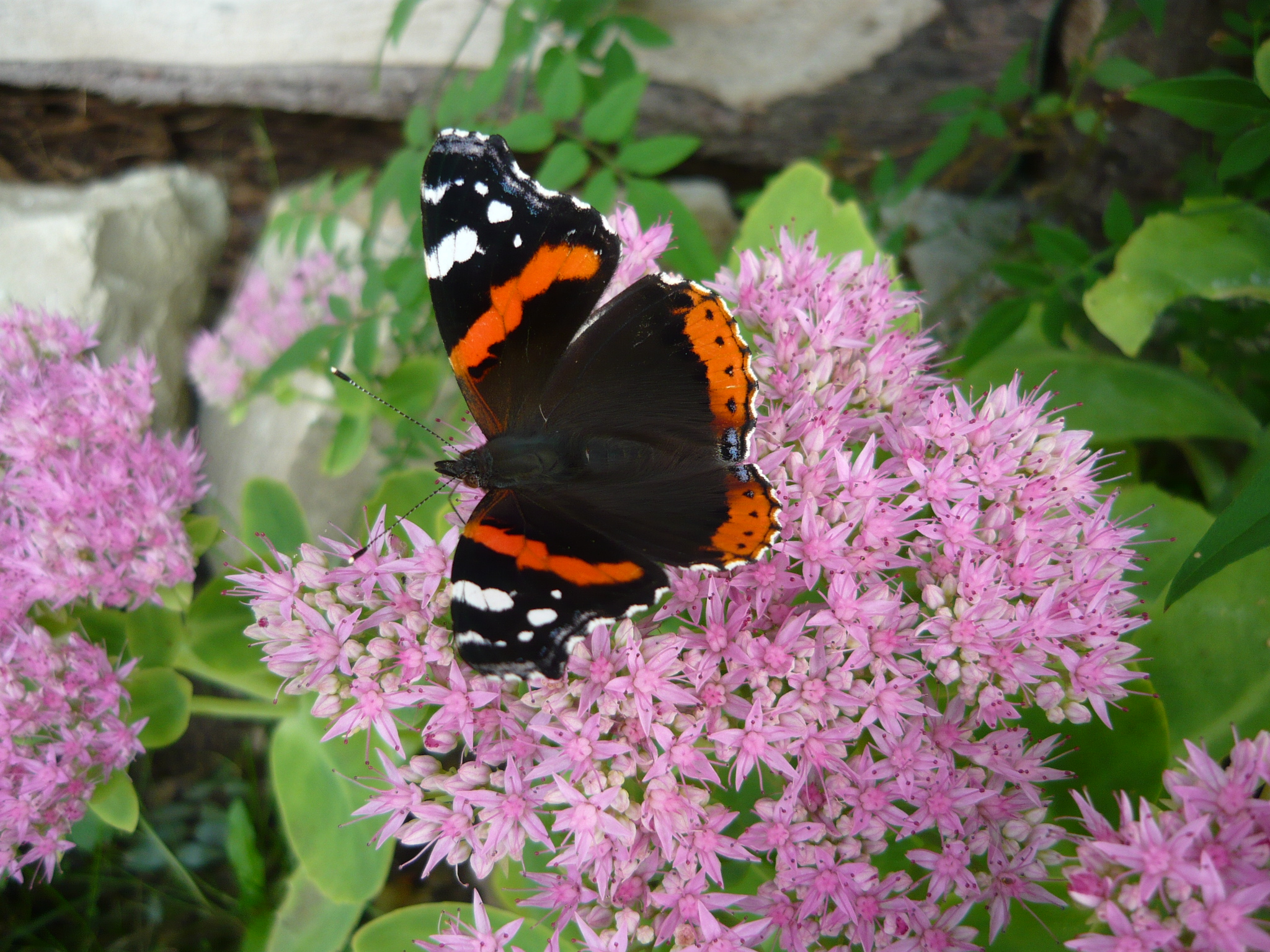

Perennial fennel is lovely for culinary purposes and our plant is so big that there is more than enough for us as well as the birds who eat the seeds all through winter. We also grow teasels, a plant much loved by gold and bull finches. This year we had a big area that had been covered by old thatch from a roof so nothing was growing there. In the spring we threw out a lot of flax seed from the health food shop along with some phacelia seeds across the space and a few months later we had a beautiful haven for pollinating insects.
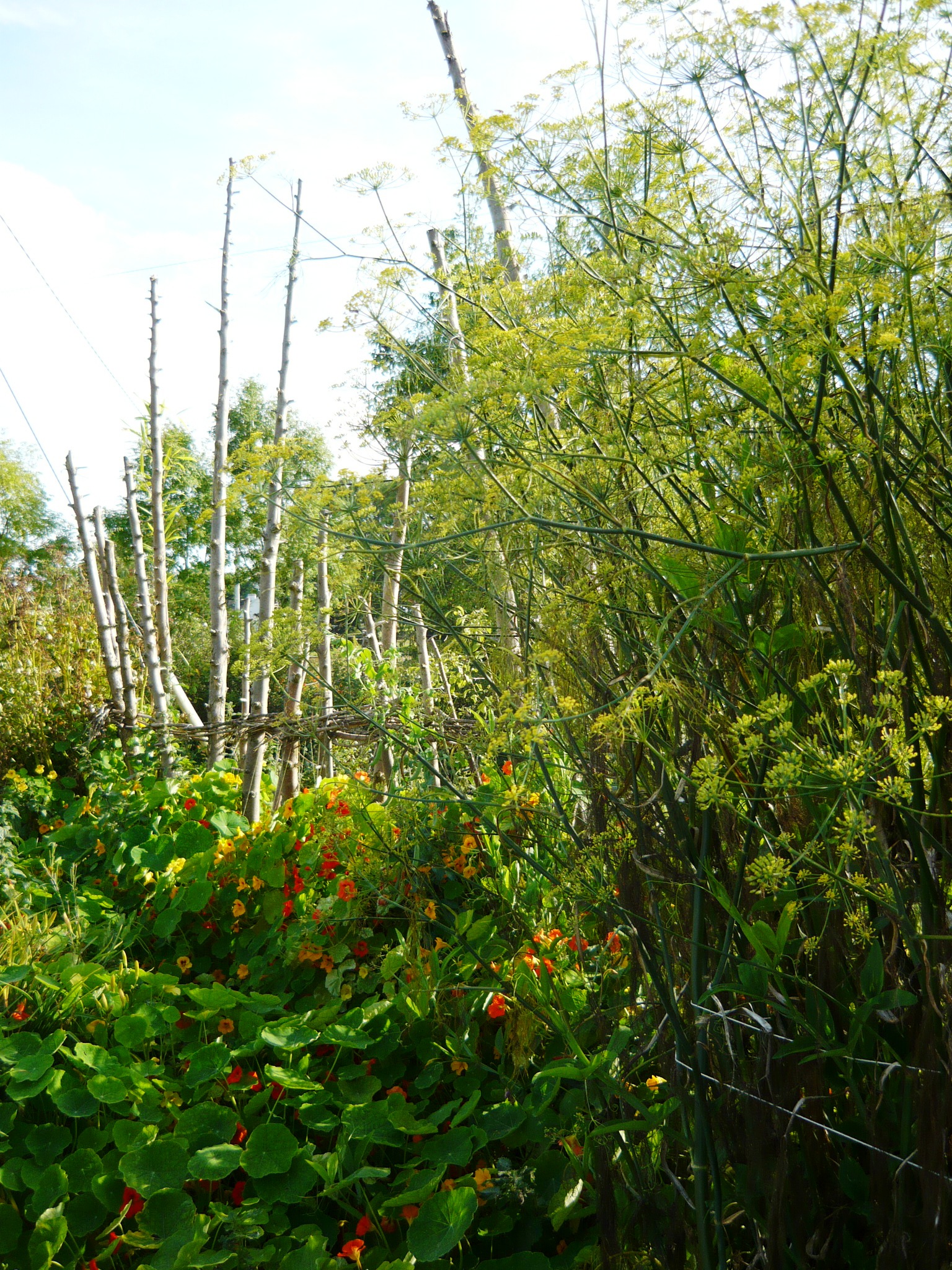

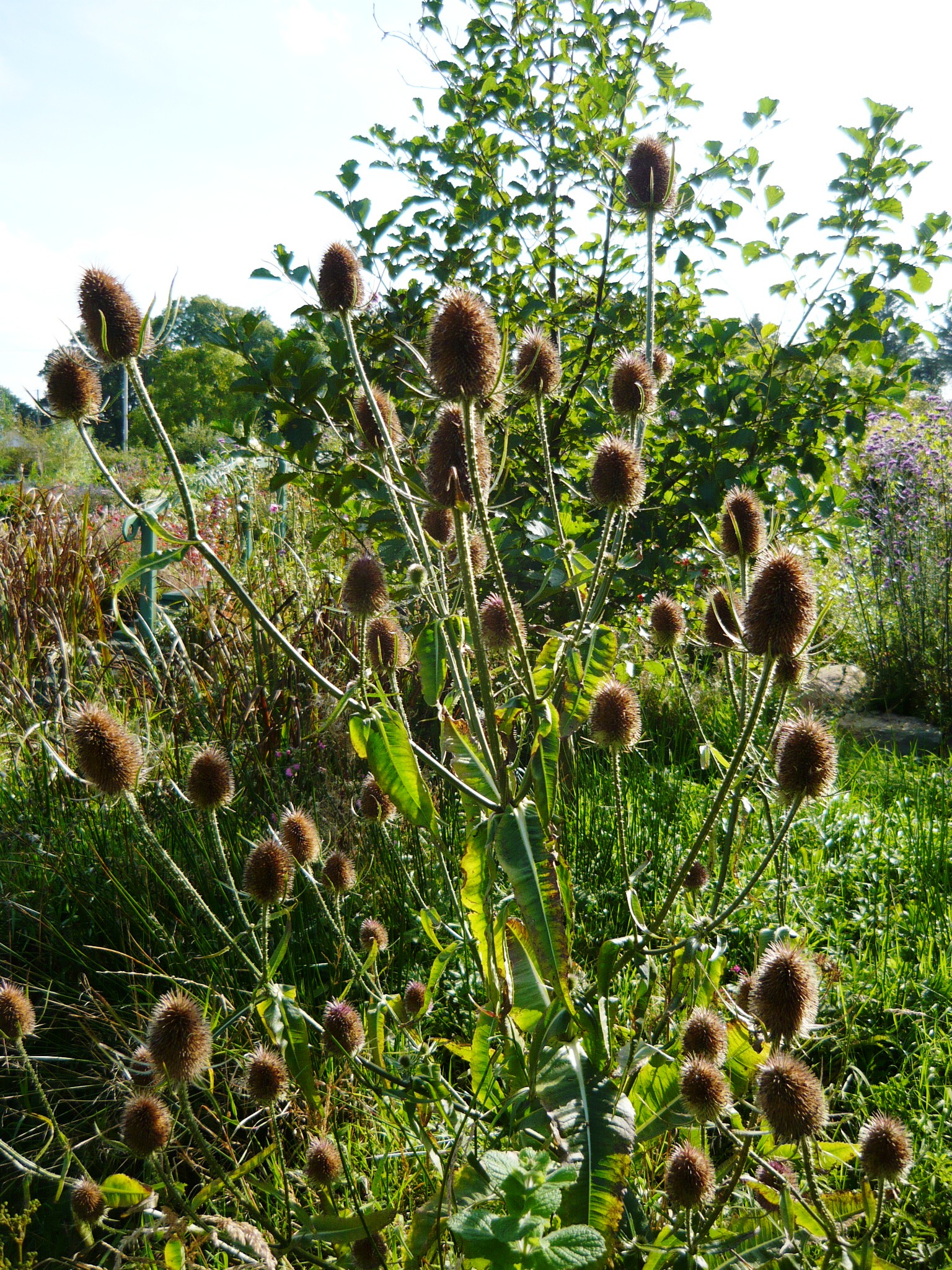
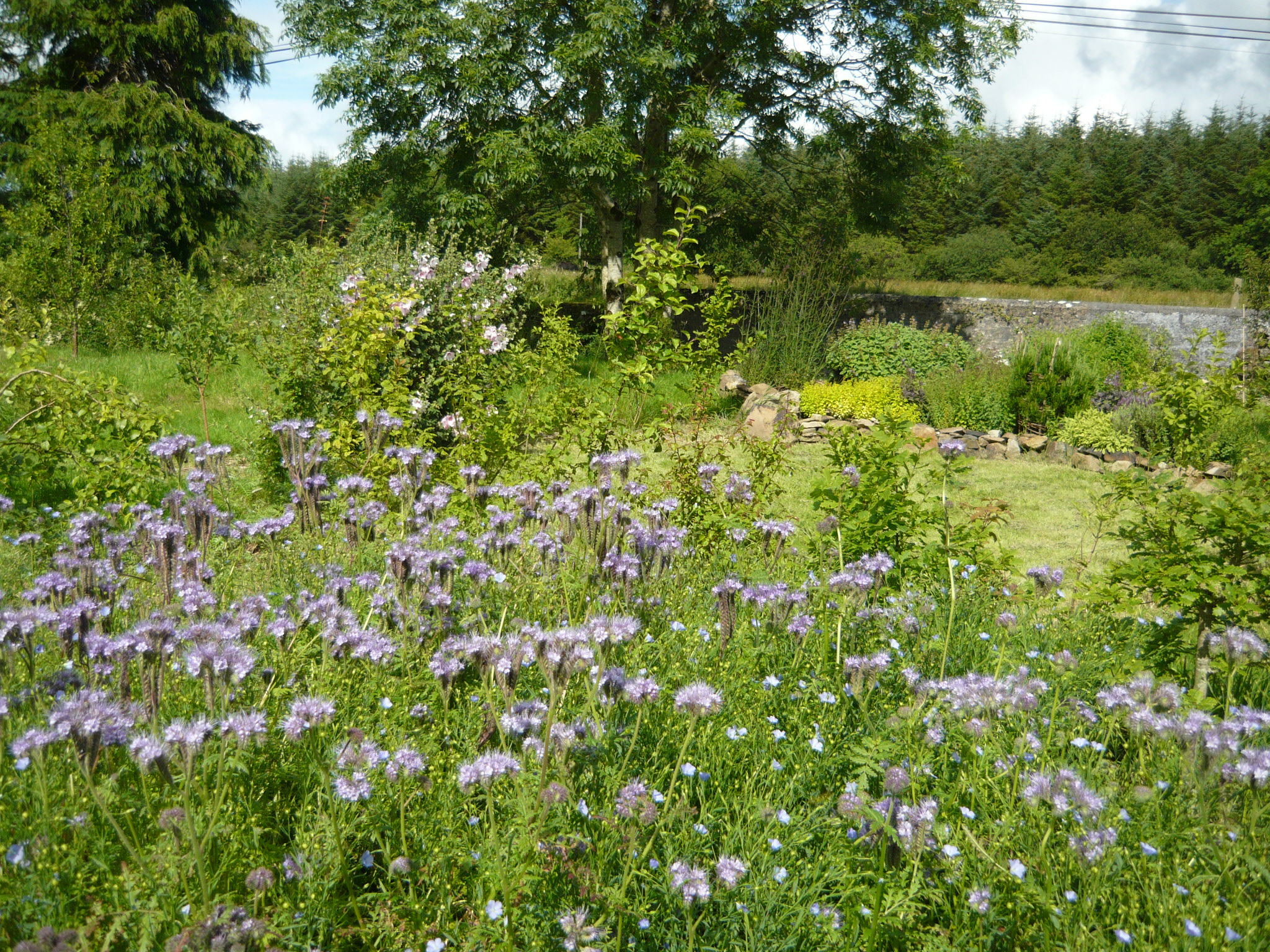
We cannot imagine our garden without wildlife, there are all the practical benefits but also so much beauty to admire and enjoy. We love looking at newts and beetles swimming in the pond and birds nesting and eating in the garden. Not to mention the very special time our bats scooped over the pond in total silent one summers night and the only proof they were drinking, were the slight ripples in the moonlit surface of the pond.


It is harvest time in our garden and almost every day we are bringing in something tasty for the dinner or to store for leaner times.
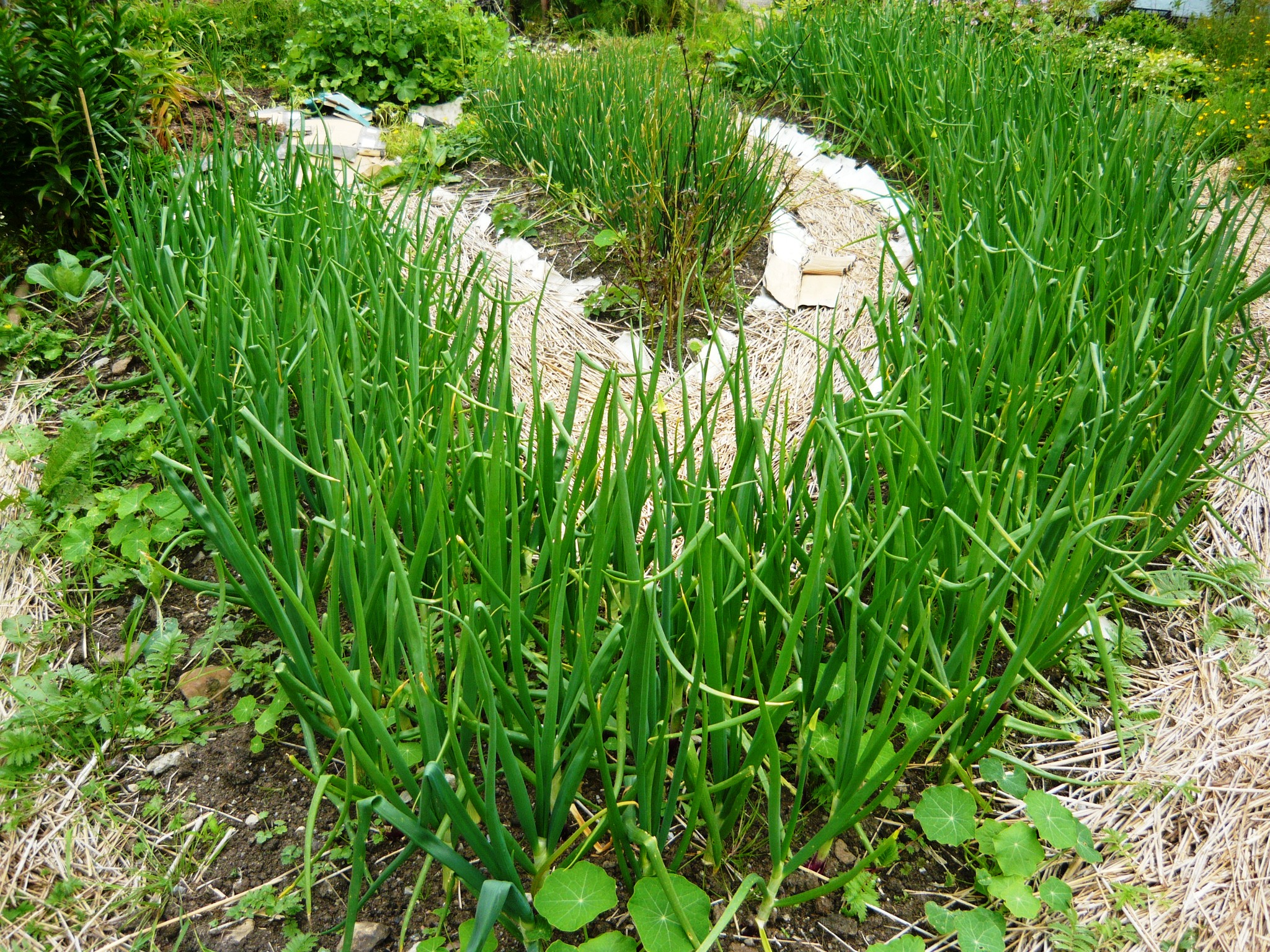
We have recently adopted a lovely young dog, and between training her and building our extension, most of the growing season has been very busy. Today it was time to harvest our onions and shallots and as you can see in the picture; our onion bed was completely covered in weeds and plants this morning. We have been growing nasturtiums for three summers now. They self-seed prolifically, taste nice, bring in pollinators to the vegetable plot and look very cheerful on a dull rainy day. Another reason to have them in the vegetable garden is that they act as weed suppressants and if they get too big and start to shade out your crops, they are very easy to pull out.

We started our onion harvest by pulling out most of the nasturtiums and weeds and after that it was very easy to get the onions out. We put in small sets in spring and have been eating and giving away lots of lovely fresh onions all summer so today we were surprised to find that we still had enough onions to fill a whole wheelbarrow. The only problem is that we have had a very wet summer here in the West of Ireland and they cannot be put out in the sun to cure and dry up a bit. We are planning to tie them into bundles and hang them from the roof of our open shed where the sun might shine on them once in a while, but the rain can’t get to them. If it works out we are hoping to be self sufficient in onions up until midwinter at least.

The weather has been very wet but it seems to have benefitted the members of the onion family. We bought a bag with about 15 shallots in spring and today we harvested hundreds. Each set had grown into a big cluster of plump healthy looking shallots.


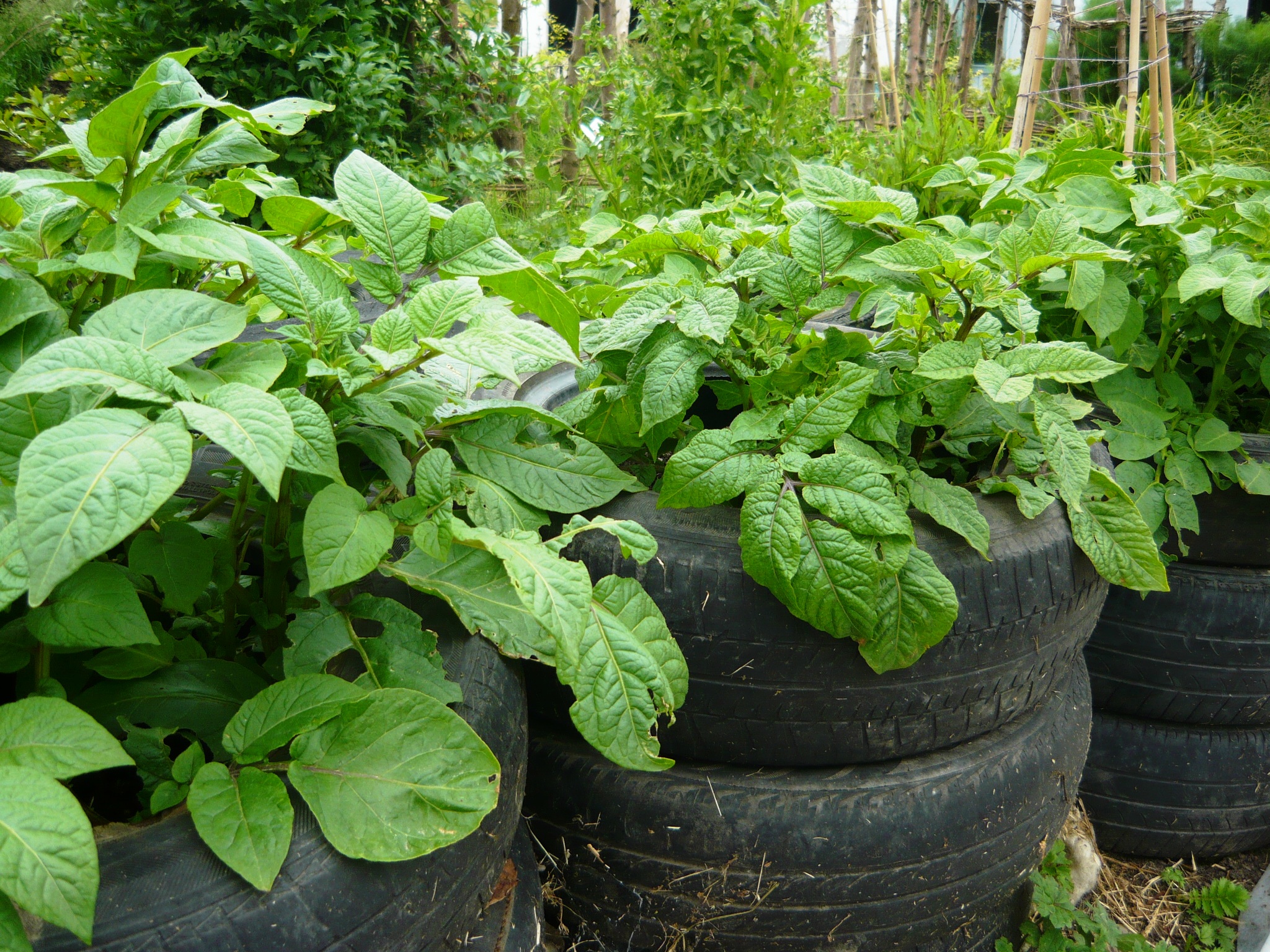
Another crop we were looking forward to check on were the potatoes we planted on St. Patrick’s Day. The tyre stacks had grown quite high and we pulled apart one stack of the long fingerling ratte variety and two of the blue ones. The ratte potato is a French second early variety and the tubers had grown all through the stack but as it has been a very cold summer the harvest was not as big as we had hoped, but we are looking forward to tasting the ones we got. They are supposed to have a chestnut flavour. Our blue potatoes were growing close to the ground and had no tubers near the top of the stacks, but the ones we harvested were very big and healthy looking. We have not had any problems with blight. We are not sure of the variety but are looking forward to baking, frying and mashing them. We still have six more stacks to harvest in the next week or two.


Our runner-beans are called sunrise but so far there are only pretty flowers to look at and no beans. It has been too cold for them to really flourish.
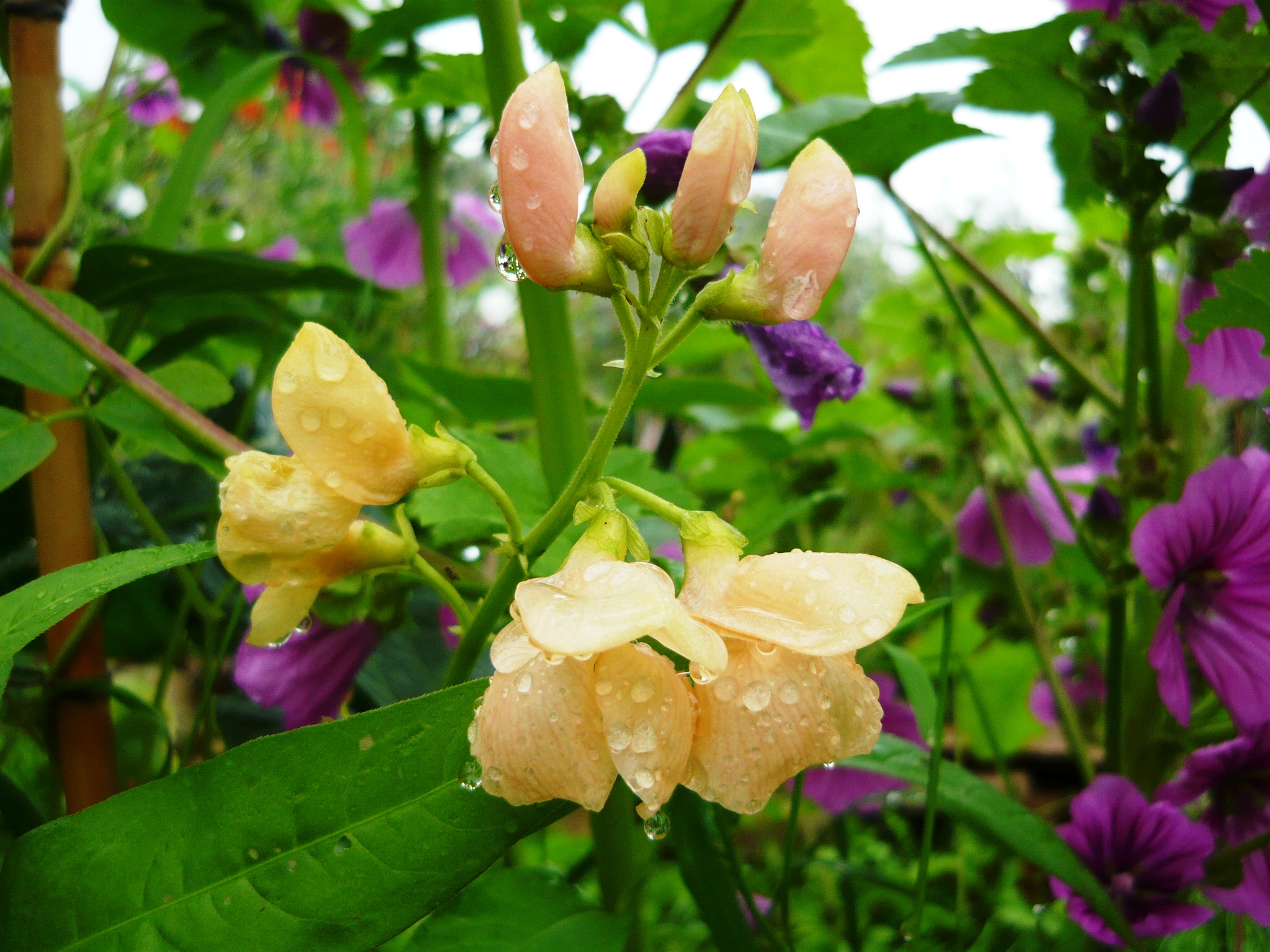
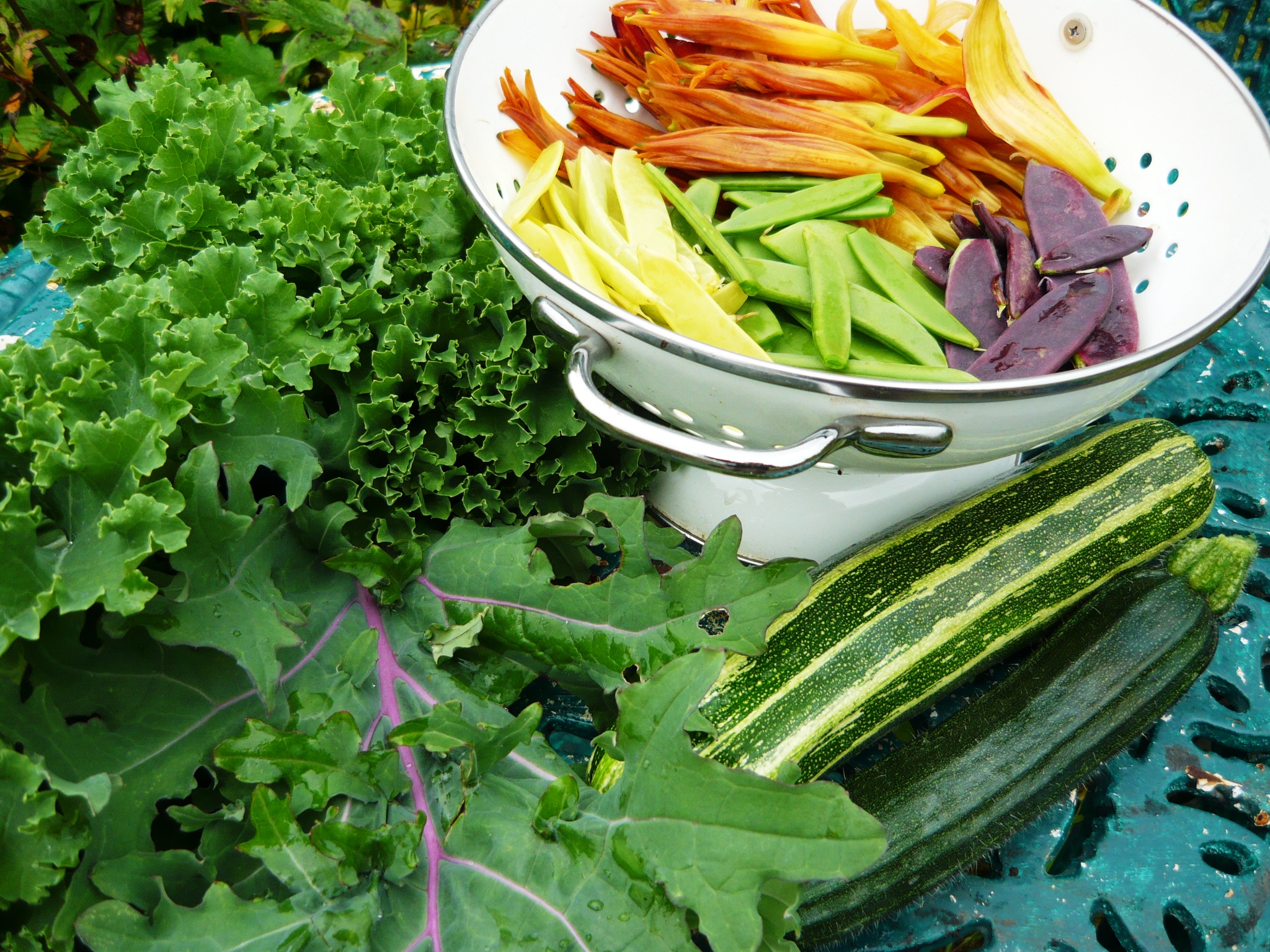
We are growing purple, green and yellow peas as well as lots of daylilies for stir-fries. The daylilies (hemerocallis) are very tasty and can be picked as buds, flowers or the day after they have flowered for stir fries. They are eaten regularly in China and yellow daylilies are sold dried under the name of golden needles for soups and stews. As far as we know, not all varieties are edible so use caution and do some research about yours.

All in all it has been a very wet and dull summer but we are happy with our harvest, despite mostly ignoring the kitchen garden and letting the weeds run riot we have enjoyed many tasty meals this summer and we are looking forward to the continued harvest.

We have been waiting for about a week for the rain to let up so that we could harvest some of our lovely herbs, but today we decided to wait no longer. Most of them are at their peak now, lush and green and just starting to flower.

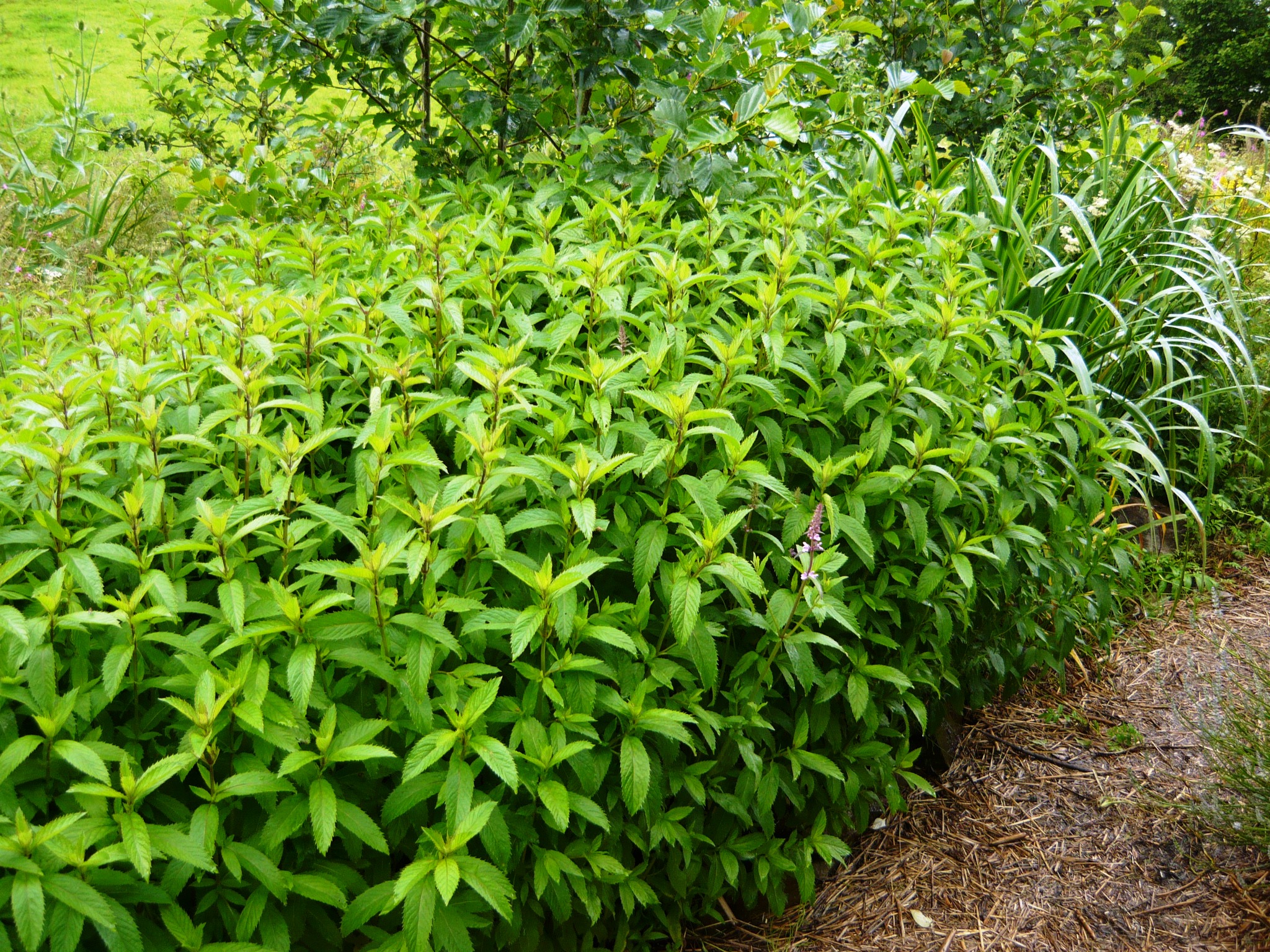
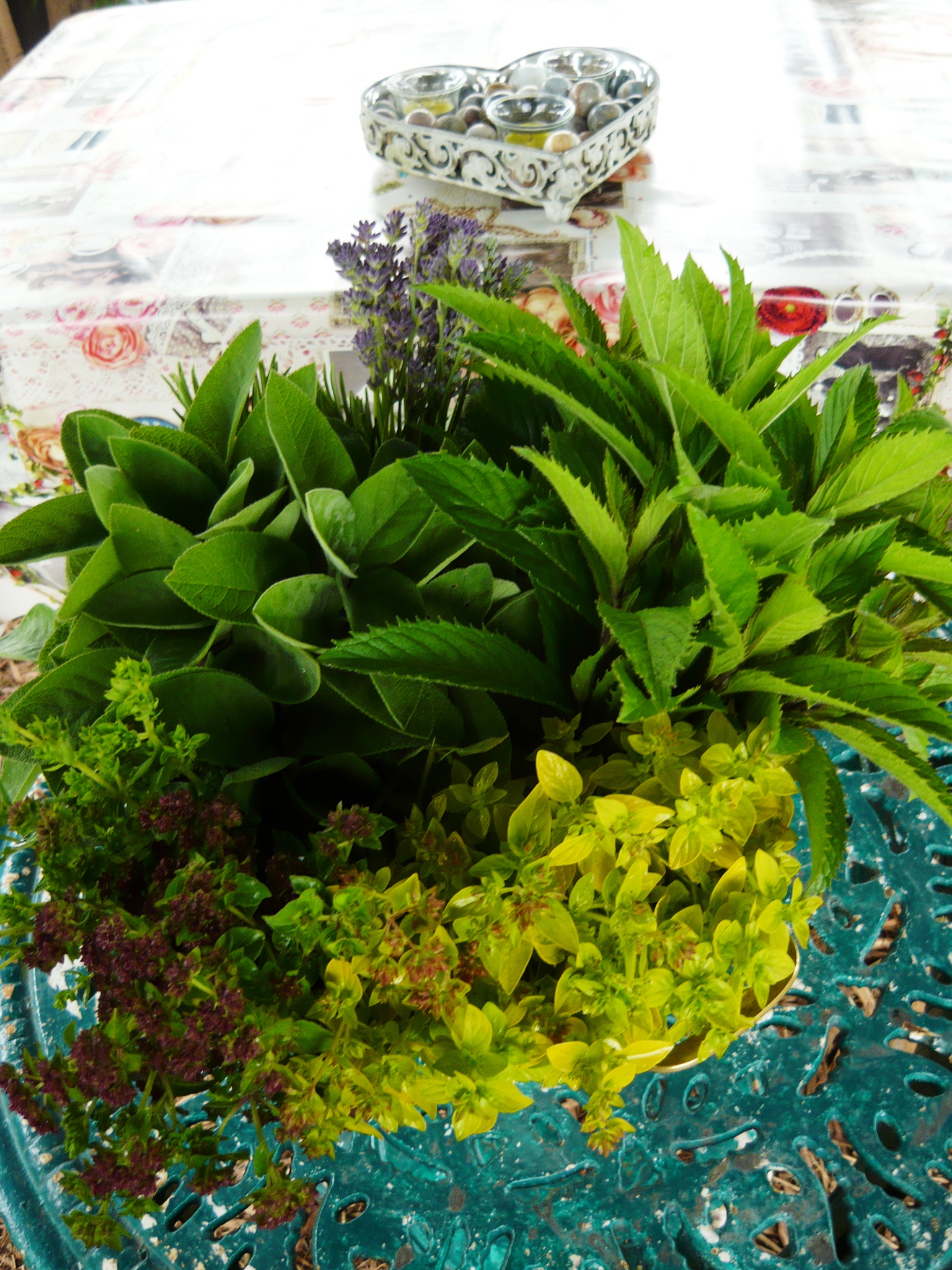
We wanted to keep some of this for the whole year and capture the smell and taste of many of the different herbs we grow in our garden. Vinegar is very useful for all those winter salads and capturing the herbs by making herb flavoured vinegar is something we have wanted to try for a few years, so we were happy to find some tips about doing this in Beryl Wood’s excellent book, Let’s preserve it.
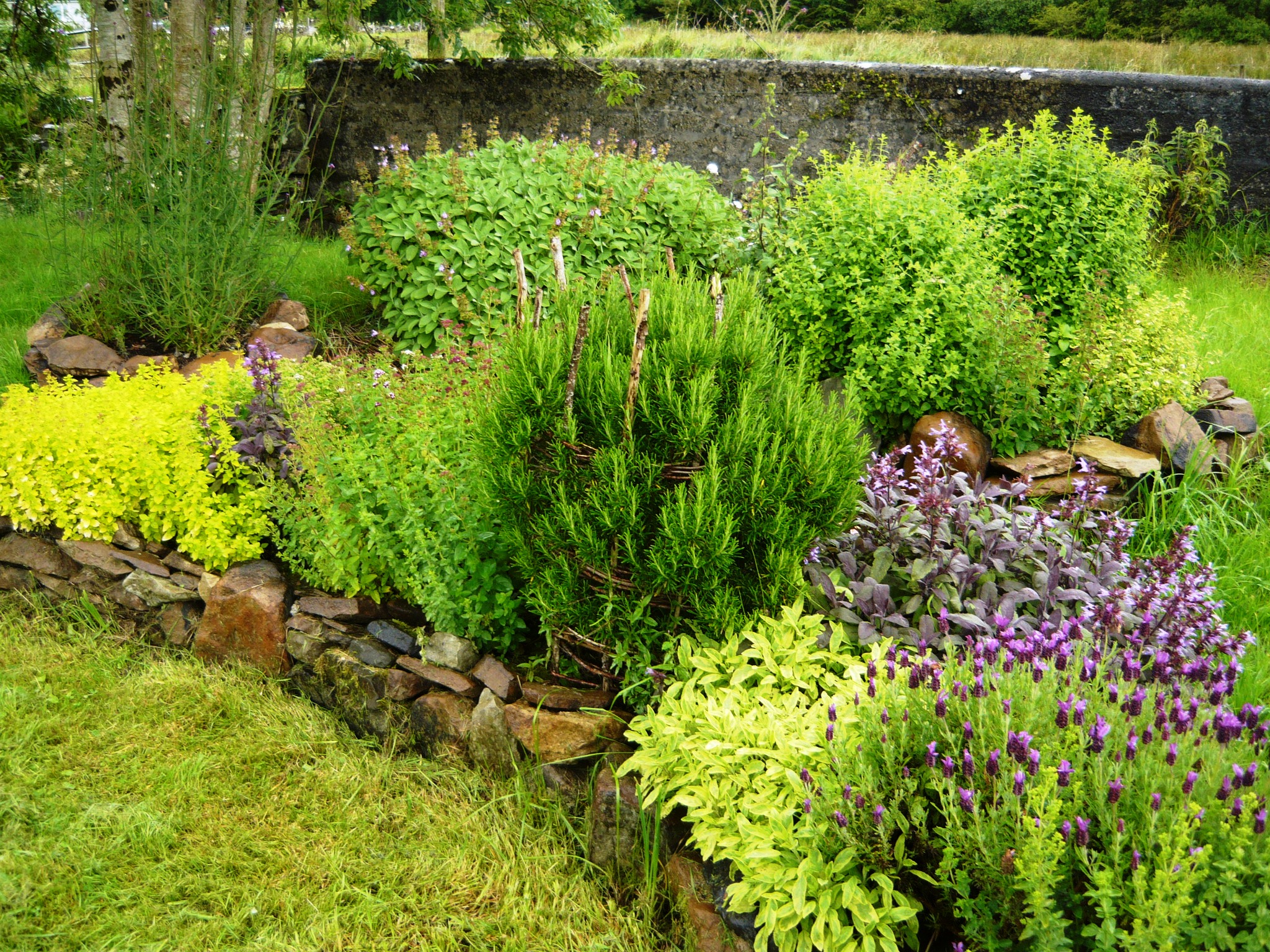
We started by harvesting some sage, lemon thyme, lemon balm, fennel, golden oregano and mint. We removed the tough stalks and used a rolling pin to crush them up, filling our jars half way up. We poured on our distilled vinegar, you could also use malt vinegar if you prefer or any other fancier variety. We bought some cheap vinegar as the herbs will give it a lovely flavour anyway and because we wanted to make a lot of it. We will shake the jars regularly over the next six weeks, at least once a week, and we will push the herbs down under the surface to preserve them properly. We are then planning to strain, bottle and enjoy them for the rest of the year.


We also experimented with some mixed berry vinegar, hoping to end up with something resembling fancy raspberry vinegar. Time will tell.

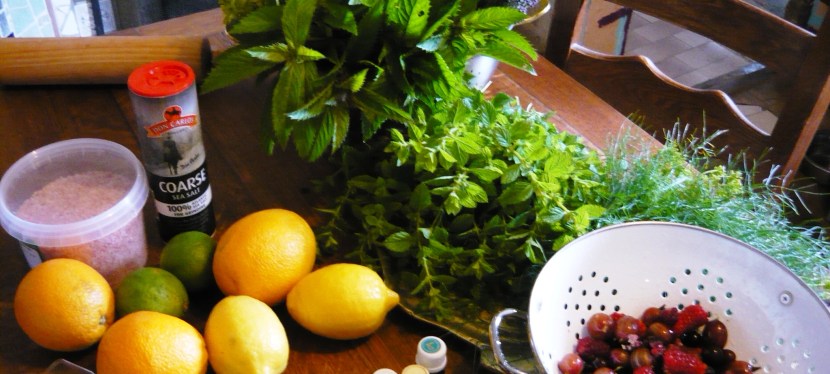
We wanted to try another thing we found in the UK Country Homes & Interiors magazine recently (August 2015). We try to use as little chemicals as possible in our home so the tips for making homemade citrus air-fresheners seemed very appealing. We started by cutting in half and juicing oranges, lemons and limes and removed all the white stuff, ending up with just the outer peels.
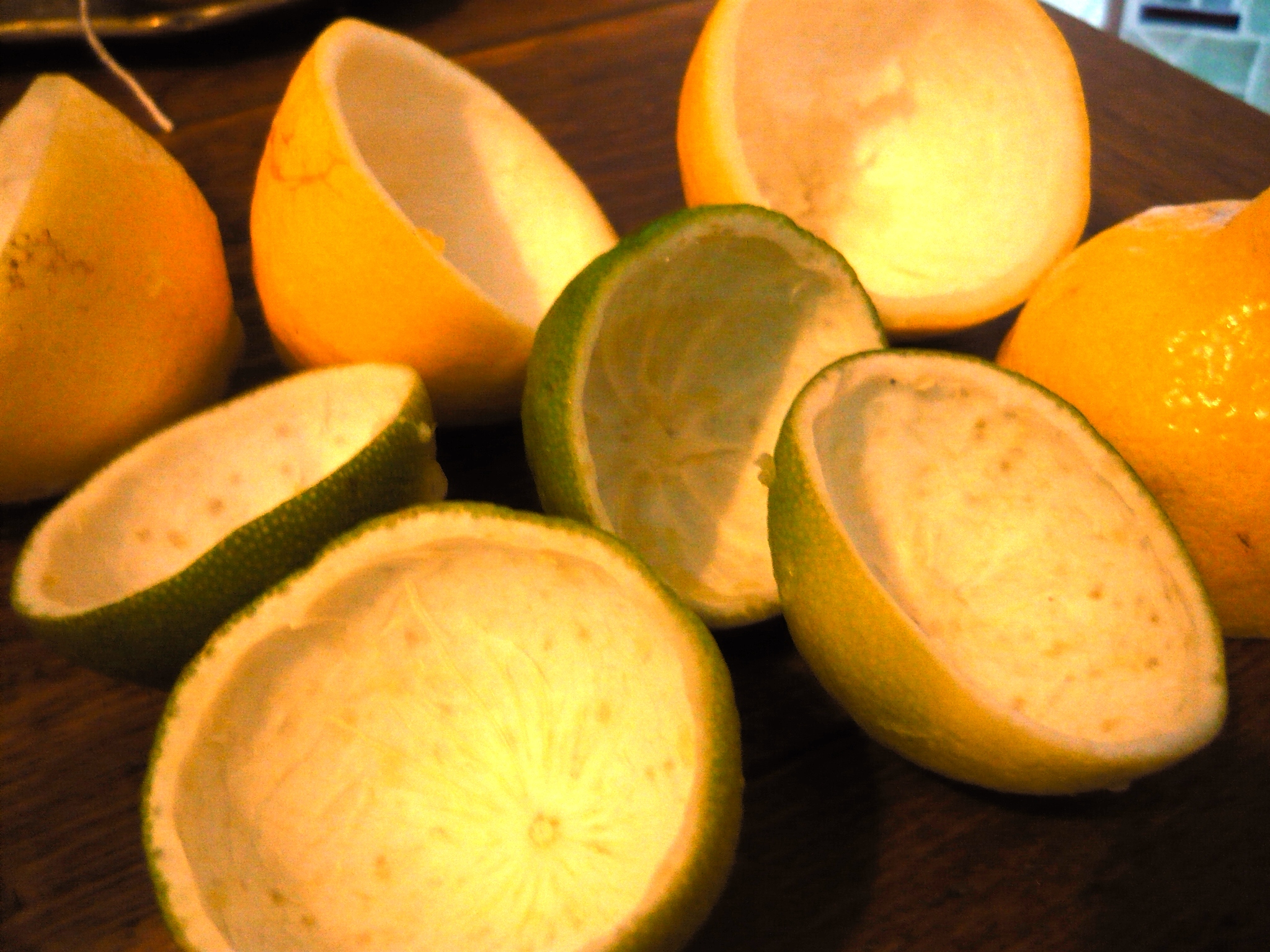
We mixed some ordinary table salt with some lovely sea salt and some Himalayan pink salt and put it in two different bowls. To the one for oranges we added lavender flowers from the garden, ylang-ylang, lavender and mandarin essential oils and to the one for lemons and limes we added chopped rosemary and clove, peppermint and rosemary essential oils. You could also add other herbs and your favourite spices to the mix. We then stirred for a good while to mix the oils and herbs well with the salt and packed our peels full of the mixture. To finish off we added fabric circles and string to keep the air-fresheners all together. This was quite fiddly to do but putting an elastic band around the fabric as you tie the string on helps a lot. We now have a sweet-smelling house with every room scented for very little money.



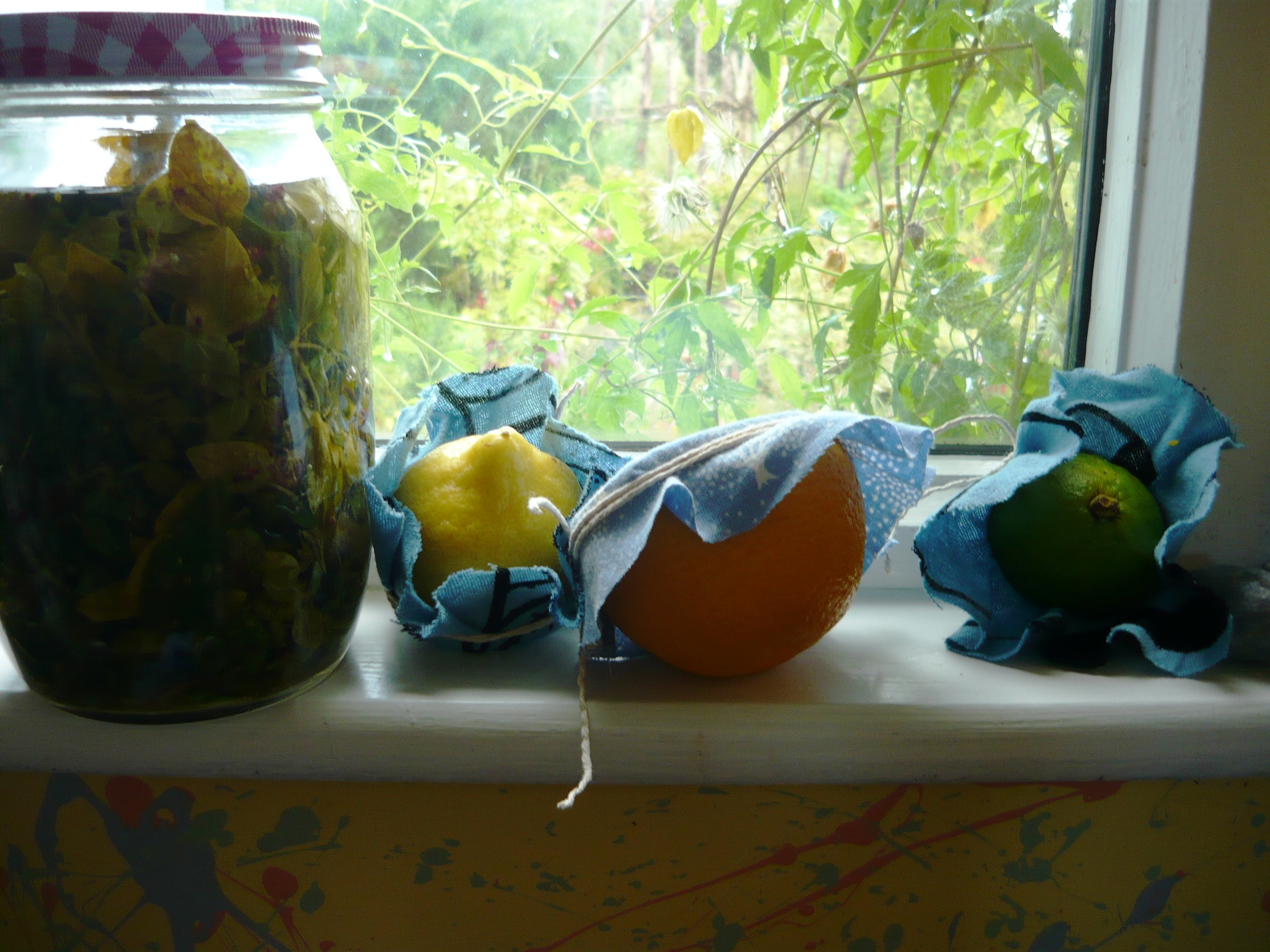
It is satisfying and comforting to think that we will be able to enjoy our herbs for a long time now, even after they have wilted and died back in the autumn.


It is the lightest time of year and things are moving on fast in the vegetable and fruit garden. We use a system with no-dig, raised beds for growing annual vegetables and our beds are now in their third year. We add mulch to them several times a year, and top them up with well rotted cow manure once a year. The earth worms then do the work for us and mix the newly added materials into the beds. We have made them 120 cm wide as it is possible to weed and harvest at that width without stepping onto the soil and compacting it. Our paths are about 30 cm wide but we would make them a bit wider if we did the beds over again as they get quite overgrown with floppy green vegetable leaves. Everything grows very well in our beds including weeds but we try to stay on top of them. Mulching helps a lot and we grow all our little plants in pots until they are big enough to out compete the weeds and stand a chance against the slugs. Onion sets are one of the few things we put straight into the beds.


We planted our potatoes on Saint Patrick’s Day in the middle of March and they have now been earthed up five times and we are up to our forth layer of tyres. They are growing strongly and we can’t wait to dismantle the stacks to see how many potatoes we can find.

For growing peas and sunflowers we use some cut off big plastic bottles to protect the newly planted seedlings and it is working very well. There is less slug damage than other years and the bottles also protected them from the worst of the weather when they are small. We are planning to just leave them there and it also makes watering easy as you can just pour some water into each one.

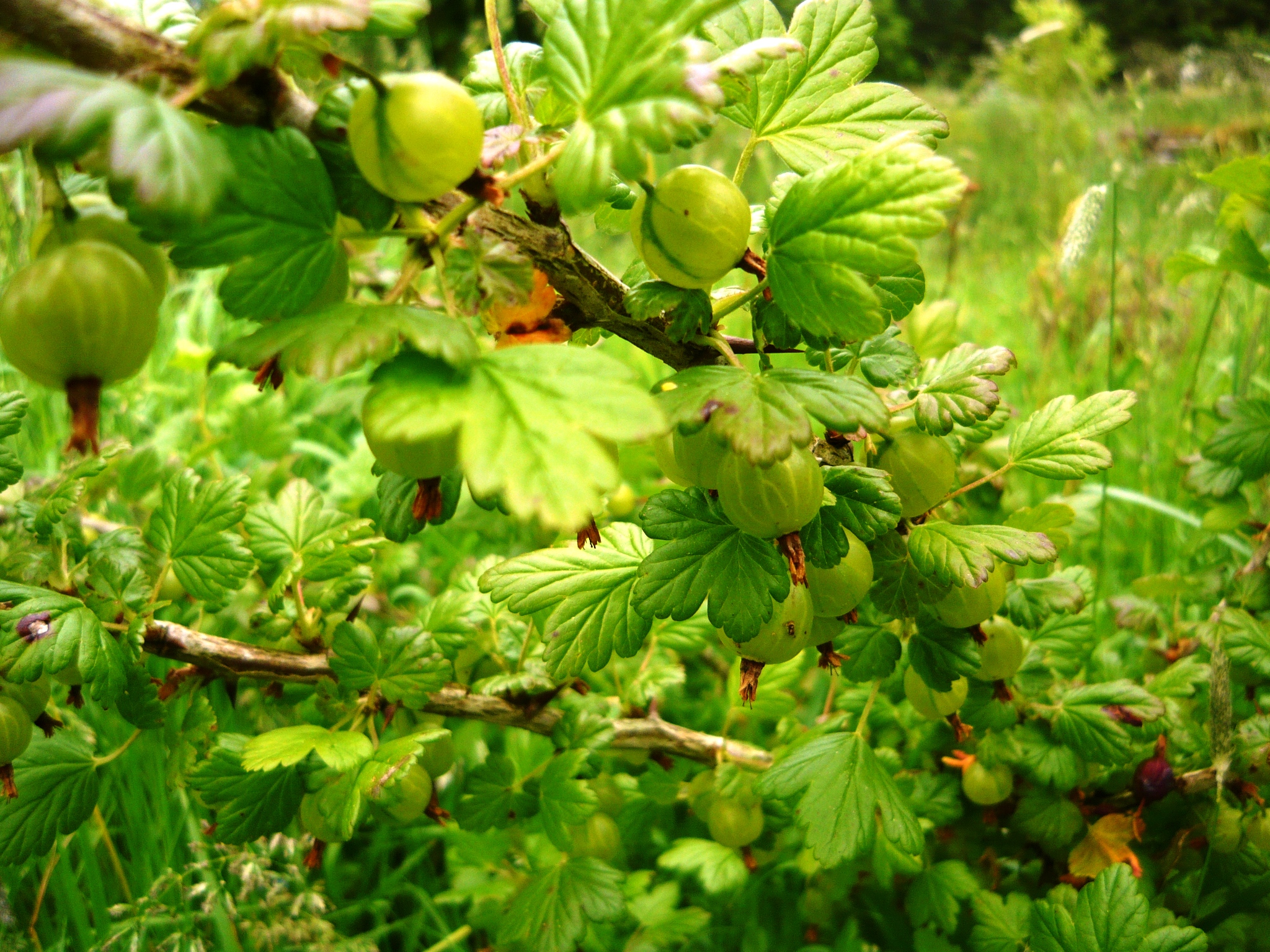
Our berry bushes have now been in the ground about two years and we have an amazing amount of berries this year. We have blueberries, raspberries, gooseberries and currants, as well as a lot of hybrids like jostaberries and tayberries.


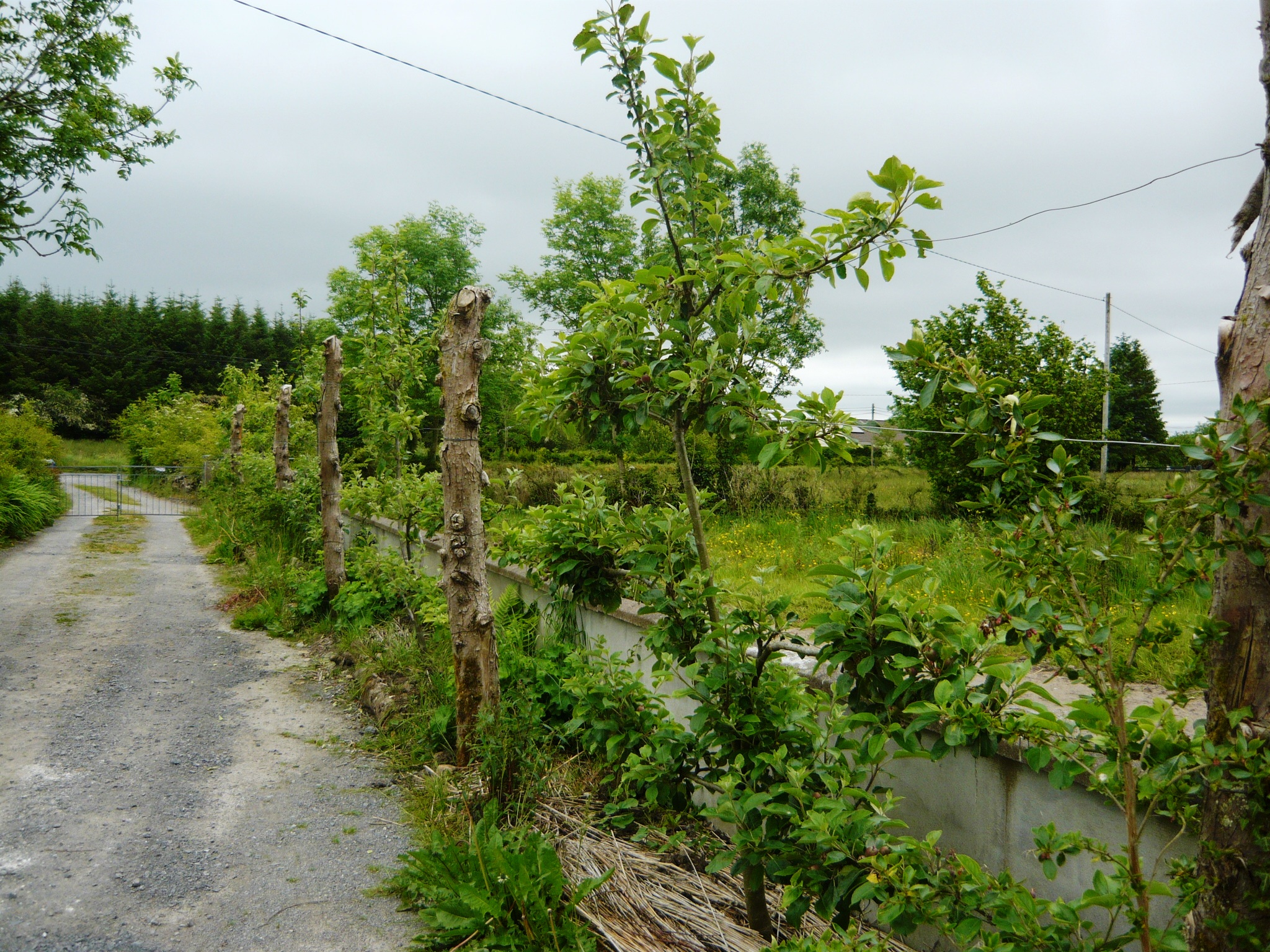
Along our drive a long row of Laylandii cypress was planted that blocked out all the light from the south and made it impossible to drive a car down it. We removed them and kept every fourth trunk in place and stretched wires in between them. We now have seven different varieties of apples planted there. We put in small trees and bent all the branches out to the sides to create espaliers and now, after only two years they are really filling in and starting to fruit. They look lovely but are also less prone to disease and take up a lot less space than it they were planted straight in the garden.


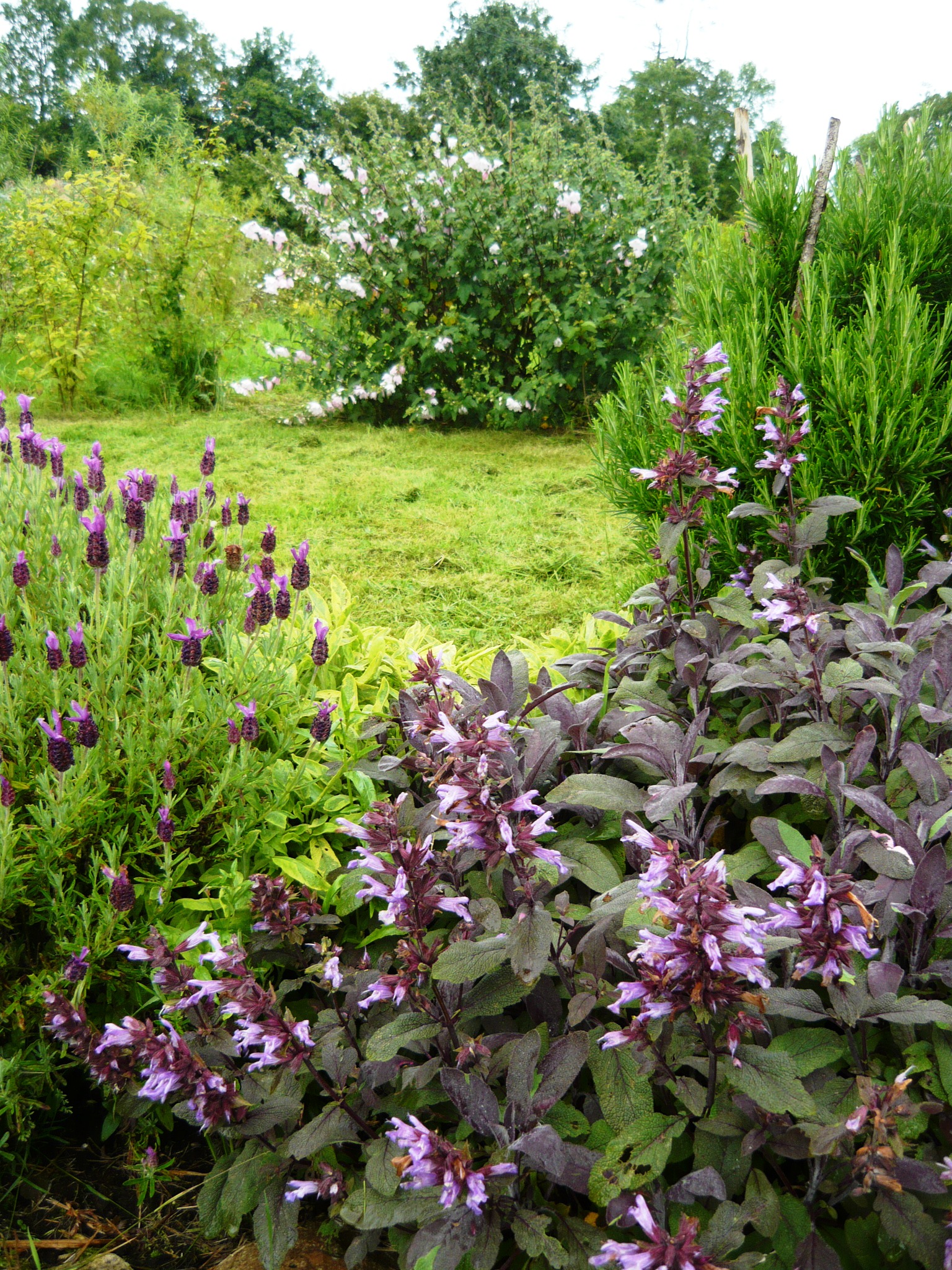
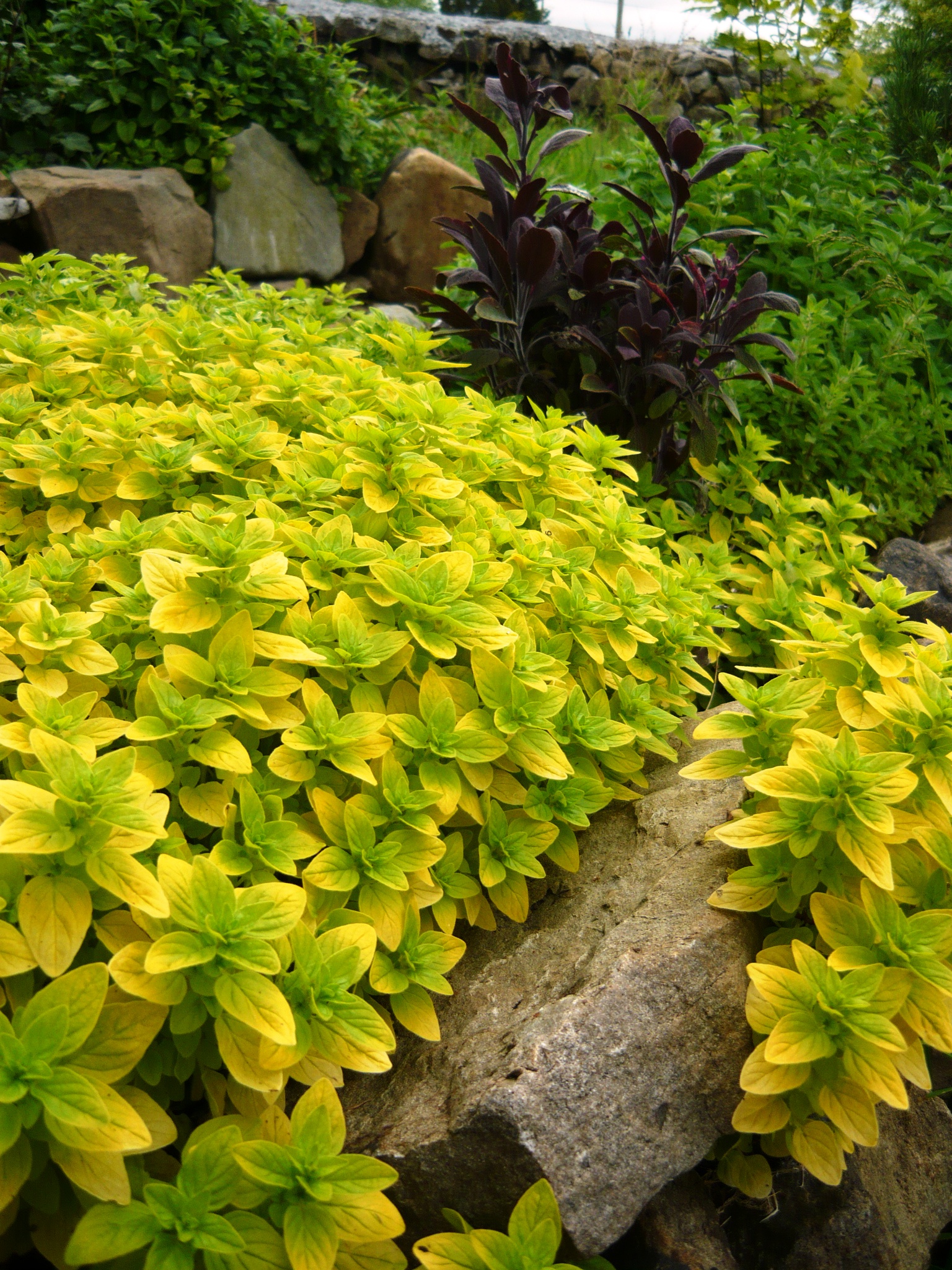
We are harvesting and using our herbs everyday for food and teas. It is a pleasure to spend time in the herb garden listening to the bees buzzing away and looking at the butterflies.


We also grow perennial vegetables and are particularly happy with the sea kale that is flowering at the moment and has a great honey scent. The good king Henry is very tasty and the yellow flowers from the Turkish rockets are going into salads along with purple chive flowers. Our perennial Swedish ‘leeks’ are doing really well and we have harvested a lot of them in spring when the annual onions weren’t ready. They are just about to flower now and later the newly formed bulbils will be heavy enough to make the stems lean over and re root. Our cardoons and artichokes are making good use of the willow fence we built in winter.


All in all it is a beautiful and bountiful time in our kitchen garden.
 thegreenerdream