The Importance of Being Organized.

 staying organized lables

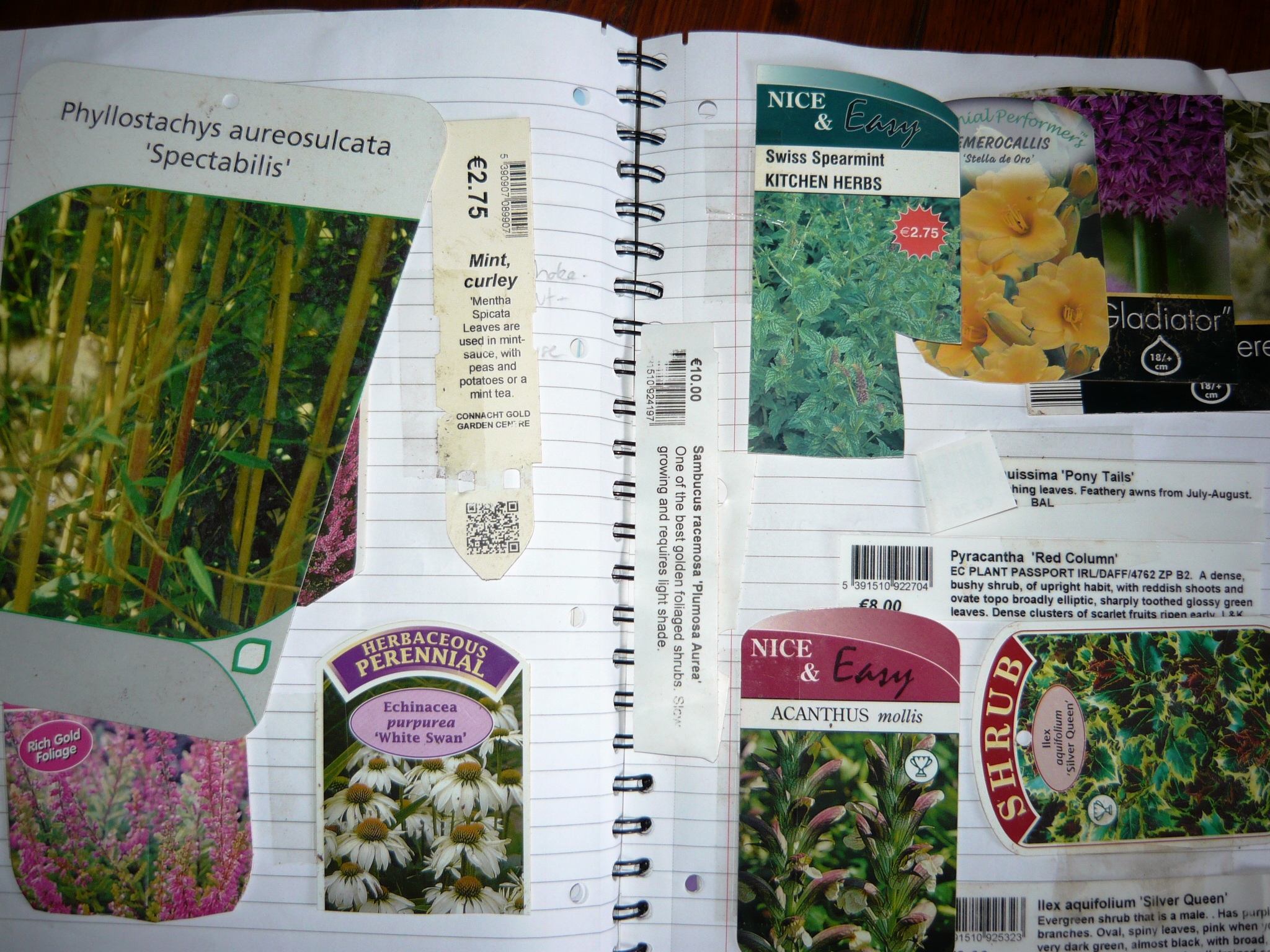
We are in our third year of creating our garden and one of our most important tools is our garden planning book with notes and labels. When you start planning a garden it is great to make a lot of plans on paper as it saves time, effort and money. It is great to look through books and magazines for ideas and also think about what you want to use your garden for. Do you have to consider young kids, disabilities or pets? Do you plan to grow your own food or have a purely decorative space? Do you want a formal layout or a wild billowing mass of flowers and shrubs?
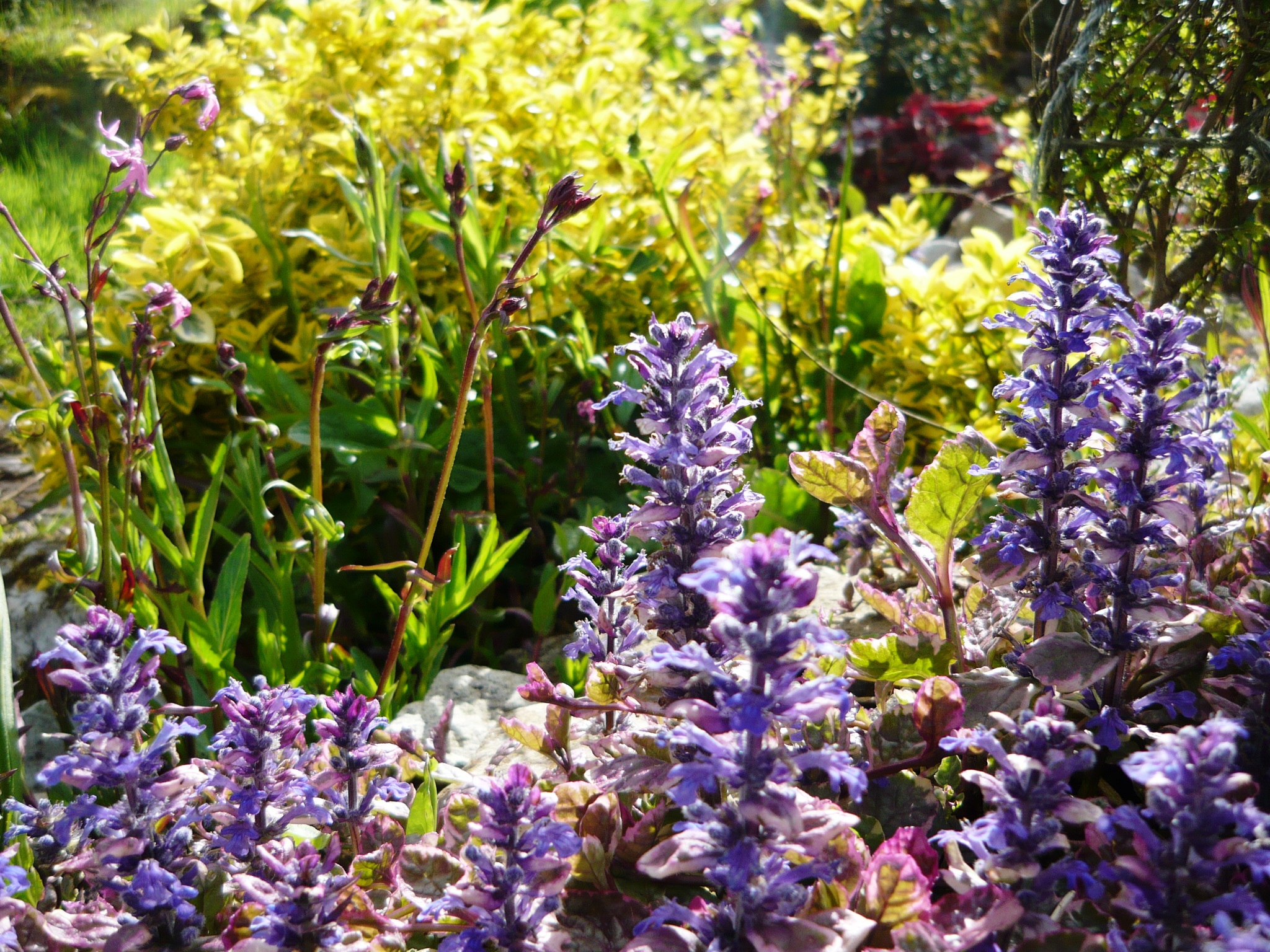
bugle

Our plans were for a wildlife friendly garden with lots of food plants and space for our teenagers and friends to hang out. The book has been helpful in keeping a record of our journey. We have for instance  made notes in our diary part of the book about when we started digging the pond, what plants we put around it, What is doing well and what has had to be moved and so forth. It is a lot of fun to look back through the notes and see how much you have actually accomplished. Sometimes when you are creating a garden from scratch and also are renovating your whole house it is easy to lose track of the progress and only see a lot of half finished projects. This is when the book comes in very handy for a bit of reassurance.

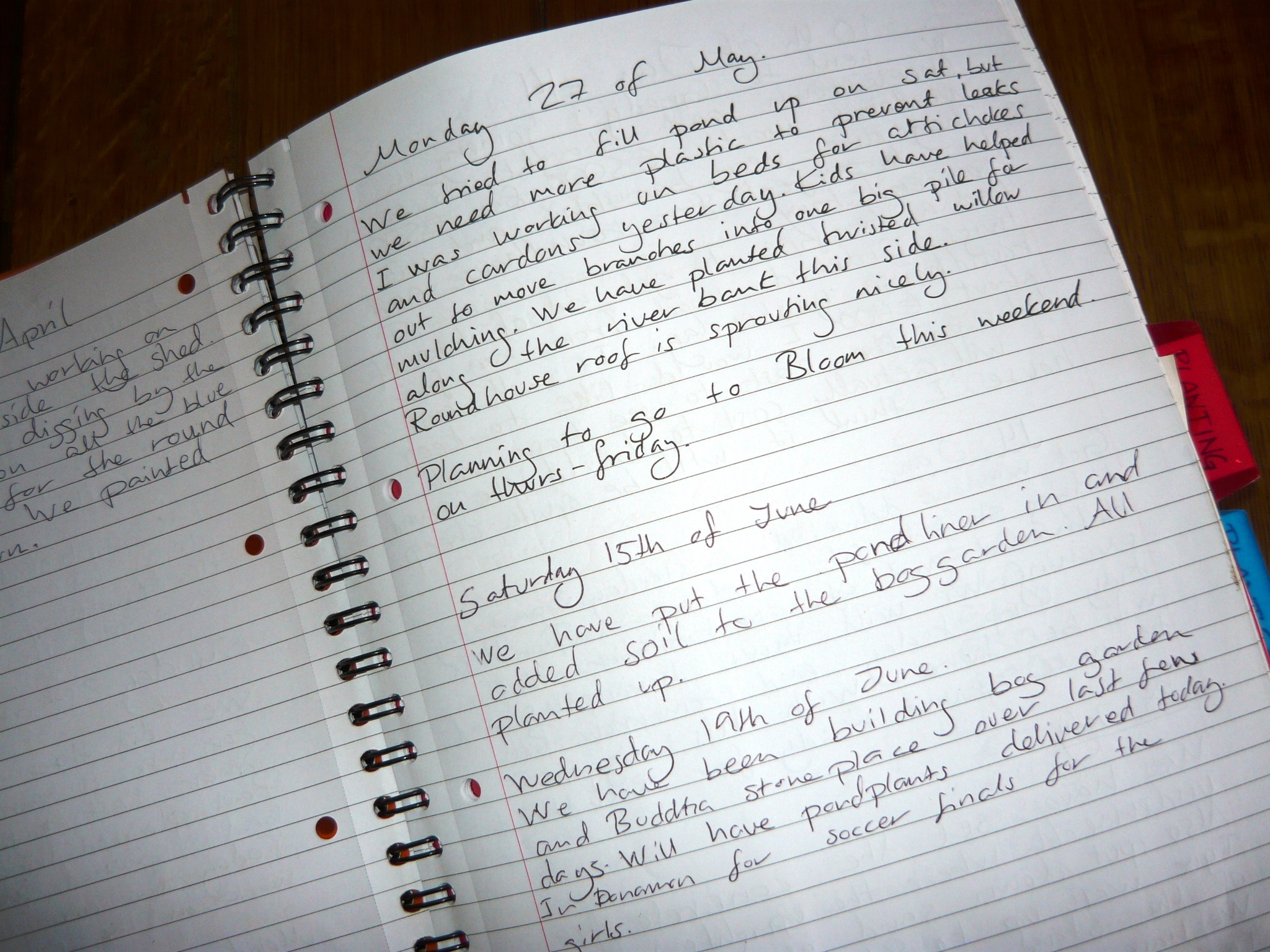
staying organized diary

staying organized diary 2

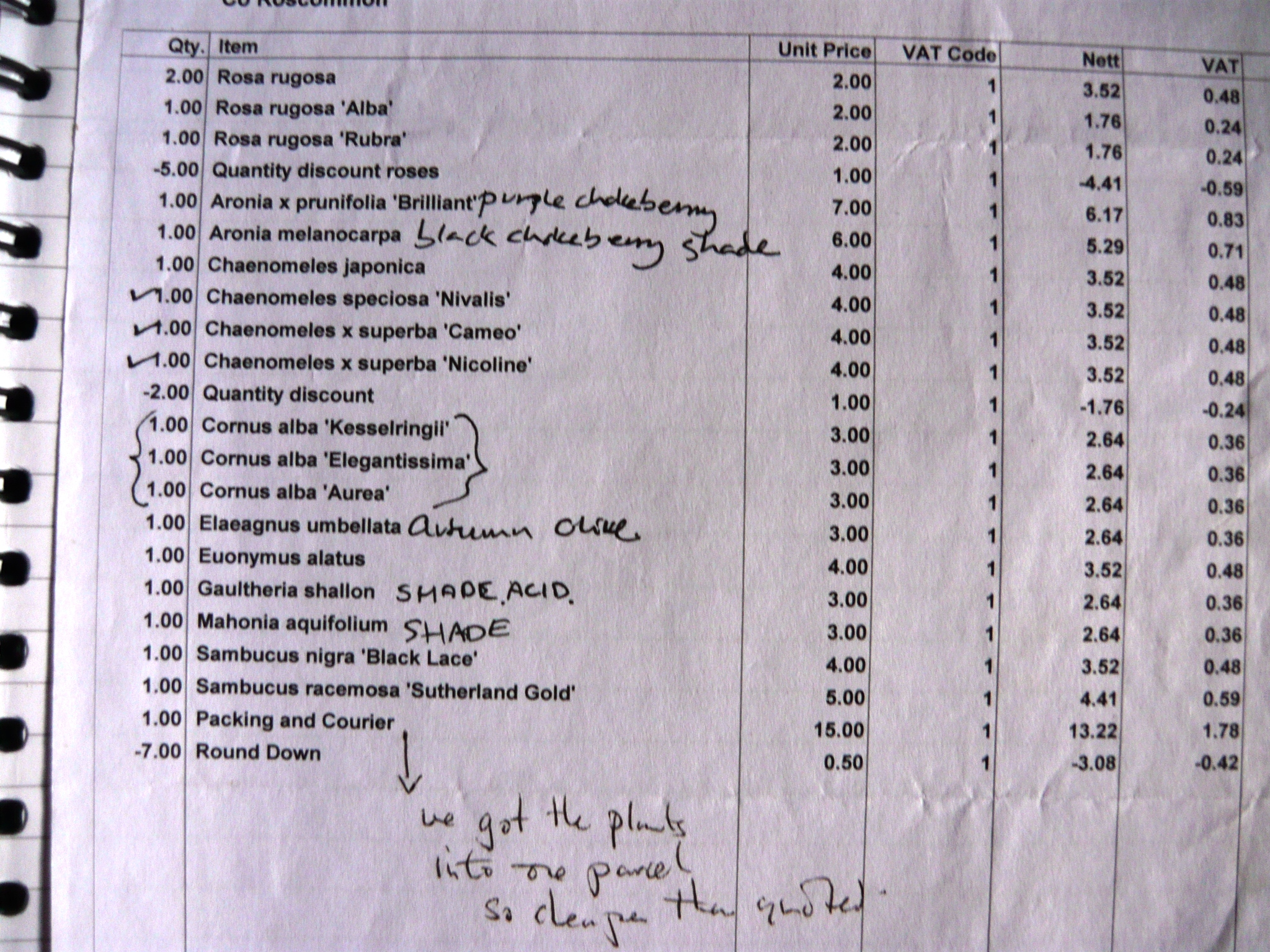
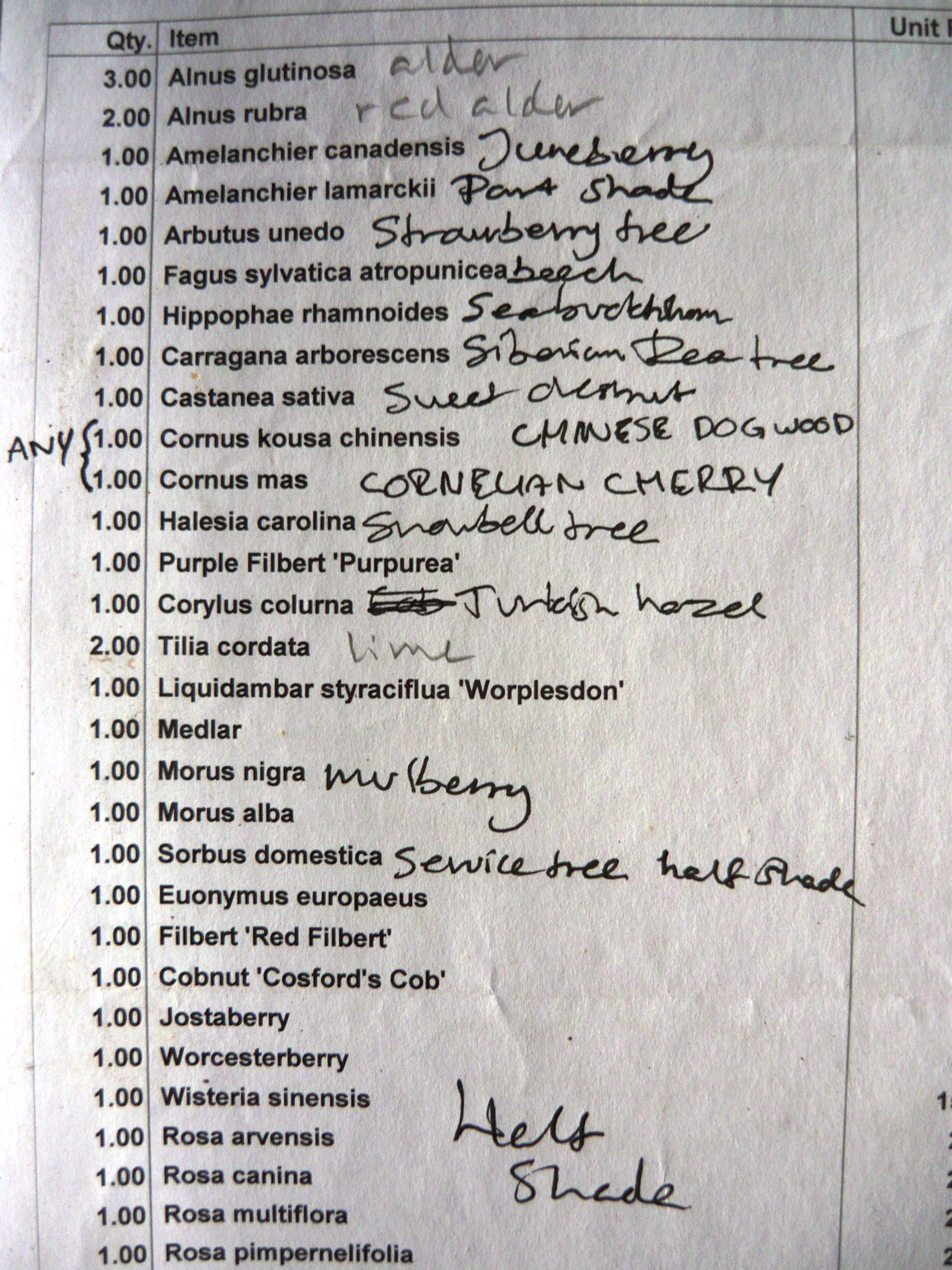
One section contains all our orders and it is lovely to see this two page order from the spring of 2013. Future Forests in Cork have written at the bottom of it, under packing and courier;

We got the plants into one parcel so cheaper than quoted.
 tree order

staying organized tree list

This was our main tree order and a lot of the trees are now taller than any of us and wider too. It is doubtful if any of them would fit into a parcel now, even on their own. The best advice we can give to anyone starting a garden is to buy your trees small. They soon catch up and grow bigger faster than the pot grown bigger expensive specimens, sometimes available at Garden centers. It is also very important to mulch around small trees. We use double layers of cardboard boxes and natural mulch like wood chippings or straw. It only needs topping up once a year. The trees can grow away without competition from smothering weeds and without drying out. This in combination with a generous helping of well rotted manure in the planting hole has set all our trees off to a good start. Our babies are growing up!
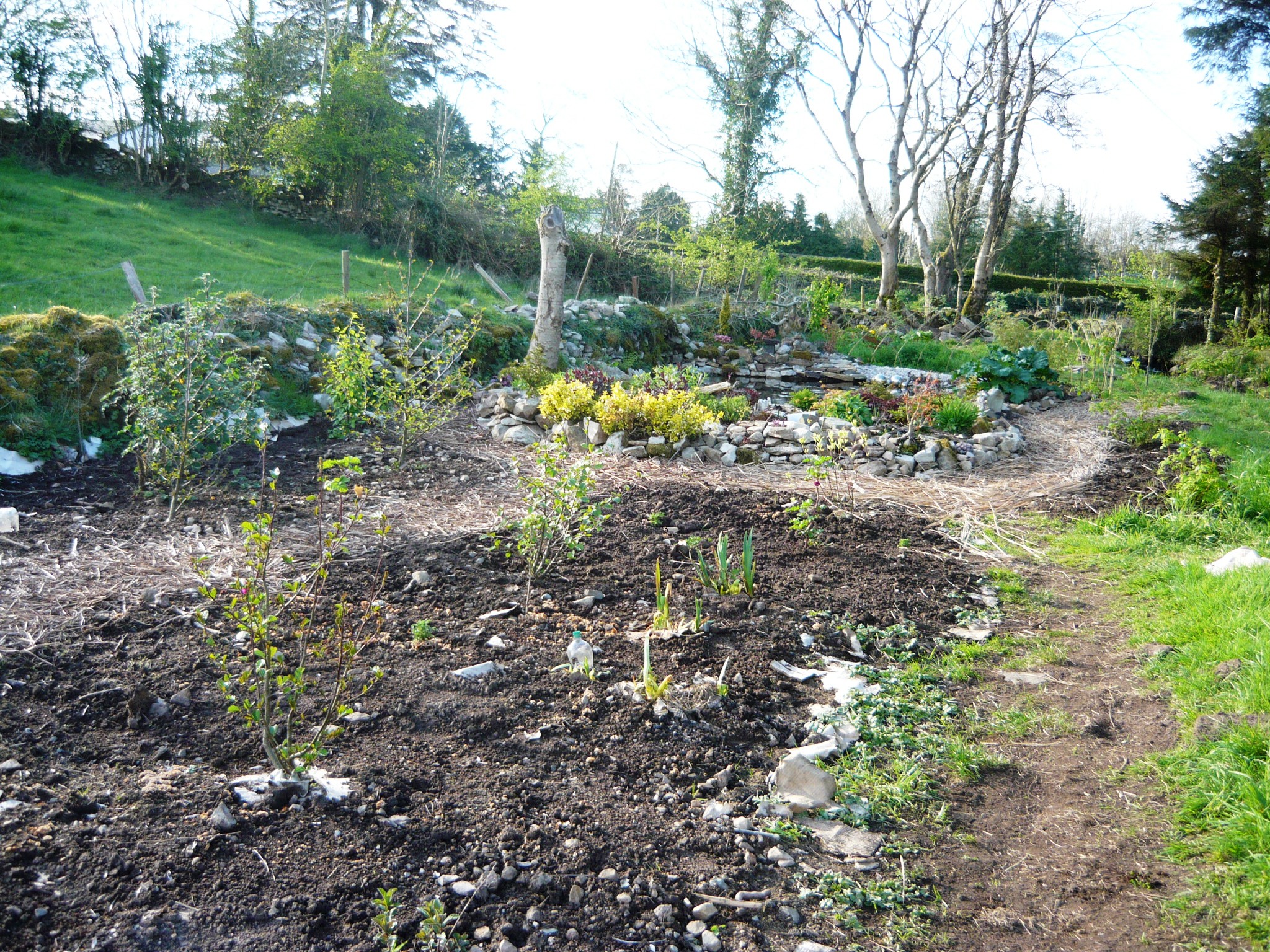
summer 2014

May 2014

trees by pond

May 2015

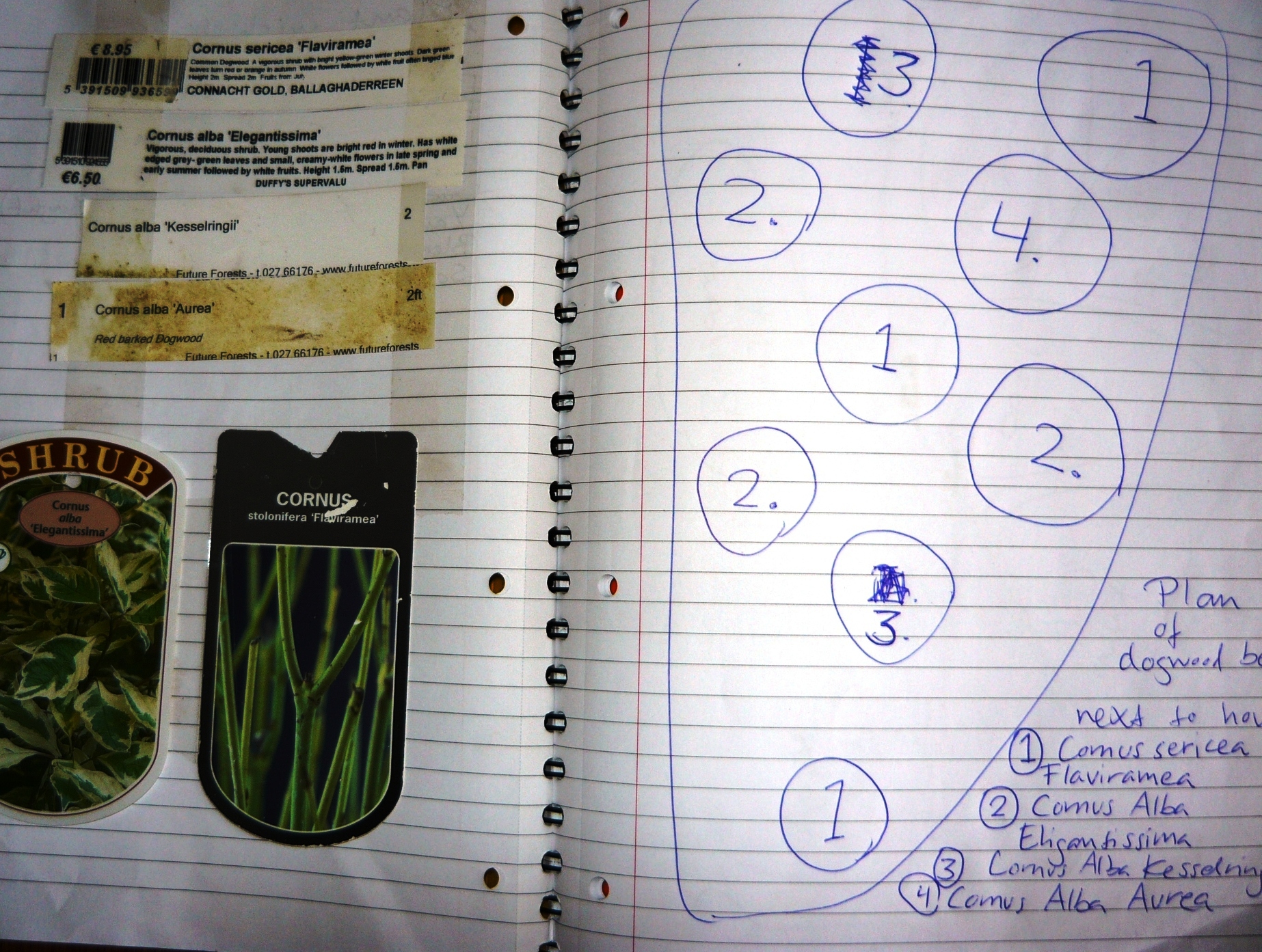
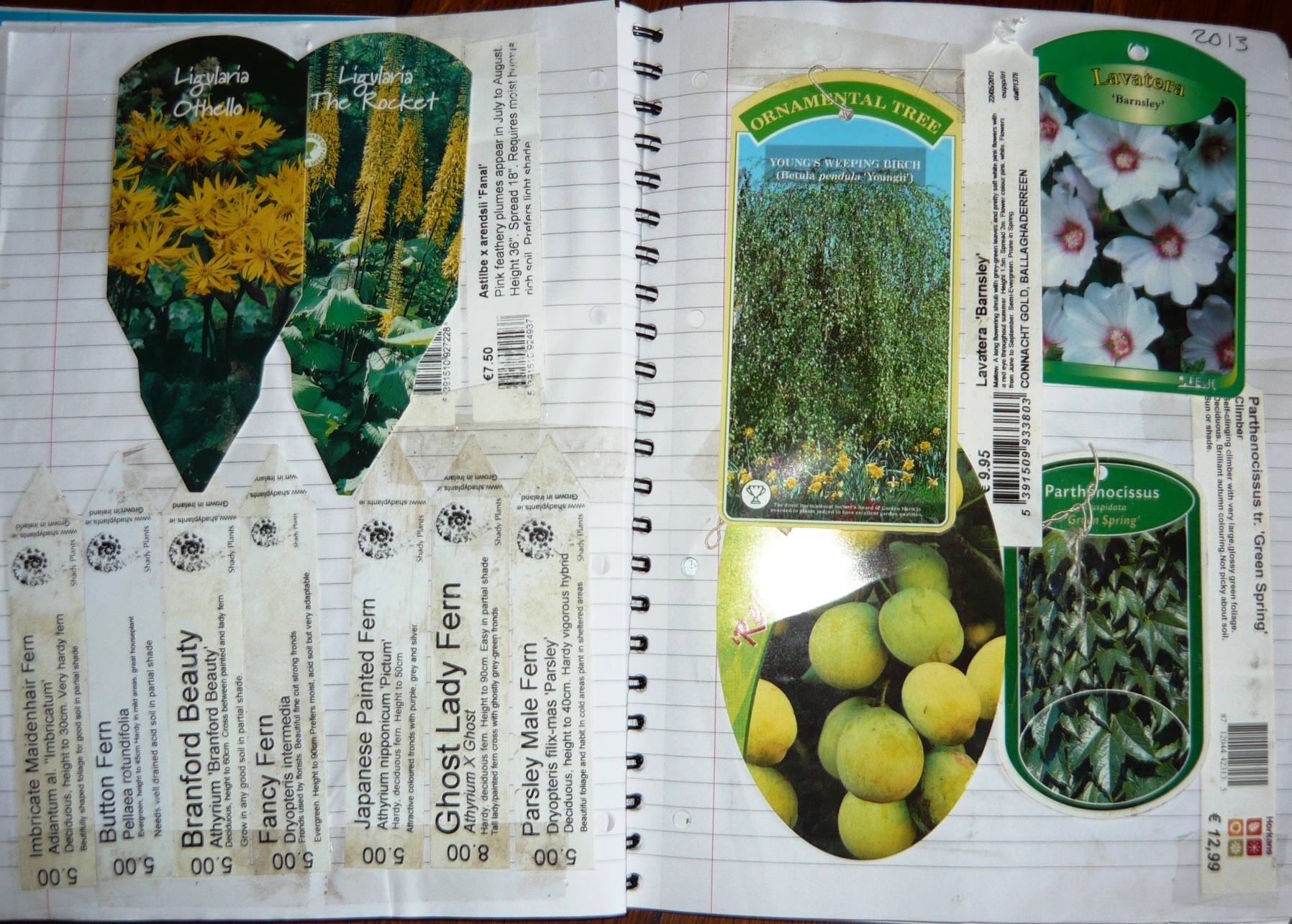
We have made a lot of planting plans for different areas of the garden with the plant labels attached to the pages. It is fun to be able to tell friends, when you divide and share a plant, what the botanical and common name are and what particular variety they are getting. It is also nice to be able to remove the unsightly labels from trees and shrubs, but still keep track of where the different varieties are planted.

staying organized labels

staying organized 064

dogwood

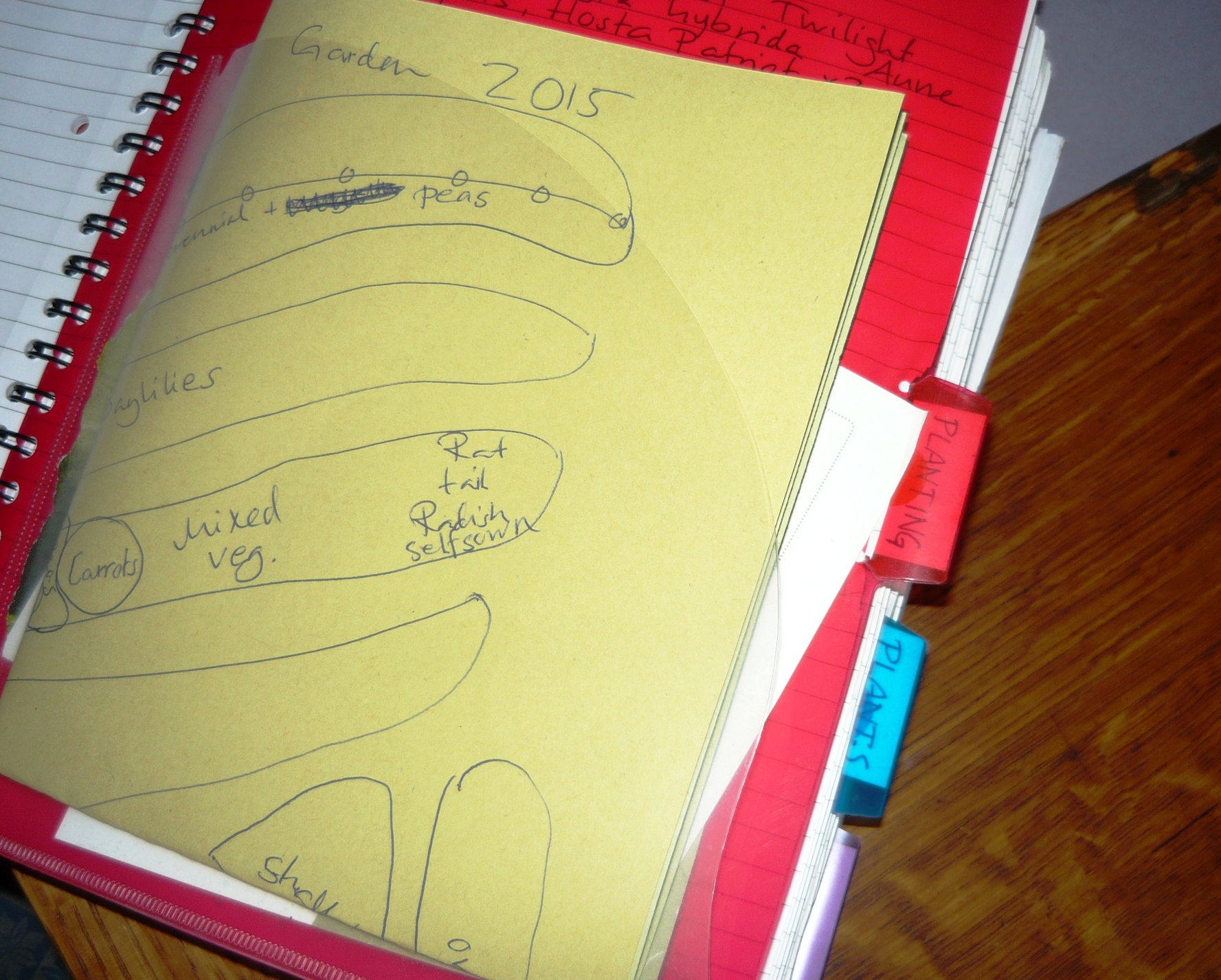
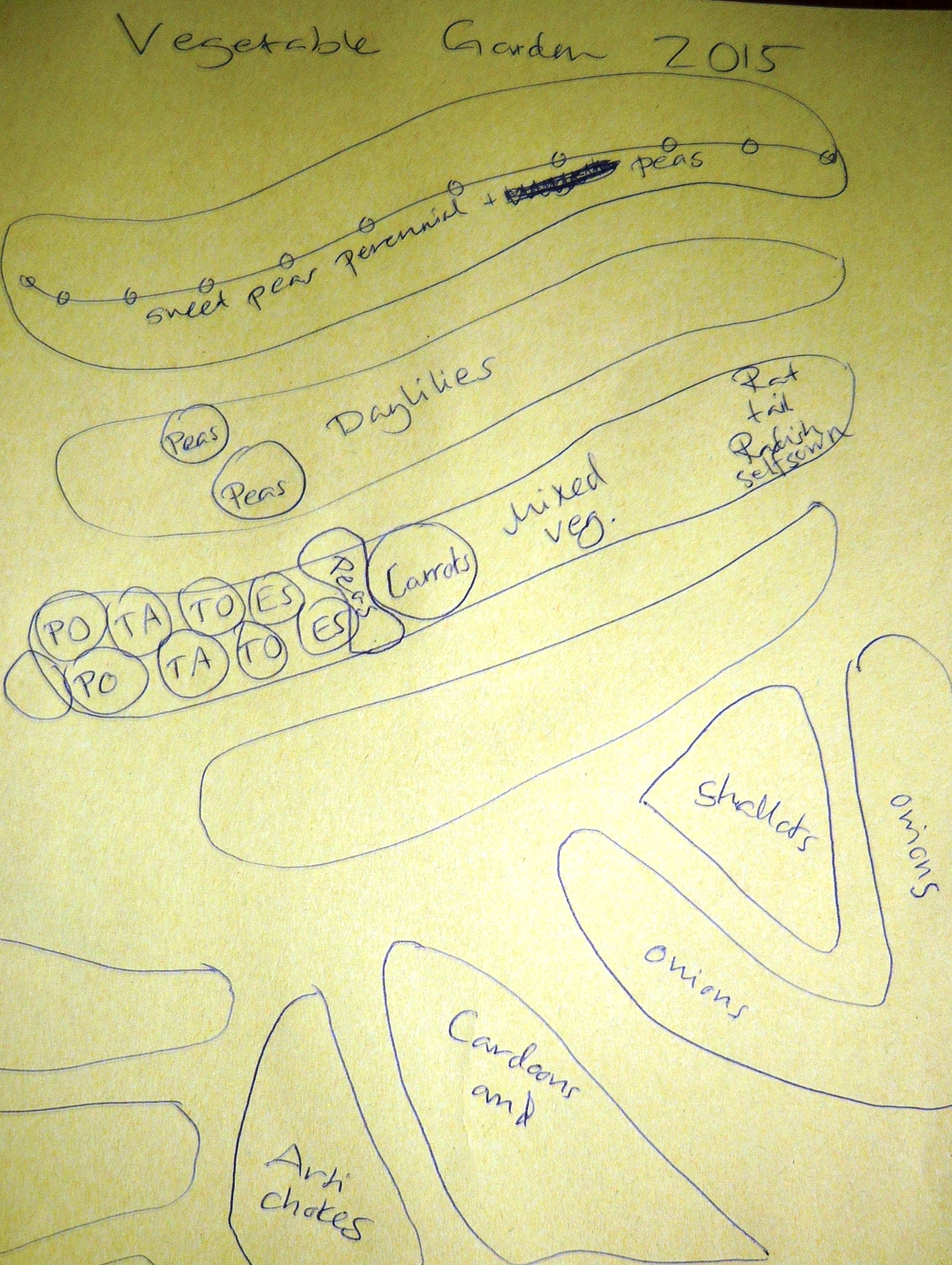
Vegetables do better if they are moved around the plot and not grown in the same soil year after year. We have made quick sketches of the beds with what was growing in which bed each year. But we now have to come clean and tell you that we forgot to do this on paper before and kept it all in our heads, but now, while preparing this post we had to look back through photos of the garden to help our memories along. The ideal is to have a four year crop rotation, and we try to do this with the big groups like onions and brassicas. We also grow a lot of mixed vegetables and try different things for different years so hopefully we can keep on avoiding pests and diseases. Our book has some practical pockets in each section for storing plans like this.

veg rotation

veg 2015

practical pockets

veg list

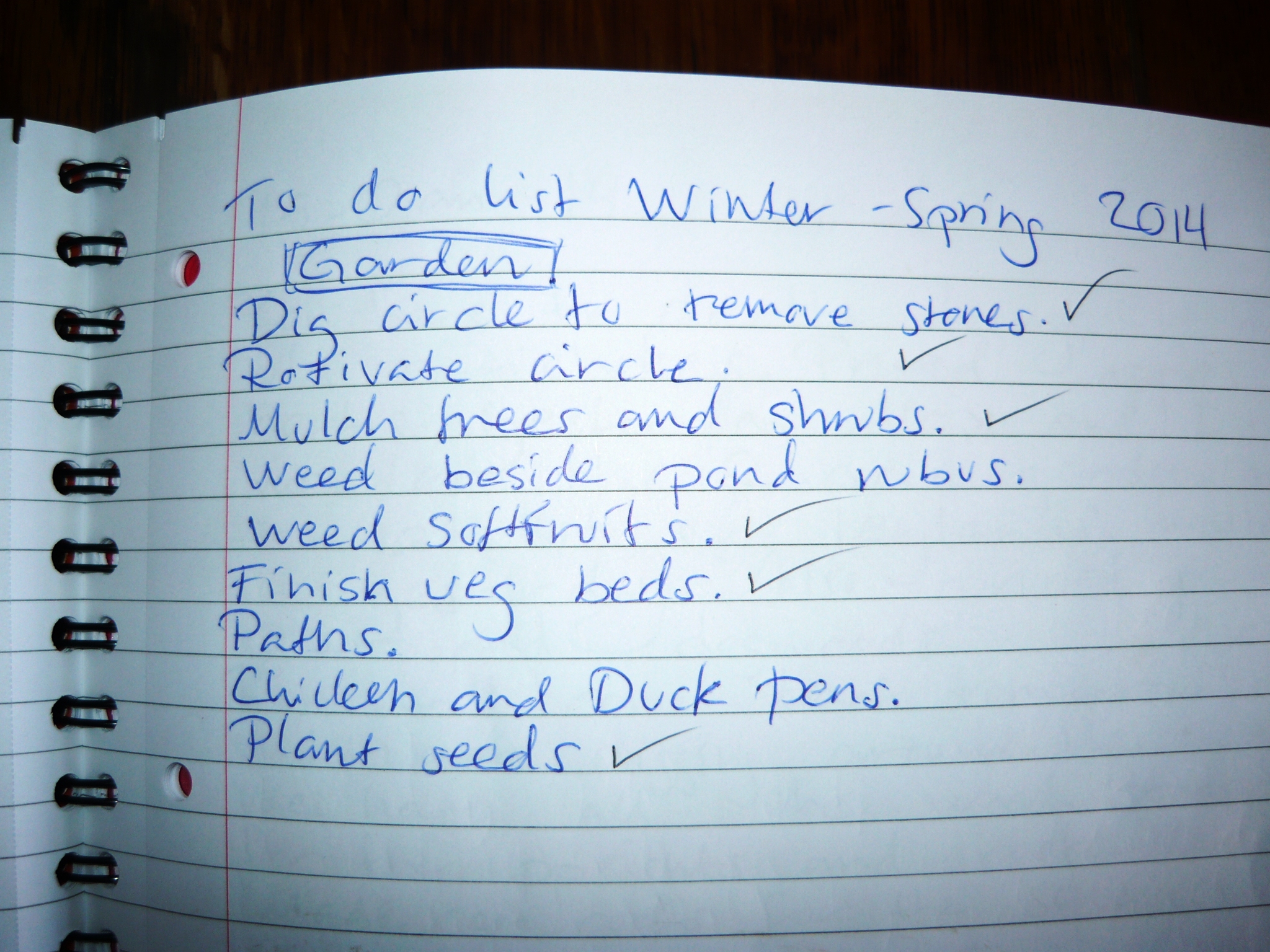
We believe that it is essential to keep a record book of the garden and if you do you will soon find that you refer to it again and again. Happy gardening!
to do list

Woodland management on a small scale.

 woodland 044

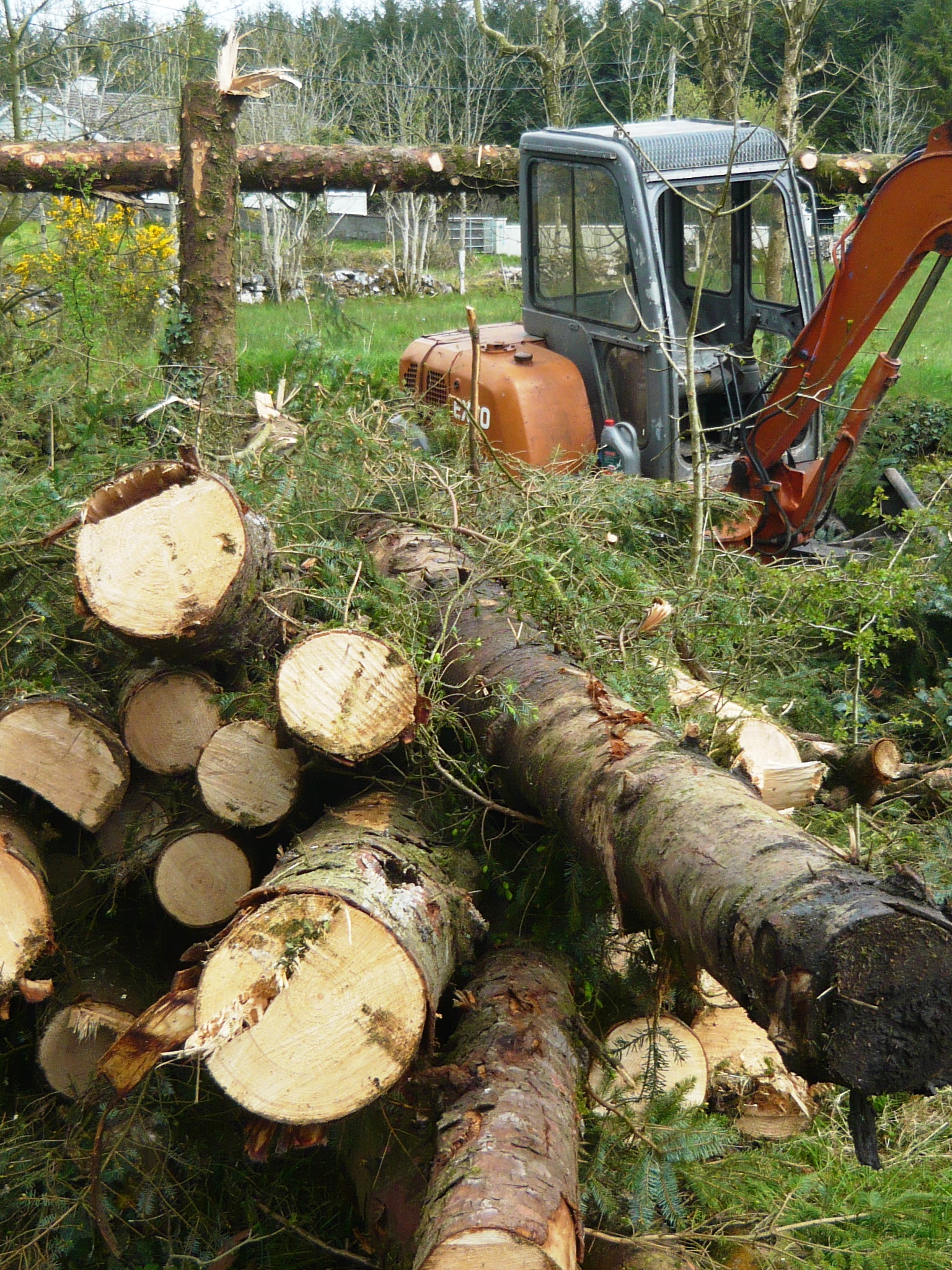
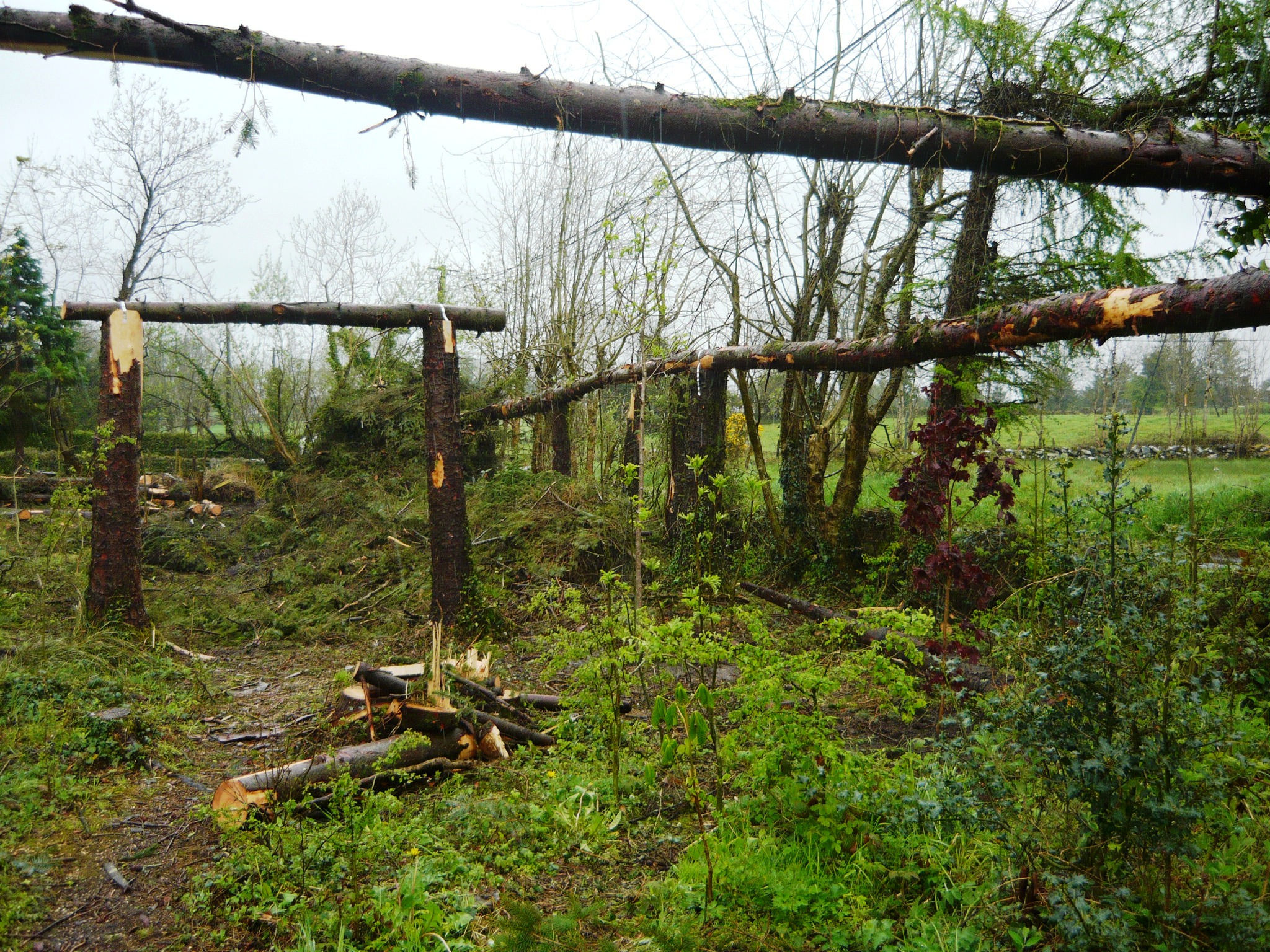
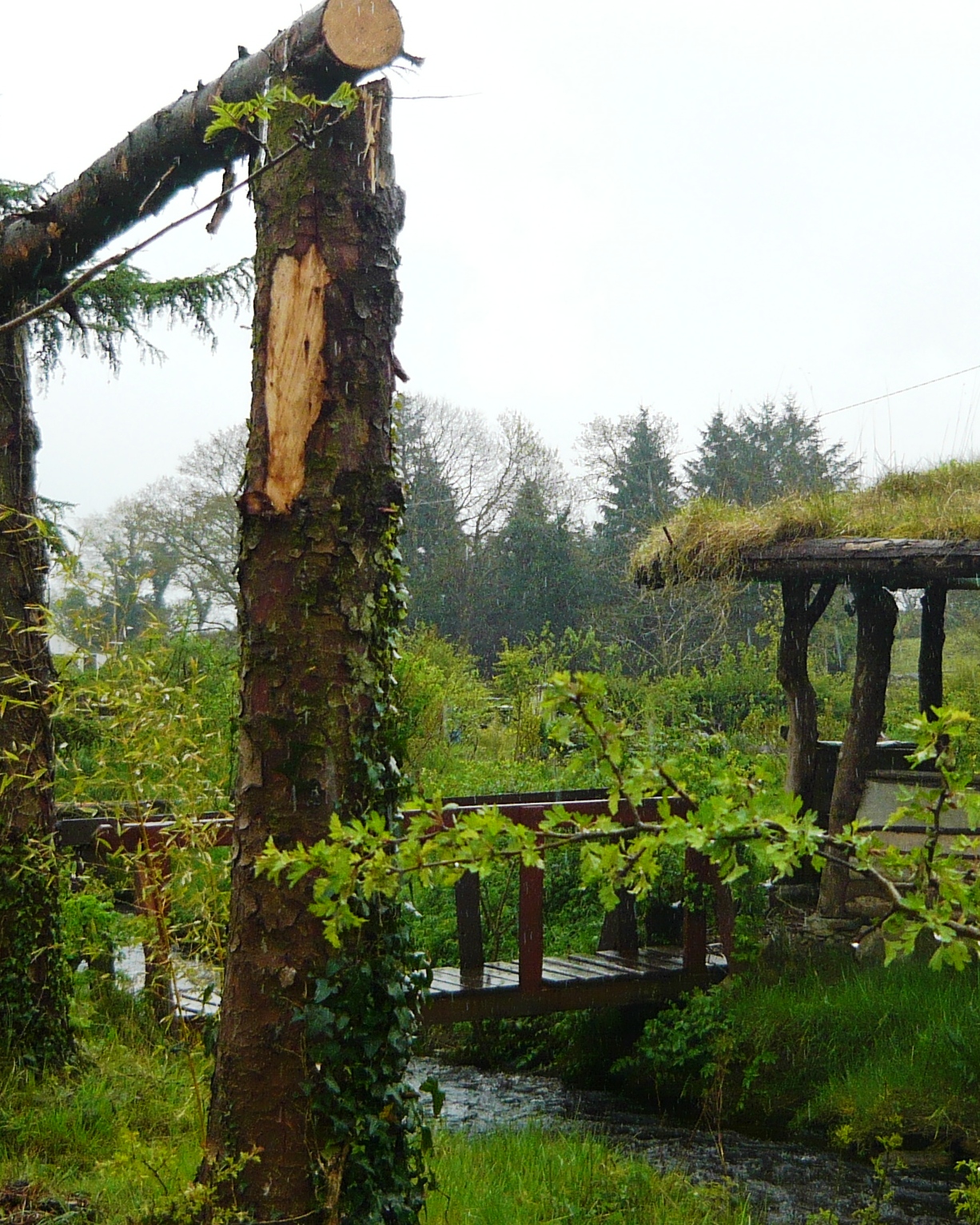
Our little woodland has had a complete makeover in the last few days. We had about 22 spruce that were planted in 1972. They were quite close together thus thin, tall and leggy. As the ground is boggy the wind had started to rock the roots and it was time for a change. We cut a lot of them quite high and used some of the cut trunks for crosspieces, creating supports for climbers. A lot of the logs will be used for firewood, some of the big thick ones will be supports in our conservatory and a few have been given to friends for their house renovation project.

woodland before

woodland gate

woodland logs

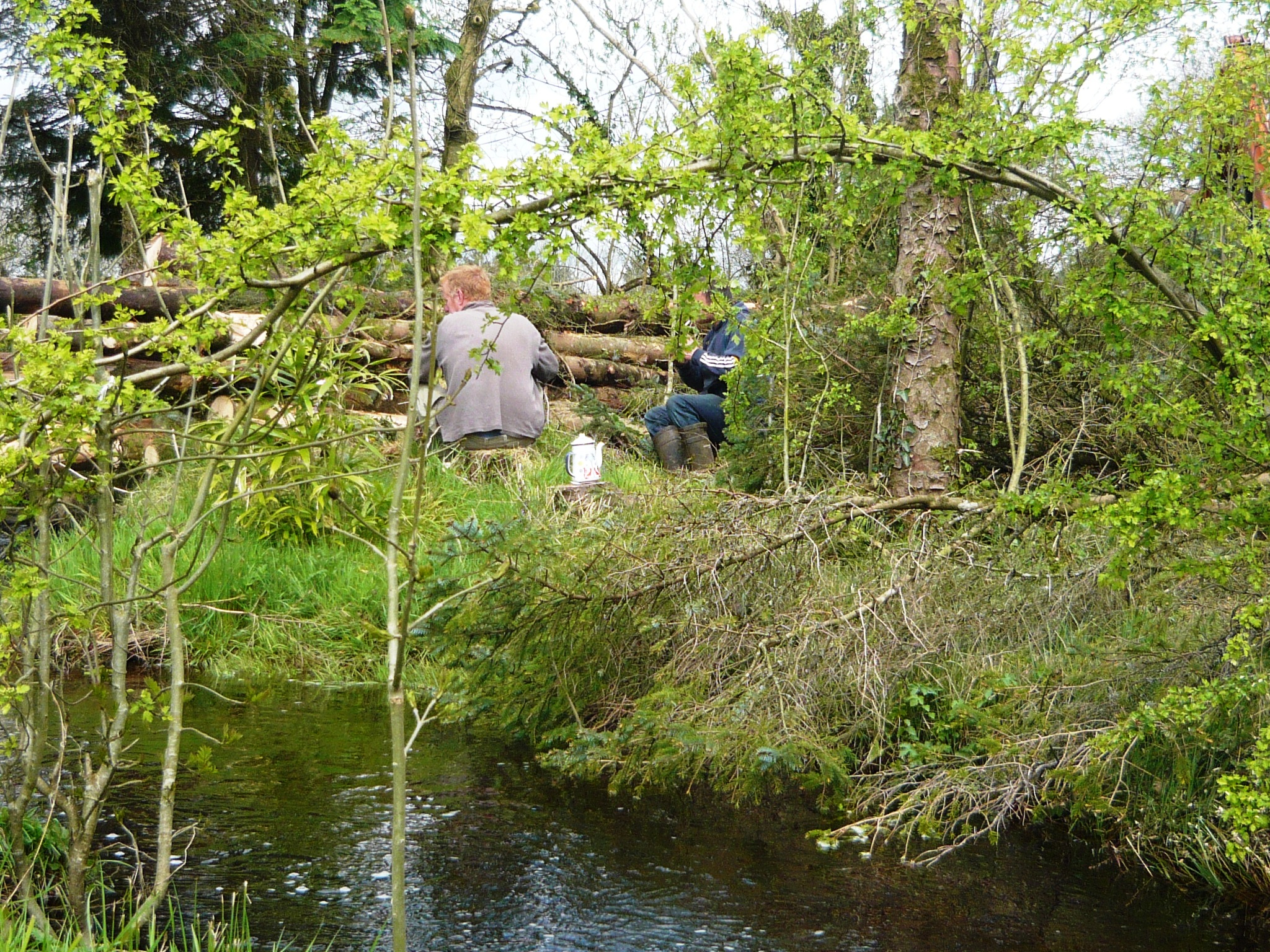
As we have electric cables right next to our woodland we got a friend with a digger to come around and make sure no trees went on the wires or on the road. We had a lot of willow and other tree saplings in the woods and we moved them to a temporary safe location, out of reach of falling logs. Here you can see the two tree fellers hard at work.

 woodland workers

After the felling was complete we were left with a lovely bright space ready to replant with trees, shrubs and ground-covers more beneficial to us. Our whole garden is based on the principals of forest gardening, where all plants have a purpose other than just aesthetics or fashion. They are planted in a way as to mimic young woodland with a canopy, shrub and ground cover layer. Plants are chosen for food production, wildlife, pollination, soil-improvement, firewood, medicinal purposes, basketry materials etc. Did you know that lime, hawthorn and beech trees all have lovely leaves for spring salads? A lot of perennial vegetables are included as they are more reliable, often more nutritious and less susceptible to slug damage.

woodland maple

woodland whitebeam

Waiting to be planted out.

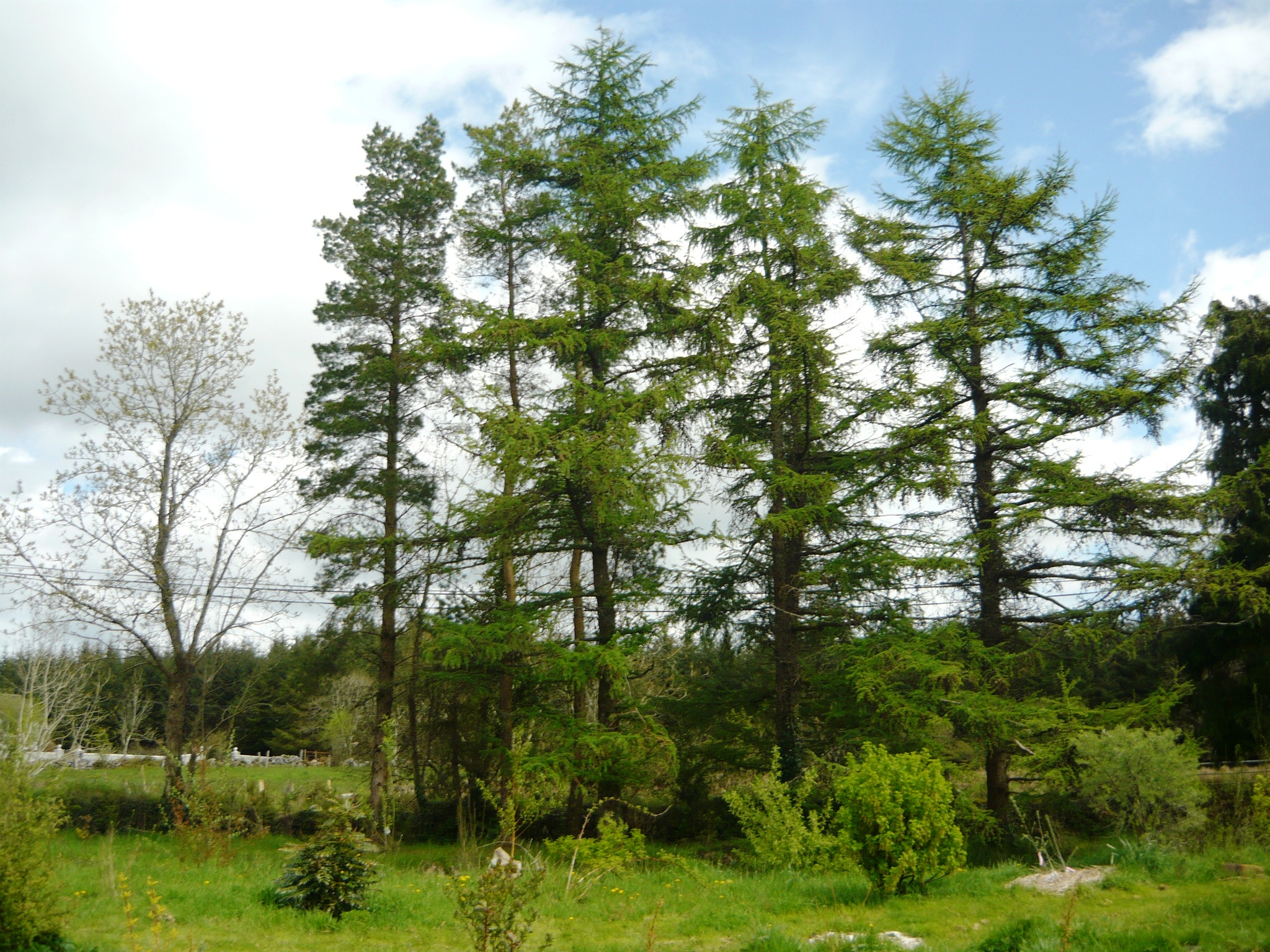
We have kept our beautiful big Scots pine and larch trees as they still have decades of life left in them. We are in the process of adding rowan, lime, beech, oak, willow, hawthorn, maple, birch and hazel trees to the woodland. A lot of these trees will be kept pollarded or coppiced and we will use the off-cuts for fuel, plant-supports and basketry.  We already have some mature ash trees along the boundary.

woodland 026

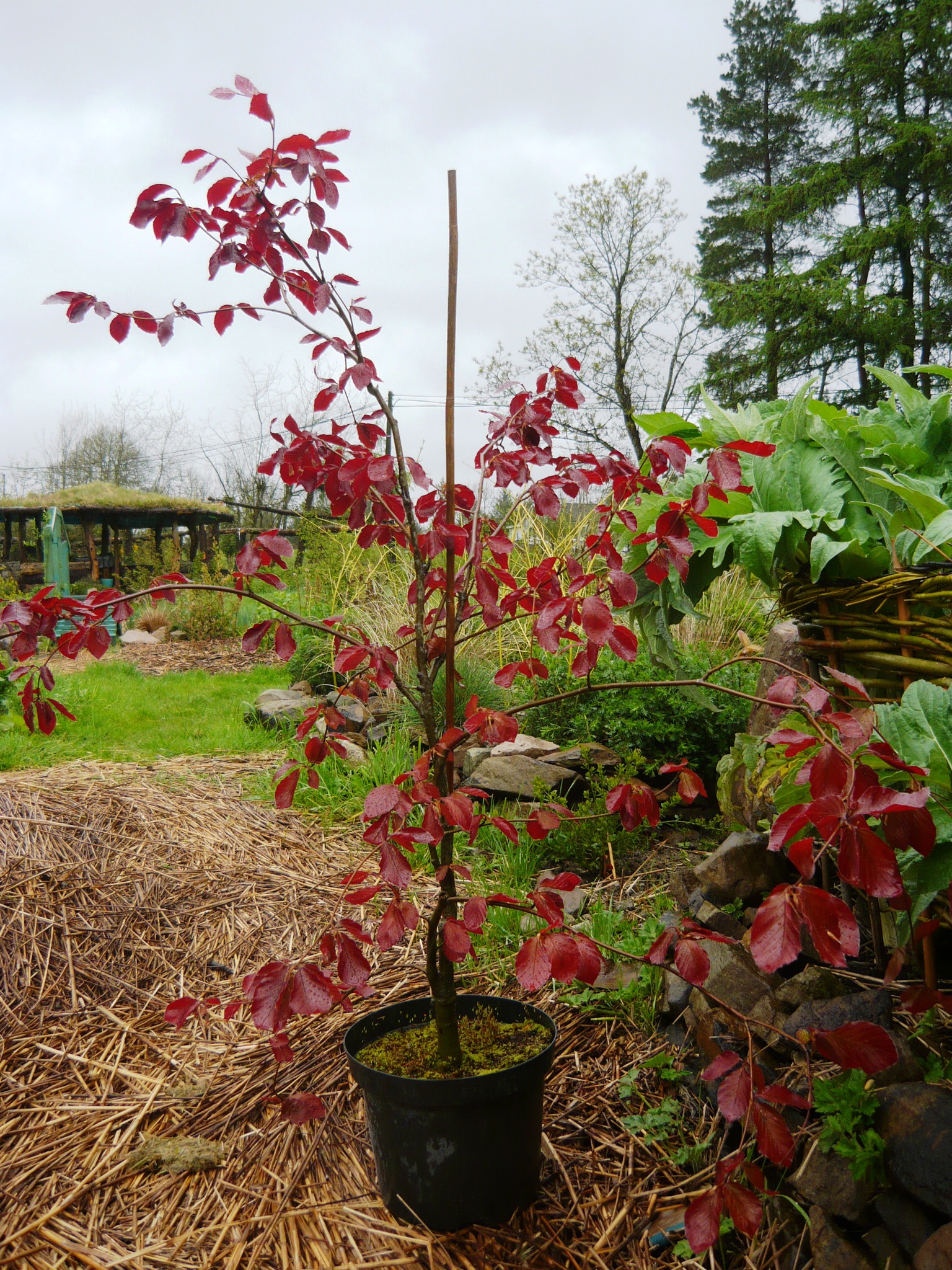
 It was love at first sight when we spotted this copper beech at the tree nursery. It had to be included in our new woodland as well as the stunning purple contorted hazel.

woodland beech

woodland 060

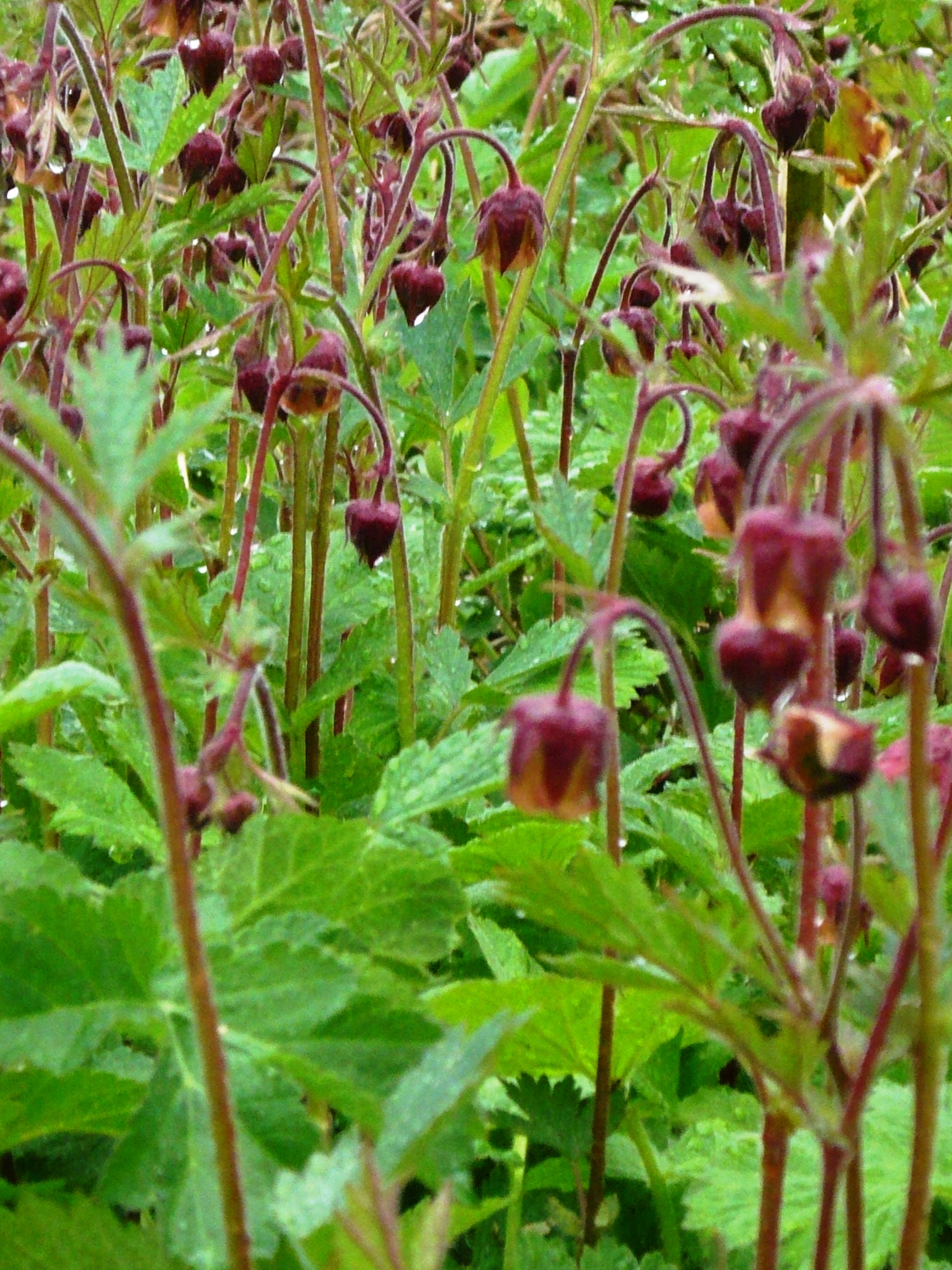
You will have to imagine climbers growing up and across all of these structures. Old fashioned roses, honeysuckle, ivy, virginia creeper and clematis. All of these will bring more wildlife and pollinators into our garden. As the ground is boggy, we will use the brushwood from the felled trees to build it up and some trees will be planted on raised mounds so as to save them from water logging. We will add water loving mints and wait for all of the marsh marigolds, wood angelicas, wood anemones and meadowsweets to come back. We have some beautiful native geums, which the bees just love. In Swedish they go by the name of humleblomster, which translates as bumblebee flower.

woodland 036

woodland 043

woodland geum

We are very much looking forward to seeing this part of our land transforming from a dark, boring plantation into a beautiful diverse habitat for us and all our visitors to enjoy. People and animals alike. We will show you the progress here over the months and years ahead.

woodland 049

For the love of Rhubarb

Timperly early

What plant is more beautiful and versatile than rhubarb? We grow five different varieties in our garden. One of the firsts plants in spring to make an appearance and also one of the first to harvest. We grow several traditional garden rhubarb for eating as well as two varieties often described as ornamental, although they have great medicinal and culinary values as well.

rhubarb bud

Rheum Palmatum, sometimes called Chinese or Turkish rhubarb have been used for millennia to treat a range of conditions and health problems. The name derives from the shape of the leaves, rather like a hand with fingers outstretched. The root is the most powerful part of this plant. The leaves, as all rhubarb leaves are poisonous. Our Palmatums are two years old now and are really starting to settle in. The leaves can grow very big, close to a metre across and the whole plant can grow to around three meters. It is very ornamental and looks great close to our wildlife pond. We put it into slightly boggy ground and built a small mound for each plant and they seem to like those conditions very much. Every year we put on well rotted manure and some straw for mulch. All rhubarbs also benefit from having their cut-off leaves put down around the plant as mulch that slowly rots and nourishes and protects the crown. When we planned our garden we wanted to put in some Gunnera but as one variety of this is liking Irish conditions a bit too well and has become a problem and is very difficult to eradicate, we did not want to risk planting any varieties of this beautiful plant. We did a bit of research and read about Rheum Palmatum and now we could not be happier with our choice. It is a magnificent plant in every way, even more beautiful than the Gunnera.

rheum palmatum

r palmatum

Rheum Australe, Himalayan rhubarb is very pretty with rounded reddish leaves. We only planted ours last year so they are still small. We are looking forward to see how big they will get this year.

australe leaf

rheum australe

Our eating rhubarbs are Timperly early, Victoria and a lovely unknown variety we were given by a friend. We like using our rhubarb for pies, cordials, chutneys and simply stewed.  When harvesting it is important to pull the stems and twist slightly as cutting the stems with a knife leaves a stump that can rot and damage the crown. We love using other flavours to enhance the rhubarb.  For pies and cordials try strawberries as combined with the rhubarb it is simply delicious. The cordial, especially turns out lovely like this and is a good alternative to most shop-bought versions, full of additives and artificial sweeteners.  For stewing, jam and chutney try grated fresh ginger for a nice zing. Vanilla and almond also work well. Try making a sponge cake with vanilla and scatter it with chopped rhubarb and slivered almonds before baking.

stalks

rhubarb and pond

green leaf

Other good uses for rhubarb are as shady hiding places for all our frogs and toads and for making leaf concrete casts. We will give it a go in the summer when the leaves are nice and big. Rhubarb is such a beautiful and useful plant. We think every garden should have at least one.

bud red

pond rhubarb

One, two, three, SOW!

Seed packets

What better way to celebrate Saint Patrick’s Day than to plant potatoes? We have asked a few of the neighbours if it is a good time to plant them this time of year in our part of Ireland (the west) and they have all said we should be alright to put them in. For the last two weeks we have been keeping them in our porch, a cold and bright place and now the potatoes have good little shoots growing. We have not grown potatoes here before but we have opted for the tyre method where the potatoes are grown in a tyre and as they grow more tyres and soil are added to earth them up and produce a large crop. It will be interesting to see how it all turns out.

Potatoes and tyres

Planting potatoes

In between the tyres we put fluffed up sheeps wool to avoid creating a slug hotel where the slugs could hang out and go on nightly raids to the nearby just sown rows of carrots, radishes, parsnips and turnips. To avoid potato blight we are planning to make a strong nettle and comfrey tea that can be watered down and used at every watering. A friend told us about this method and he has grown healthy potatoes this way. As we are growing everything organically we would like to avoid chemicals and if anyone has other tips on how to avoid blight, please write about them in the comment section.

 Placing wool

Wool

 We also planted a lot of things today that need to be grown in pots to get off to a good start. As we have a tiny cottage and not much room inside, we invented a way last year to grow as much as possible under our circumstances. All through the year we save our toilet rolls and along with free newspapers, free plastic boxes from the supermarket and a bit of plastic wrap we create a practical, slug-proof and hygienic environment for our little seedlings. They can be planted straight in the ground in their rolls, or into a larger pot for growing on with no root disturbance.

 Seeds and boxes

We wanted to grow peas, beans, sunflowers and a variety of gourds and squashes so opted for a mix of multi-purpose and seed compost with added perlite as our growing medium. The toilet rolls can be stuffed quite full and placed on newspaper, tightly packed together for stability. We watered the full boxes and let them stand for a few hours to saturate the cardboard and let excess water run away.

 soil mx

a few rolls

full box

Planting all the seeds was great fun, with one person using the dibber to the correct depth, one person planting the seeds and one person writing down all the varieties for the different rows in the box. We then watered the boxes again to set the seeds in, let them drain off for a further couple of hours and wound the plastic wrap around the whole box a few times. Last year we let the seeds stay sealed up like this for about a month, with no water or air added. The box became a perfect micro climate and all the seedlings came out strong and healthy.

 dibber

boxes wrapped up

We keep the boxes in our gazebo and the seedlings do not seem to mind the frost, even when the ground is white and frozen in the mornings. The boxes and the gazebo keep them snug and they get enough light to not grow weak and straggly.

Fifty shades of Green.

 Sprouts close up

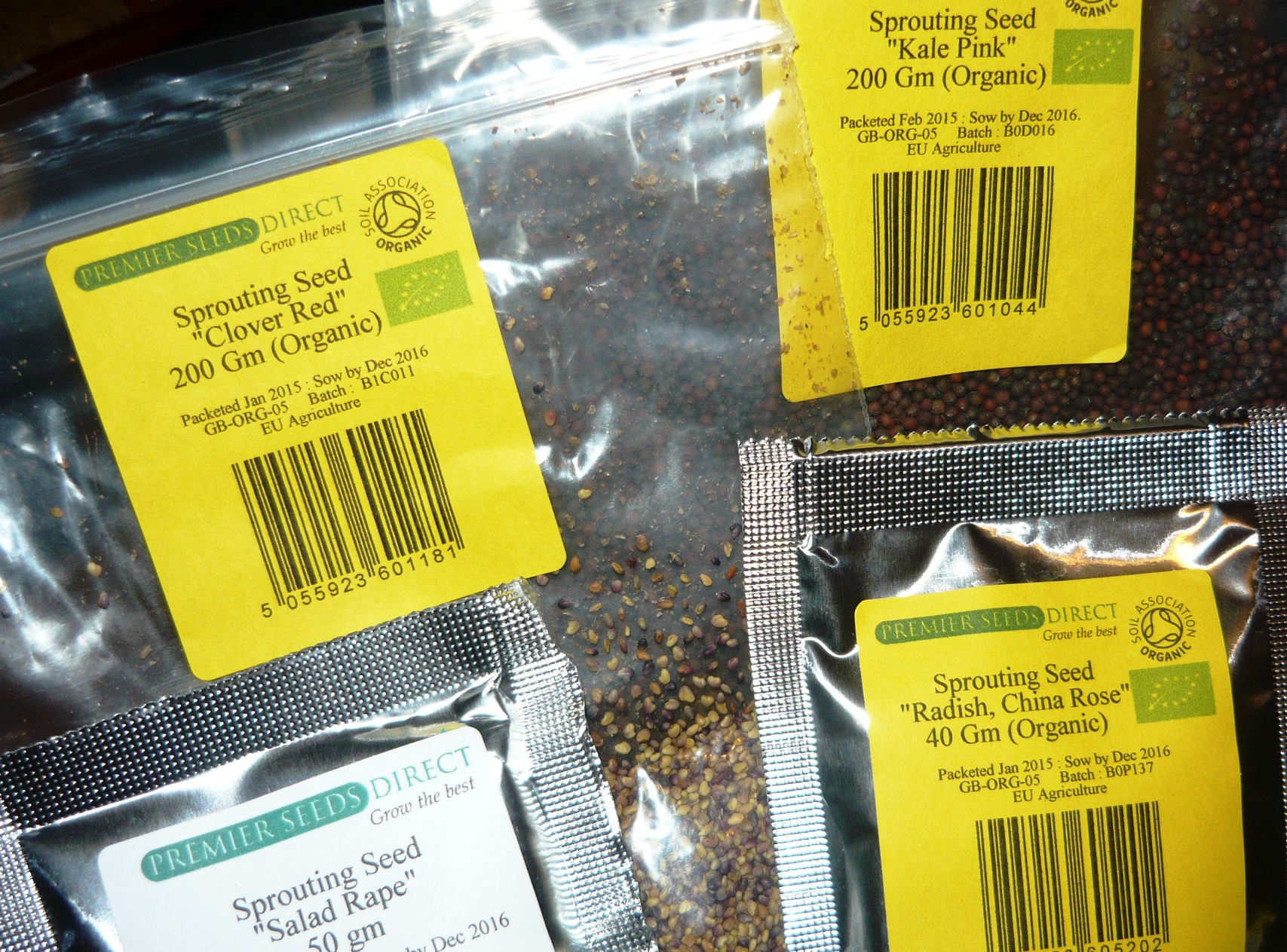
You do not need a garden to produce your own tasty greens and salad ingredients. We love sprouting. We can highly recommend it even if you do have a garden. It is so satisfying to have fresh, tasty and nutritious food growing in just days, right in your kitchen. It does not cost a lot to get started, for example, you can buy lots and lots of sprouting seeds for the price of a couple of cinema tickets. So instead of watching some film you might find boring, disappointing and degrading, you can have a lot of fun in your own kitchen.

seed packets

All the goodness of the plant is right there in the seeds. When you sprout them or grow them as micro greens, the concentration of nutrients and vitamins is much higher than if you grow them on to full size vegetables.

Sprouting seeds.

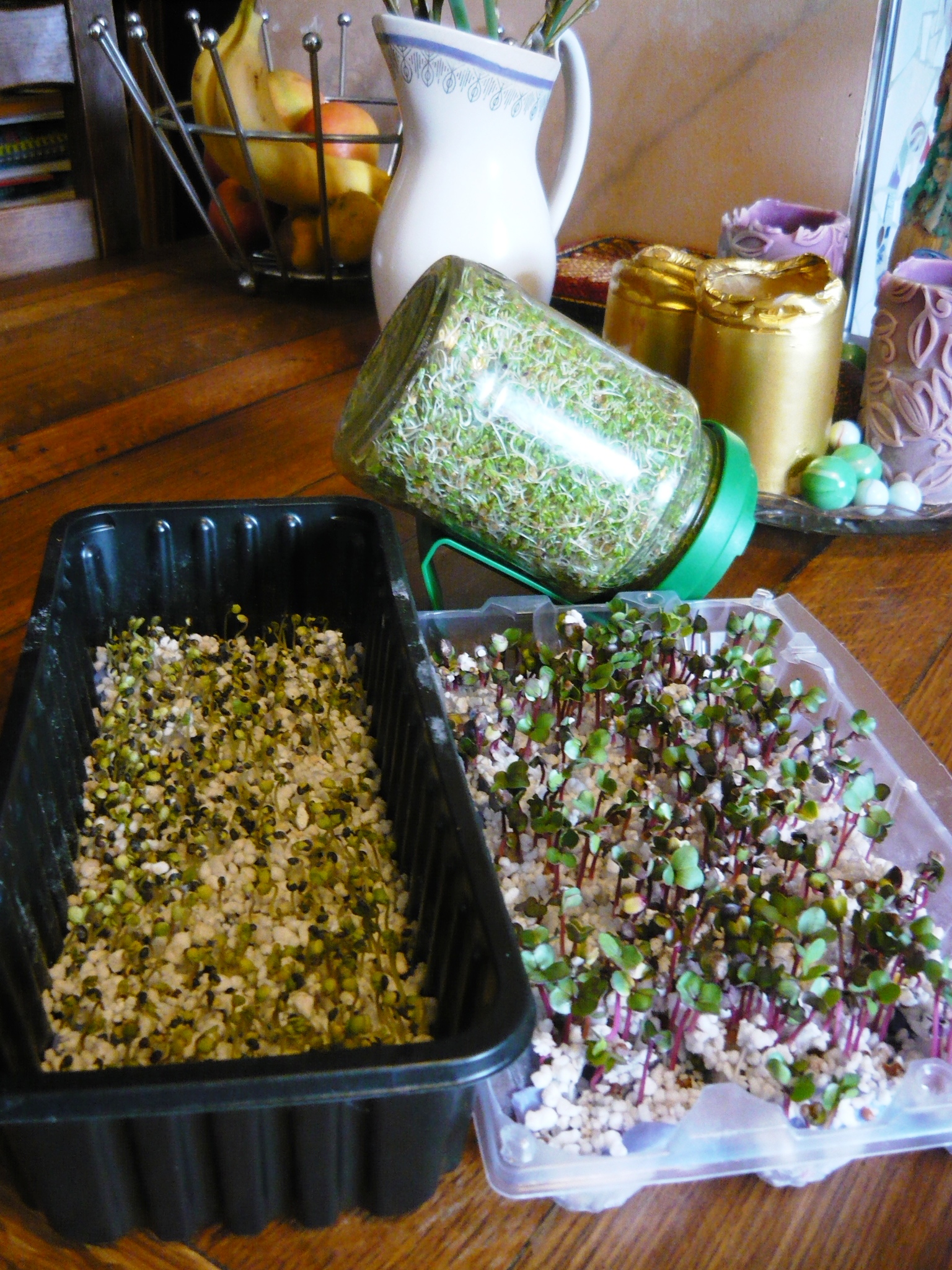
Our favourite way to grow sprouts is in a hemp fabric bag, hung over the sink. The hemp is antibacterial and does not easily get mouldy from being constantly damp. Our favourite seed to sprout is the humble lentil. Brown and Green lentils get completely transformed in just a few days from dry and hard to incredibly tasty, juicy and crunchy. We use them raw in salads and cooked in stir-fries and soups. If you buy a large bag of lentils, you will have many, many tasty meals for next to nothing. Any other slightly larger seed is also suitable for sprouting in a bag.

Sprout bag

For tiny seeds like Alfalfa and Red Clover we use a jar. You can make one up from an old jar, a piece of cloth and some string or buy one like in the picture. We also sometimes use a three-tier sprouting device where the water trickles trough all the layers and collect in the bottom tray, great for watering your house plants with. It is important to soak all seeds and rinse them prior to sprouting. You will need to do your own research as different seeds need different times soaking. After that all you have to do is rinse them for two or three times a day.

 sprout jar

Almost everyone has grown some cress or mustard on a piece of damp kitchen paper as a child. We like to grow radishes and members of the cabbage family in this way. A week from planting you end up with a forest of small seedlings, jam-packed with flavour to use as a garnish on your food. If you use a bit of soil as well, the seedlings can grow slightly larger and be harvested as micro greens.

Pink Kale

This time of year we usually end up with some garlic sprouting in the kitchen before we have had a chance to eat it. If this happens to you, don’t throw them out. Plant all the cloves packed close together in a little soil in a pot and you will soon have lovely Green, cut and come again garlic shoots. We hope you will try some or all the things we have written about here. Sprouts are delicious, very good for the planet as they do not require transport, chilling in the shop etc. as with bought vegetables and they are very cheap to produce. We can promise you that once you get started, you will not want to stop.

Garlic sprouts

Helping our endangered bees.

Christmas rose

We always knew we wanted an organic garden brimming with wildlife. Unfortunately one of the most important assets to any garden, the bees, are under threat all over the world. There are many different reasons for this but we believe the biggest one is the use of pesticides, mainly insecticides containing neonicotinoids that are used by many gardeners and industries alike. Other causes are the extensive loss of natural floral habitats, due to modern farming as well as climate change and disease.  Recent wet summers, have made it difficult for bees to find pollen and the Varroa mite is a parasite that attacks bees, spreads viruses, and often cause the collapse of entire bee colonies. Honey bees and bumblebees are dying on a catastrophic scale and this is affecting every other living creature on the planet. Loss of the bees will lead to crop failure and starvation.

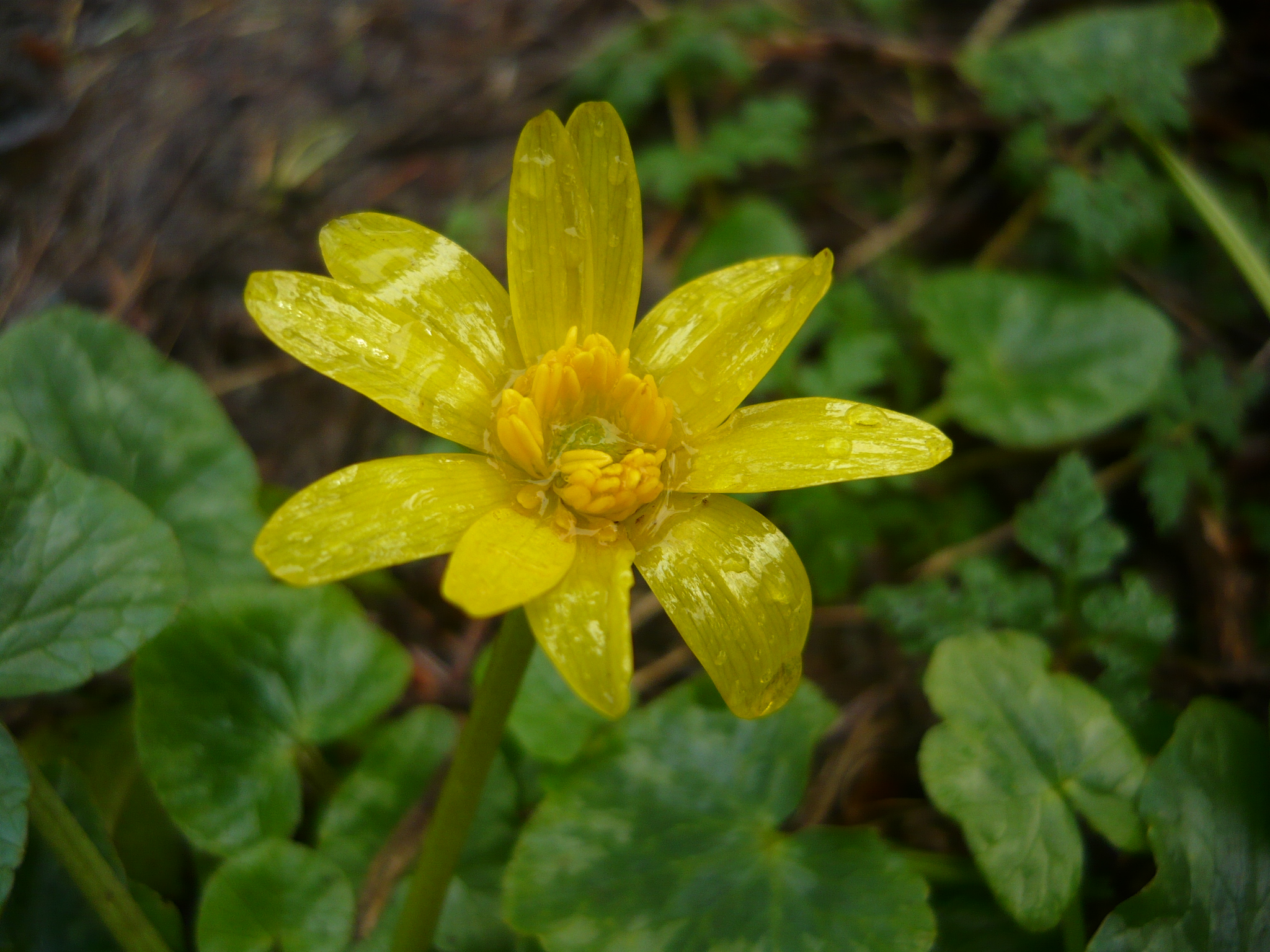
 The good news is that we can all do our bit in slowing this process down. By using no pesticides in our gardens and by providing plenty of flowers for pollen we can give the bees a better chance of surviving. Early in the year, there are not a lot of flowers around and planting some trees, shrubs and flowers that flower at this time of year, can be tremendously important to the bees. It is a good idea to use native plants, as the bees seem to prefer them and they are well suited to the area. We encourage the spread of dandelions, wild primroses and lesser celandine in different parts of our garden.

primrose

lesser celandine

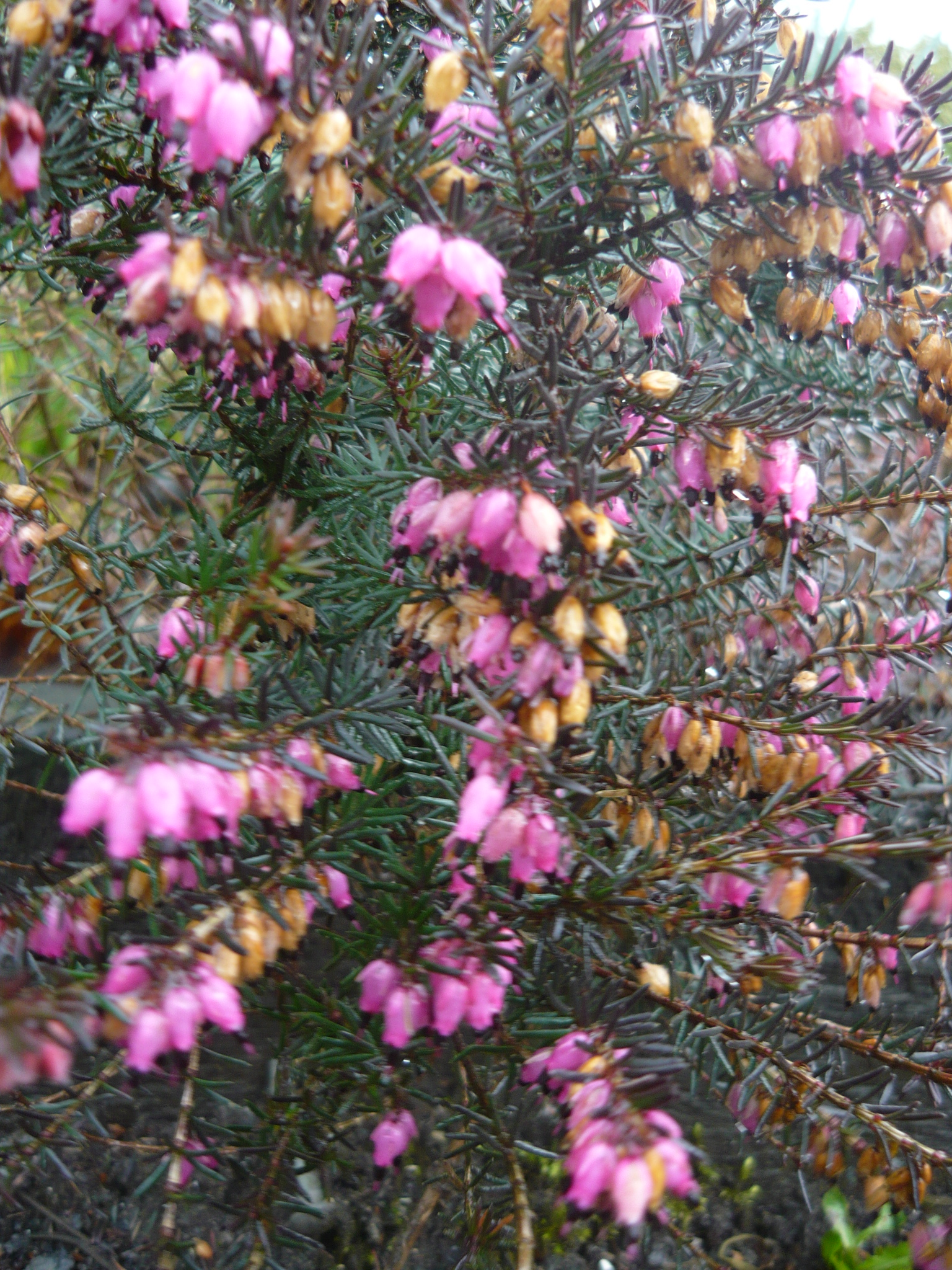
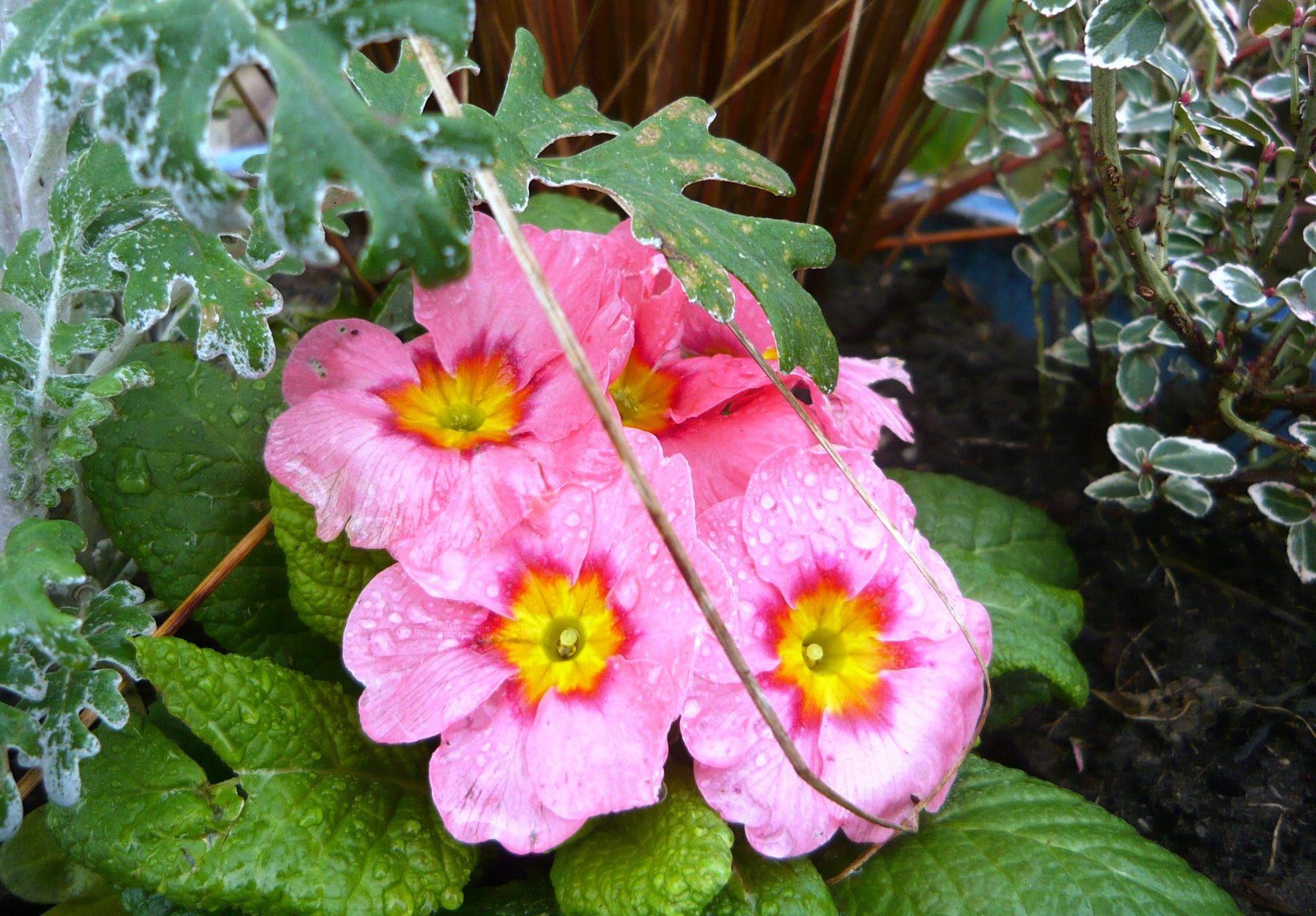
We have planted mahonia, commonly called oregon grape, forsythia, magnolia and gorse. All of these trees and shrubs have winter or early spring flowers. Other useful additions include, hellebore, commonly called Christmas rose, heather, garden primrose and daffodils. We always favour single, old-fashioned varieties of flowers. Some modern plants are bred for showy, double blooms without much consideration for pollinators.

Hellebore detail

 Heather

daffodils

In the future we are planning to keep our own bees, but at the moment we are providing all the bumblebees and other local bees with the best possible habitat, all year around. It is a lovely feeling when you see the first bumblebees of the year, awoken by the spring sunshine and warmth, fly around in search of pollen and you know they will find it in the garden.  The more bees you can attract to your garden, the more of your fruits and vegetables will be pollinated, so everybody wins.  We believe it is the single most important thing any gardener can do. All of the photos were taken in our garden today.

 Garden Primrose.

Beautiful edible perennials.

We have a lot of slugs in our garden. It is a problem as annual vegetables and flowers tend to be attacked when they are small. We still like to grow them, but we also decided early on to go down the perennial route as well. We do have a lot of Nettles, Dandelions and Chickweed growing wild in the garden and like to cook with all of them. Good King Henry, Turkish Rocket and Wild garlic have been added to our collection of perennial vegetables.

Perennial vegetables.

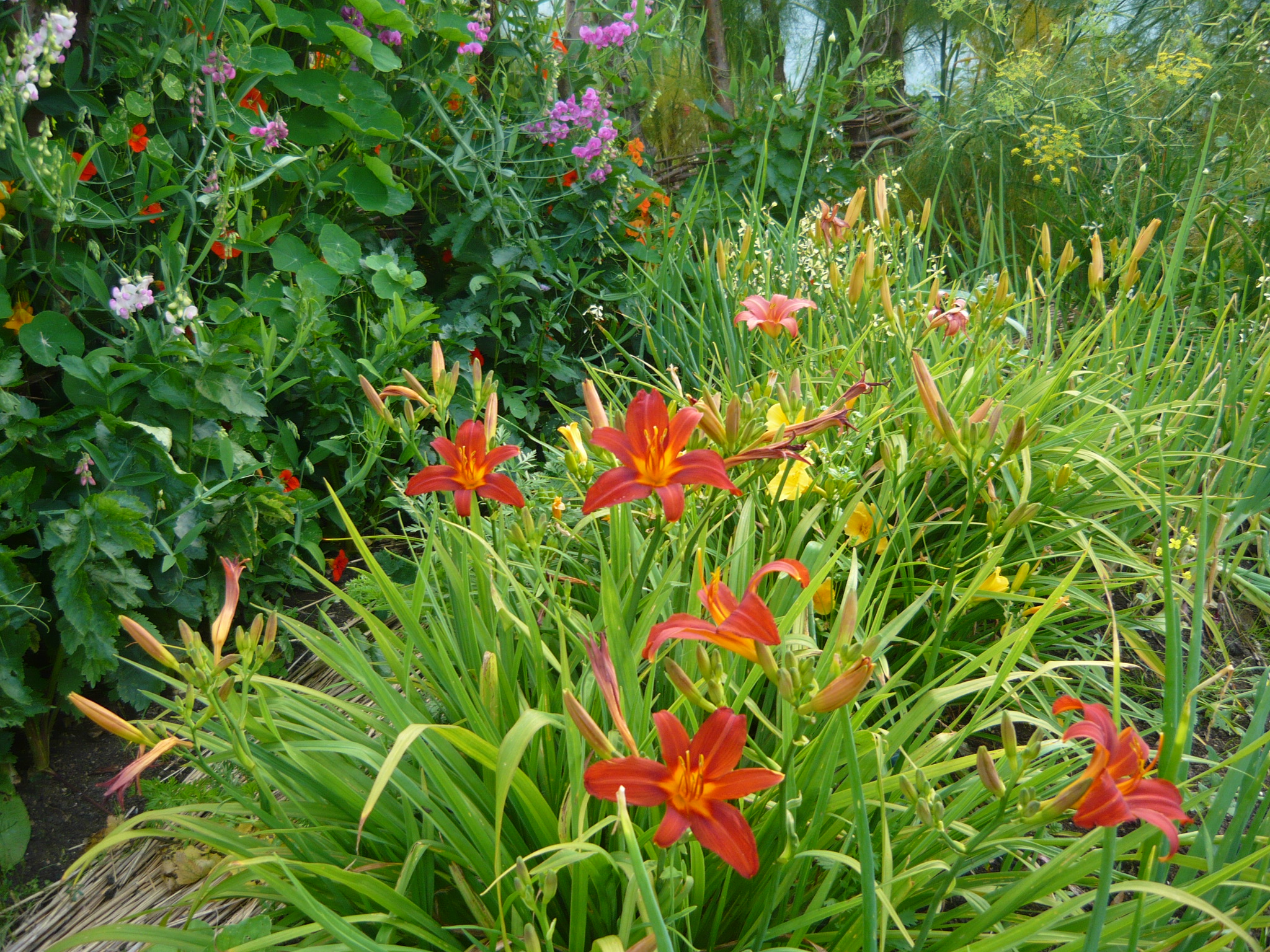
They are reliable and tasty and because they grow in abundance, very hard for the slugs to eradicate. We also like pretty flowers and sometimes they go hand in hand with food production. The Daylily, Hemerocallis is a popular perennial that grows in gardens everywhere. Many Daylilies are edible and have been used throughout China and other parts of Asia for a very long time. We love to eat them, both in salads and stir fries.

daylily

Another reliable salad plant is the Ice Plant, Sedum Spectabile, that has succulent leaves, very tasty in a mixed salad. This is a purple variety along with some Nasturtiums.

Iceplant and Nasturtiums.

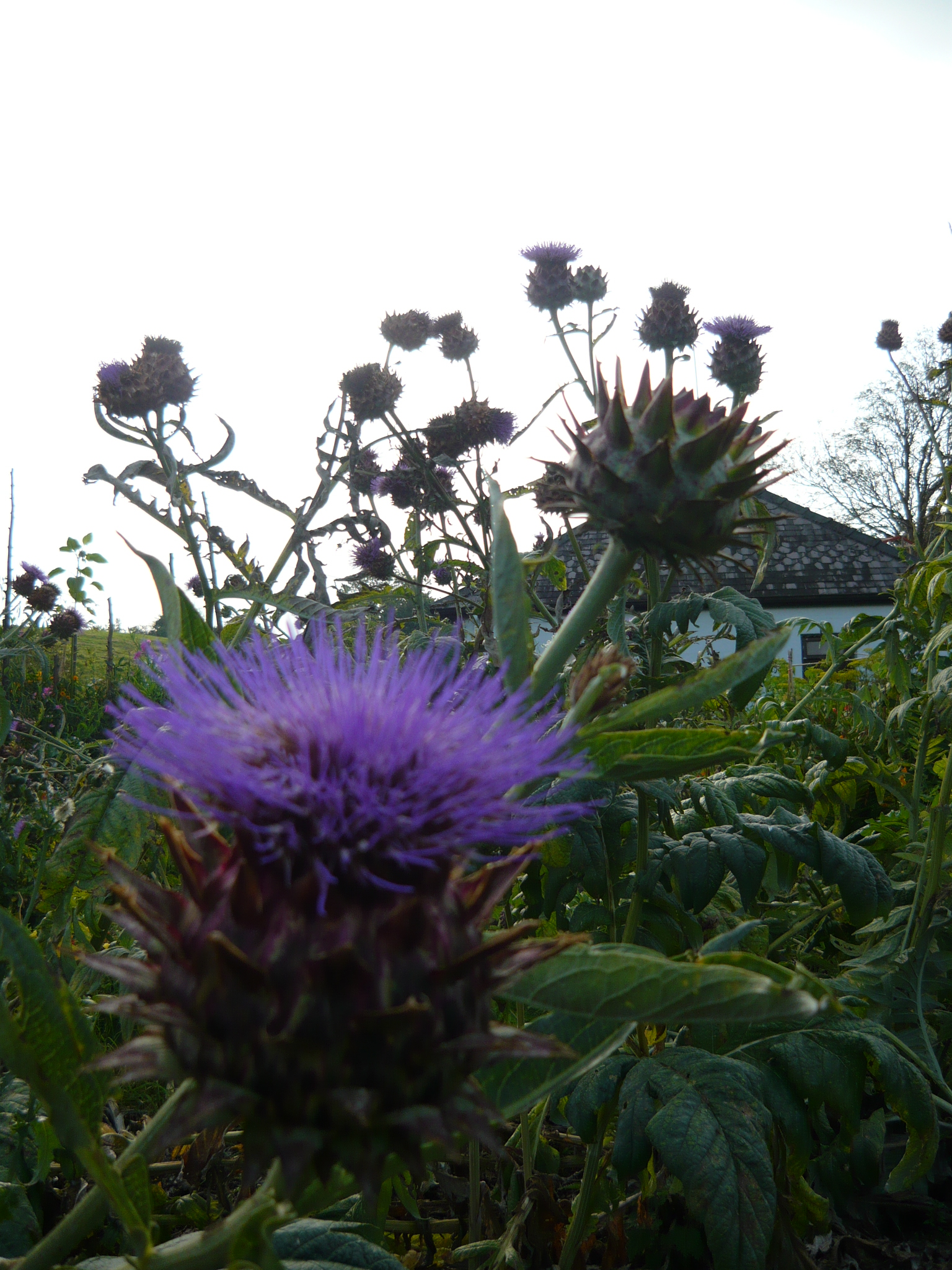
Cardoons and Artichokes bring great beauty as well as taste to the vegetable garden.

Artichokes and cardoons.

Cardoon

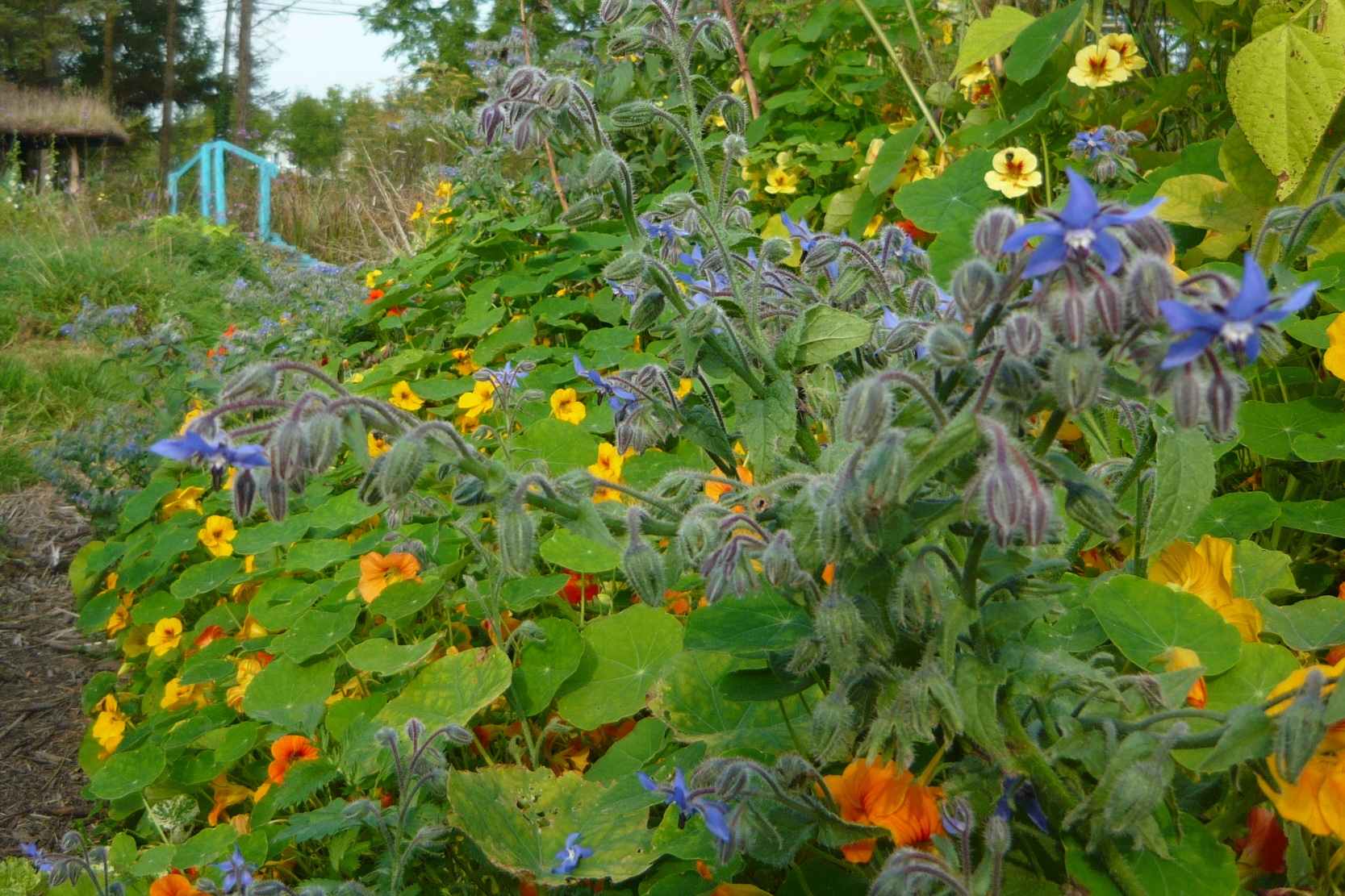
We can not exclude the Sunflowers, Nasturtiums and Borage, although they are annuals, they like to seed themselves around the place and can all be eaten as well as provide floral beauty and food for beneficial insects.

nasturtiums and borage.

It is in fact easy to create a vegetable garden full of edible flowers. We like to incorporate as many flowers as possible in our annual vegetable patch as it confuses some pests and add a lot of joy as well as taste. It is a lot of fun but please make sure you know exactly what you are growing and eating to avoid any toxic plants.

For further reading we highly recommend:

James Wong’s Homegrown Revolution

and

Creating a Forest Garden: Working with nature to grow edible crops. By Martin Crawford.