One, two, three, SOW!

Seed packets

What better way to celebrate Saint Patrick’s Day than to plant potatoes? We have asked a few of the neighbours if it is a good time to plant them this time of year in our part of Ireland (the west) and they have all said we should be alright to put them in. For the last two weeks we have been keeping them in our porch, a cold and bright place and now the potatoes have good little shoots growing. We have not grown potatoes here before but we have opted for the tyre method where the potatoes are grown in a tyre and as they grow more tyres and soil are added to earth them up and produce a large crop. It will be interesting to see how it all turns out.

Potatoes and tyres

Planting potatoes

In between the tyres we put fluffed up sheeps wool to avoid creating a slug hotel where the slugs could hang out and go on nightly raids to the nearby just sown rows of carrots, radishes, parsnips and turnips. To avoid potato blight we are planning to make a strong nettle and comfrey tea that can be watered down and used at every watering. A friend told us about this method and he has grown healthy potatoes this way. As we are growing everything organically we would like to avoid chemicals and if anyone has other tips on how to avoid blight, please write about them in the comment section.

 Placing wool

Wool

 We also planted a lot of things today that need to be grown in pots to get off to a good start. As we have a tiny cottage and not much room inside, we invented a way last year to grow as much as possible under our circumstances. All through the year we save our toilet rolls and along with free newspapers, free plastic boxes from the supermarket and a bit of plastic wrap we create a practical, slug-proof and hygienic environment for our little seedlings. They can be planted straight in the ground in their rolls, or into a larger pot for growing on with no root disturbance.

 Seeds and boxes

We wanted to grow peas, beans, sunflowers and a variety of gourds and squashes so opted for a mix of multi-purpose and seed compost with added perlite as our growing medium. The toilet rolls can be stuffed quite full and placed on newspaper, tightly packed together for stability. We watered the full boxes and let them stand for a few hours to saturate the cardboard and let excess water run away.

 soil mx

a few rolls

full box

Planting all the seeds was great fun, with one person using the dibber to the correct depth, one person planting the seeds and one person writing down all the varieties for the different rows in the box. We then watered the boxes again to set the seeds in, let them drain off for a further couple of hours and wound the plastic wrap around the whole box a few times. Last year we let the seeds stay sealed up like this for about a month, with no water or air added. The box became a perfect micro climate and all the seedlings came out strong and healthy.

 dibber

boxes wrapped up

We keep the boxes in our gazebo and the seedlings do not seem to mind the frost, even when the ground is white and frozen in the mornings. The boxes and the gazebo keep them snug and they get enough light to not grow weak and straggly.

Plants for less.

grasses

 We, like most gardeners love to cram in a lot of shrubs, trees, perennials and grasses into our garden. Unfortunately we do not have the means to pay for full priced plants in the garden centre, but over the last couple of years we have found out that it is not so unfortunate after all. At certain times of the year we visit the sales at our local garden centre. Especially in spring, we have been very fortunate as they sell out a lot of last year’s perennials and grasses at as much as 75-80% off the original price. These plants may look a bit worse for wear, but when you get them out of the pot you almost always find that they have a great root system and are just perfect for planting out in the garden. We have bought almost all our plants in this way and have had very few casualties.

 root close up

sale label

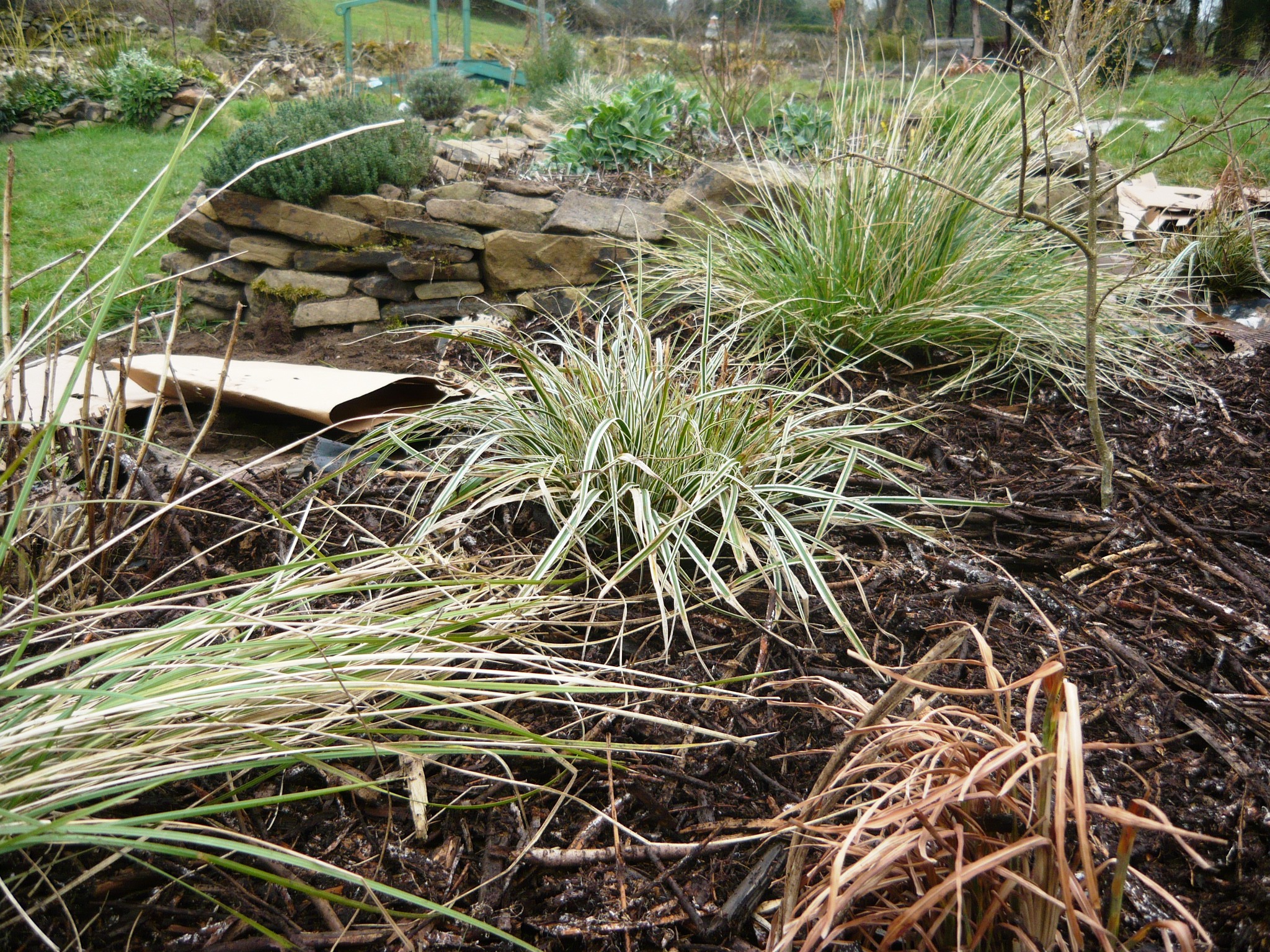
A couple of weeks ago we picked up five potted grasses at a sale and we only paid €15 for the lot instead of the full €75. Today we finally had a bit of time to plant them. We started by forking the ground over lightly to remove all the couch grass that unfortunately has a tendency to creep across and root on any bare piece of land in our garden. We had some shrubs and grasses from last spring’s sale growing in this area and just wanted to add some more grasses to make for a beautiful and hopefully easily maintained part of the garden.

bed with cardboard

wheel barrow

bed half done

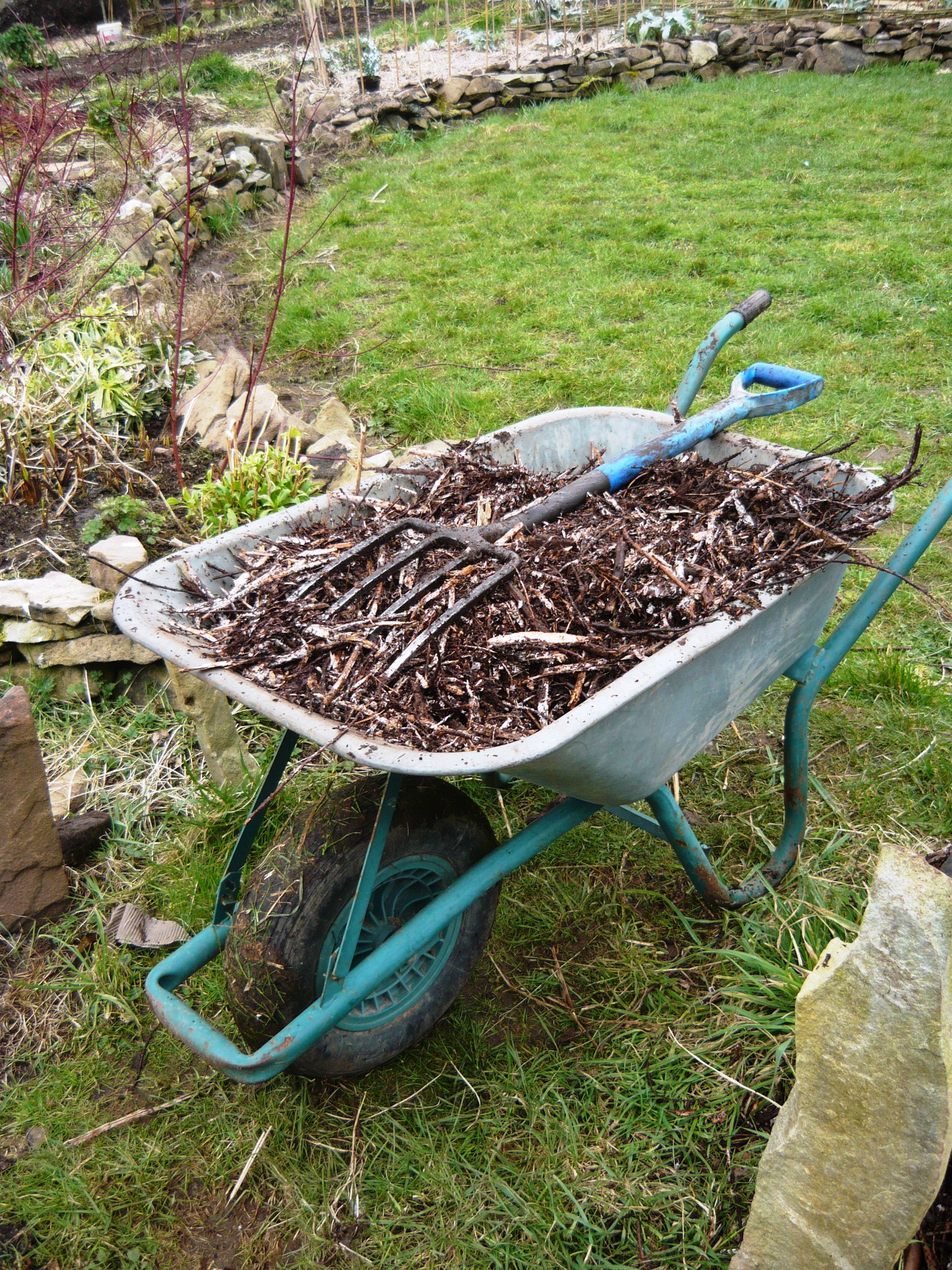
We planted all the grasses, adding a lot of well rotted manure to the planting holes and put down a double layer of cardboard boxes, to suppress the weeds and help with moisture retention if we get a warm and dry summer. We always put down cardboard and mulch on top of it around all small trees and shrubs as without the competition from weeds, they grow up to twice as fast. Our local supermarket is happy for any boxes we take away as they have to pay to recycle them. We have picked up many thousands over the last couple of years. We use them on all our paths as well, under the wood-chip mulch. As mulch for our newly planted grass area we put on a 15 cm layer of shredded Laylandii and we hope this will be enough to work as a weed suppressant for this year and hopefully by next year our ornamental grasses will have taken off and can handle the competition better.

 grass from circle

We do think it looks pretty, as the dark colour of the mulch contrasts beautifully with the golden and variegated grasses. We are so much looking forward to see how it will turn out in the summer.

Helping our endangered bees.

Christmas rose

We always knew we wanted an organic garden brimming with wildlife. Unfortunately one of the most important assets to any garden, the bees, are under threat all over the world. There are many different reasons for this but we believe the biggest one is the use of pesticides, mainly insecticides containing neonicotinoids that are used by many gardeners and industries alike. Other causes are the extensive loss of natural floral habitats, due to modern farming as well as climate change and disease.  Recent wet summers, have made it difficult for bees to find pollen and the Varroa mite is a parasite that attacks bees, spreads viruses, and often cause the collapse of entire bee colonies. Honey bees and bumblebees are dying on a catastrophic scale and this is affecting every other living creature on the planet. Loss of the bees will lead to crop failure and starvation.

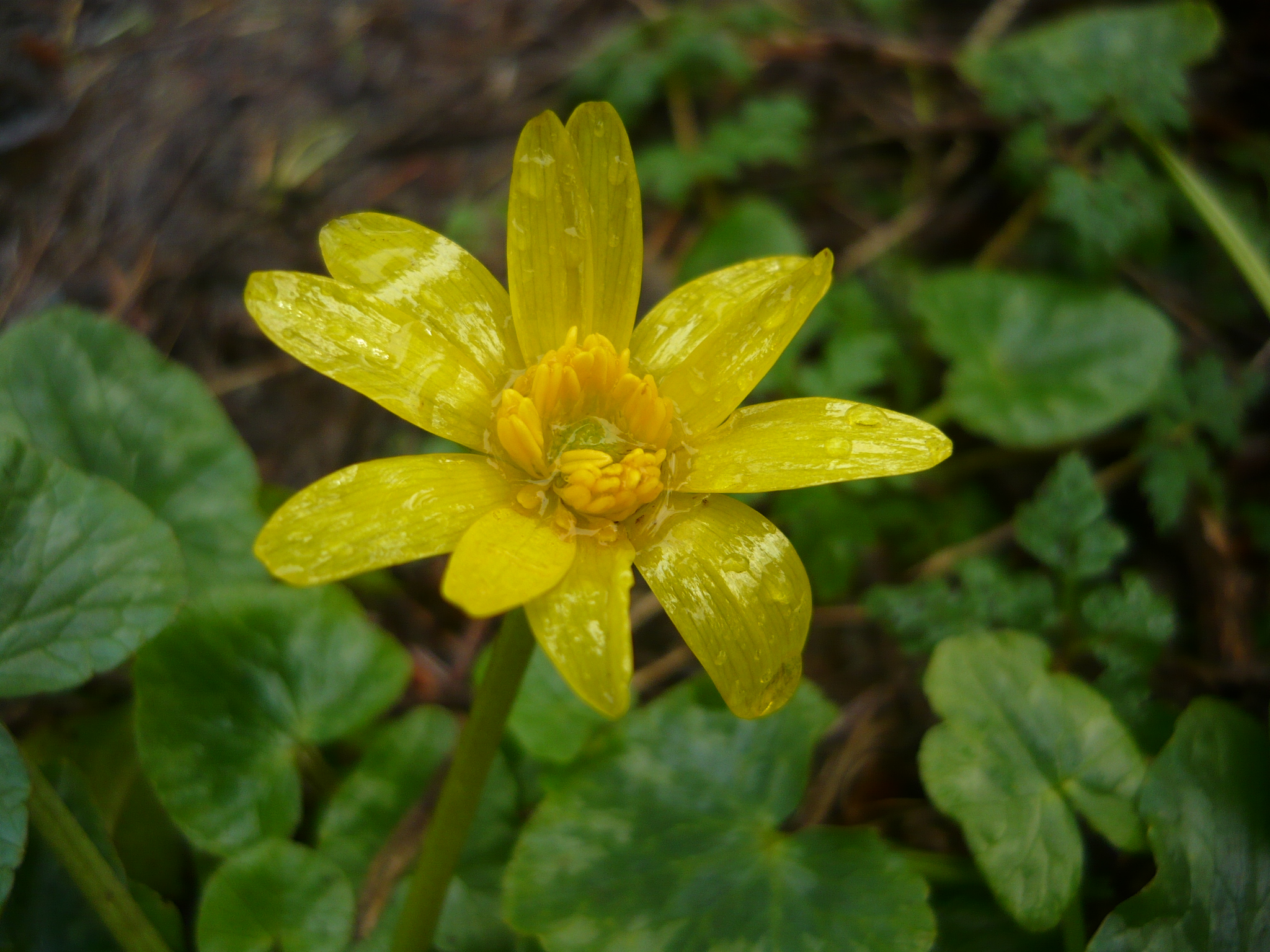
 The good news is that we can all do our bit in slowing this process down. By using no pesticides in our gardens and by providing plenty of flowers for pollen we can give the bees a better chance of surviving. Early in the year, there are not a lot of flowers around and planting some trees, shrubs and flowers that flower at this time of year, can be tremendously important to the bees. It is a good idea to use native plants, as the bees seem to prefer them and they are well suited to the area. We encourage the spread of dandelions, wild primroses and lesser celandine in different parts of our garden.

primrose

lesser celandine

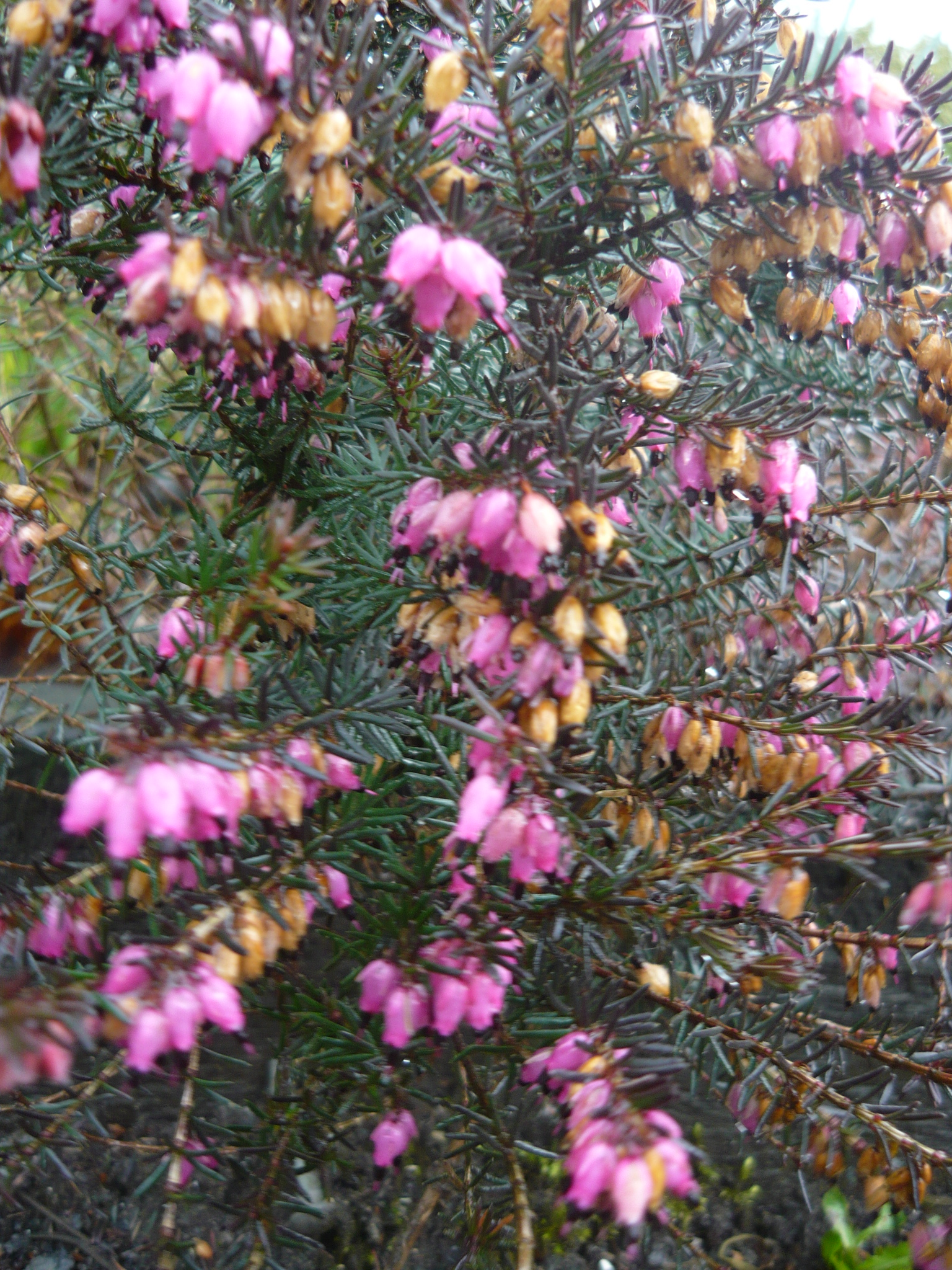
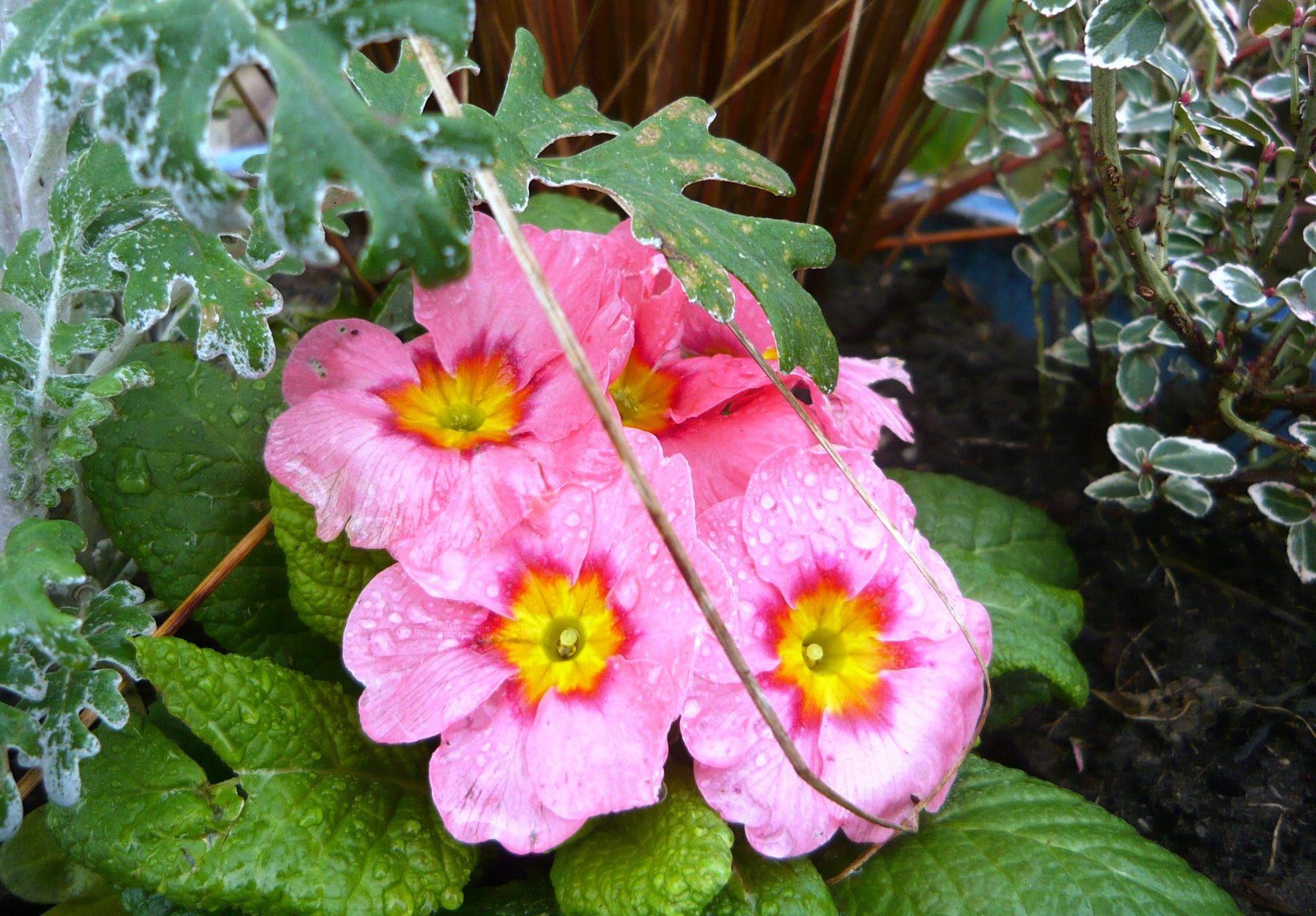
We have planted mahonia, commonly called oregon grape, forsythia, magnolia and gorse. All of these trees and shrubs have winter or early spring flowers. Other useful additions include, hellebore, commonly called Christmas rose, heather, garden primrose and daffodils. We always favour single, old-fashioned varieties of flowers. Some modern plants are bred for showy, double blooms without much consideration for pollinators.

Hellebore detail

 Heather

daffodils

In the future we are planning to keep our own bees, but at the moment we are providing all the bumblebees and other local bees with the best possible habitat, all year around. It is a lovely feeling when you see the first bumblebees of the year, awoken by the spring sunshine and warmth, fly around in search of pollen and you know they will find it in the garden.  The more bees you can attract to your garden, the more of your fruits and vegetables will be pollinated, so everybody wins.  We believe it is the single most important thing any gardener can do. All of the photos were taken in our garden today.

 Garden Primrose.

Beautiful edible perennials.

We have a lot of slugs in our garden. It is a problem as annual vegetables and flowers tend to be attacked when they are small. We still like to grow them, but we also decided early on to go down the perennial route as well. We do have a lot of Nettles, Dandelions and Chickweed growing wild in the garden and like to cook with all of them. Good King Henry, Turkish Rocket and Wild garlic have been added to our collection of perennial vegetables.

Perennial vegetables.

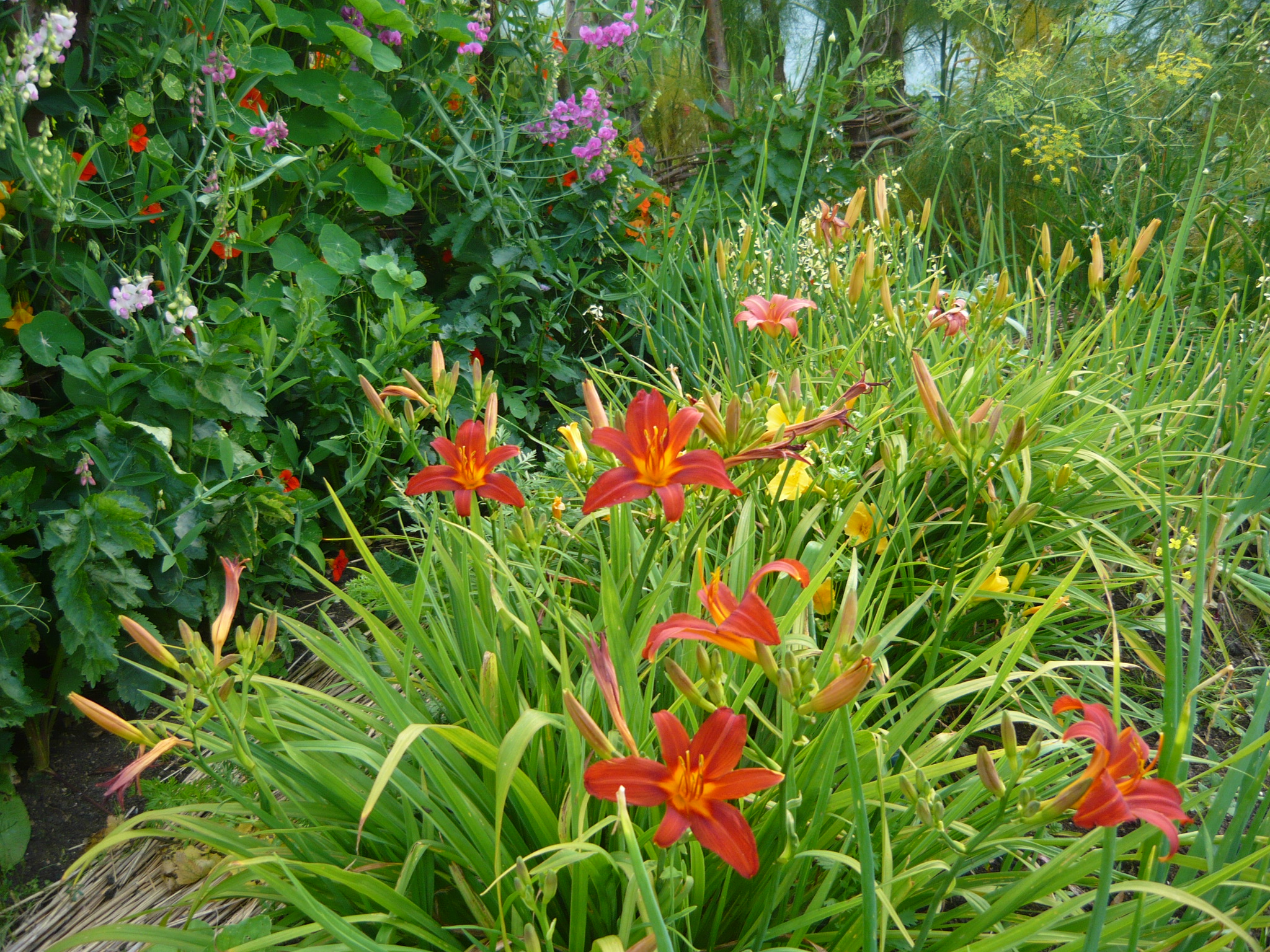
They are reliable and tasty and because they grow in abundance, very hard for the slugs to eradicate. We also like pretty flowers and sometimes they go hand in hand with food production. The Daylily, Hemerocallis is a popular perennial that grows in gardens everywhere. Many Daylilies are edible and have been used throughout China and other parts of Asia for a very long time. We love to eat them, both in salads and stir fries.

daylily

Another reliable salad plant is the Ice Plant, Sedum Spectabile, that has succulent leaves, very tasty in a mixed salad. This is a purple variety along with some Nasturtiums.

Iceplant and Nasturtiums.

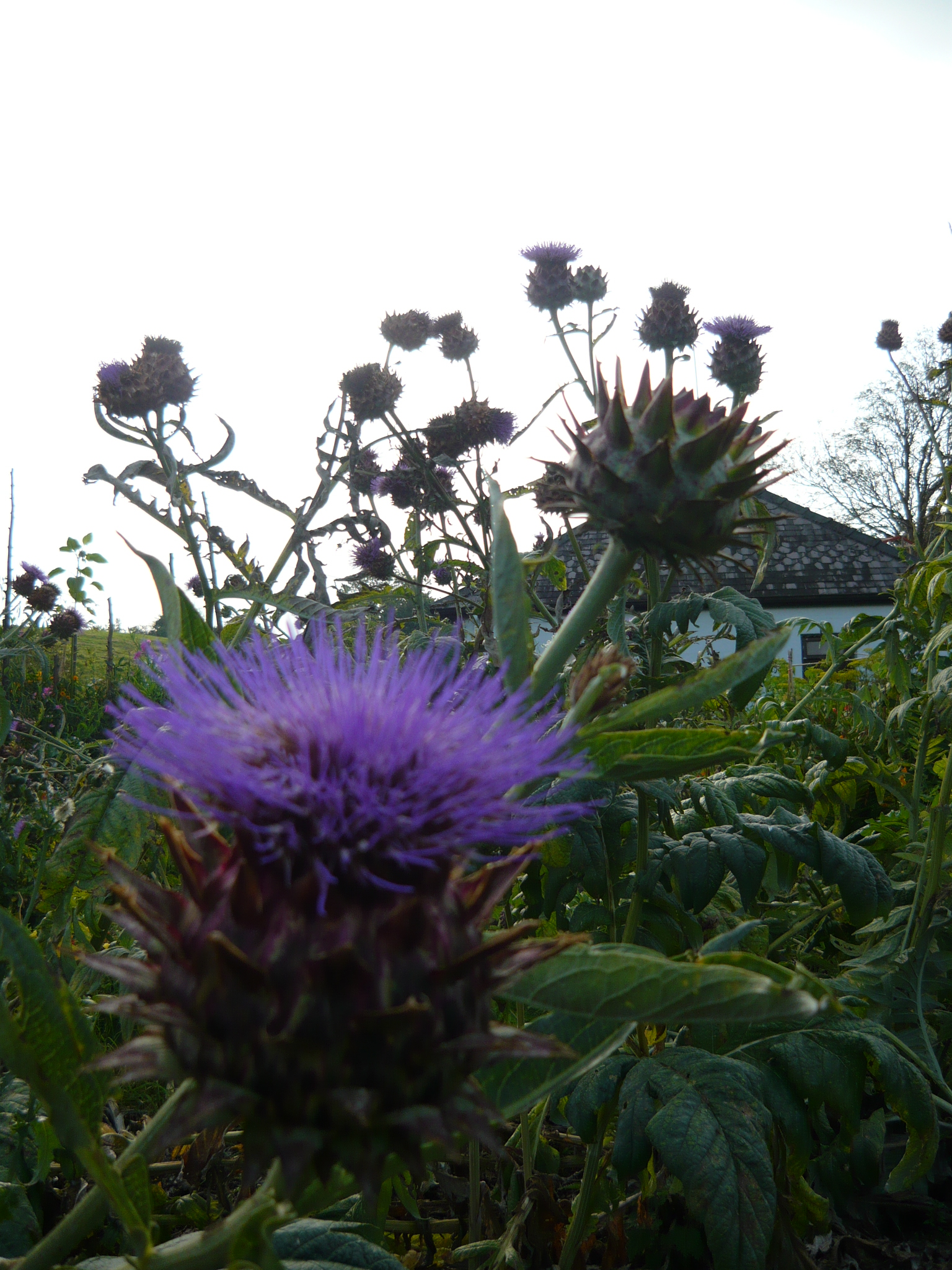
Cardoons and Artichokes bring great beauty as well as taste to the vegetable garden.

Artichokes and cardoons.

Cardoon

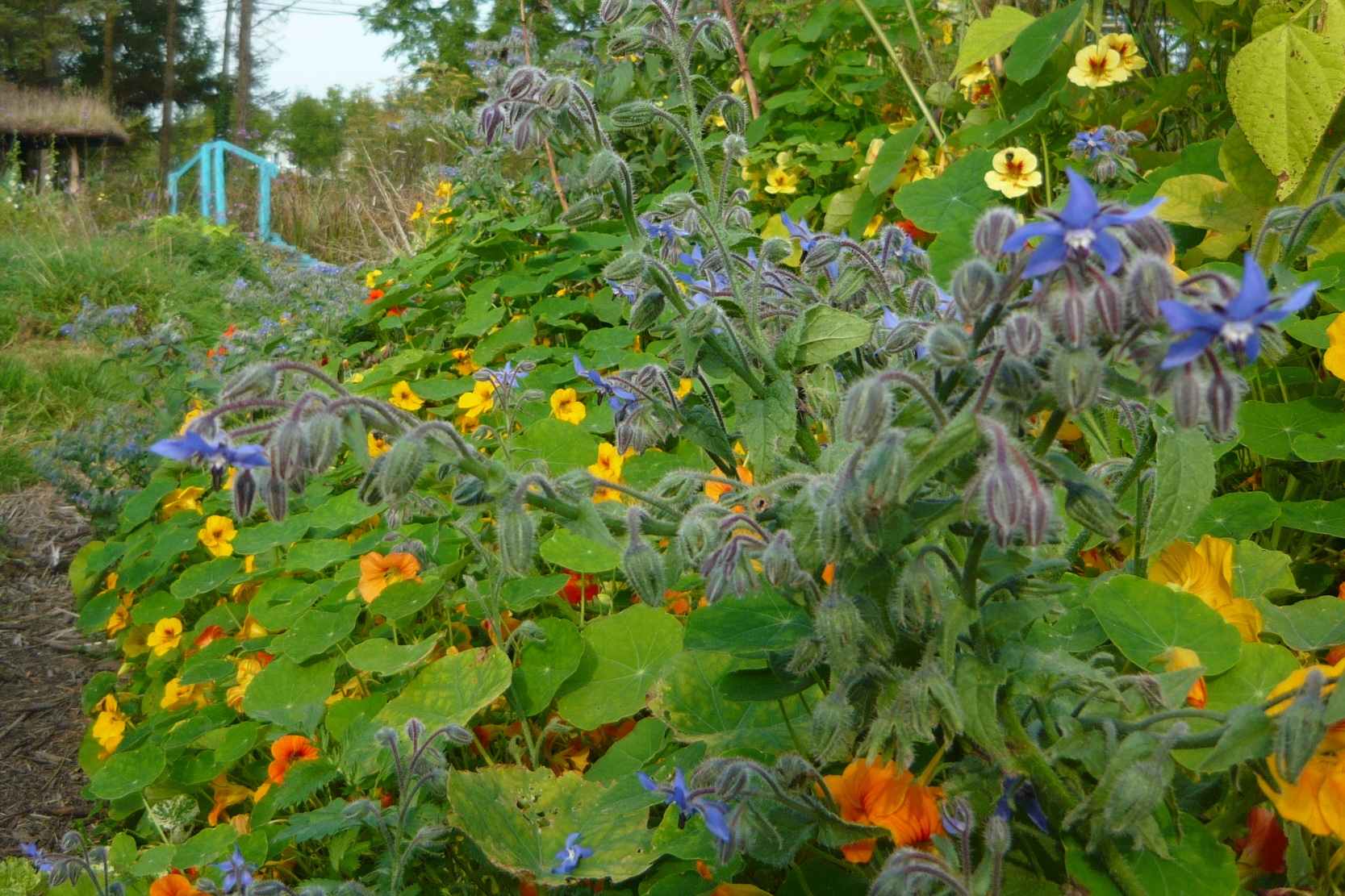
We can not exclude the Sunflowers, Nasturtiums and Borage, although they are annuals, they like to seed themselves around the place and can all be eaten as well as provide floral beauty and food for beneficial insects.

nasturtiums and borage.

It is in fact easy to create a vegetable garden full of edible flowers. We like to incorporate as many flowers as possible in our annual vegetable patch as it confuses some pests and add a lot of joy as well as taste. It is a lot of fun but please make sure you know exactly what you are growing and eating to avoid any toxic plants.

For further reading we highly recommend:

James Wong’s Homegrown Revolution

and

Creating a Forest Garden: Working with nature to grow edible crops. By Martin Crawford.