
Usually we like to get stuck in and do most jobs around the garden and house by hand. But sometimes the jobs are so big that we have to call in the heavies and let them do it for us. We had a digger and roller here for a couple of days, and they did more work than we could have done manually in at least four weeks. Sometimes you have to way up the positives and negatives.

We have not done anything to our drive for the three years we have been here and it was now full of potholes and weeds. The digger scraped off the old top layer of gravel all along the drive and outside our porch. We saved all of this material to add to our paths through the garden, as a stabilising layer.


It was then time to have a truck load of quarry dust delivered and dumped along the drive. Our friend with the trusty digger helped us distribute it evenly and then it was time for some fun. Most of us had a go on the roller, some doing a lot of work and some just trying it out with a big grin on our face. One example is the main authour of this blog who just rode the roller up and down the drive once… For the people who did get stuck in it worked really well for compacting the gravel and now we have a lovely drive without any potholes and quite an even surface.


We have now finished our extension on the inside and time has come to add on the conservatory and connect the two roofs. We are adding a conservatory mainly as a way of further insulating the house and bringing all that lovely sunshine from the south into our home. It will also be a place to dry our washing, starting up seedlings in the spring and just sitting around with cups of tea and coffee, talking to friends.
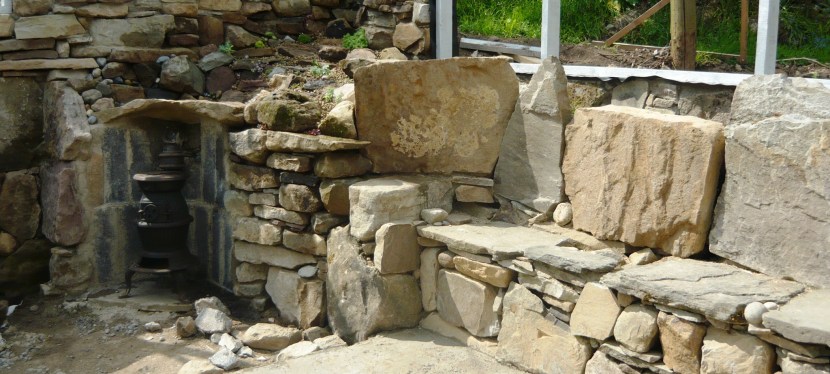
The digger dug out a bit more of the bank behind the house and we will use all the stone that we have found in the garden to build a solid stone wall at the back and side of our conservatory. For the floor we will put down flag stones and leave areas with soil in between for planting right into the floor. A conservatory is probably not the right name for it as it will be more like a piece of the garden with a roof over it. We are planning to use polycarbonate for the roof as it is strong, lightweight and has good insulating properties. It is very exciting to think of all the possibilities this space will bring.

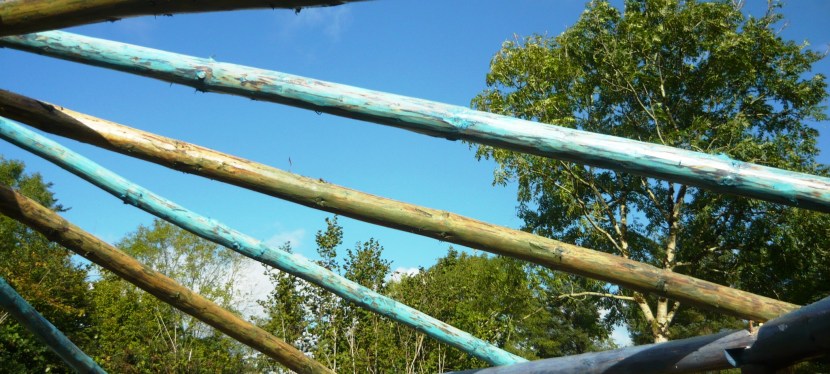
As a first step we put down a small foundation for our main upright post, a branch that came of an ash-tree we had to pollard behind the house. The digger was again a great help lowering it down onto the round foundation. It is great to be building again and to have a nice big project to get stuck into. There are more posts to put up, stone walls to be constructed and windows to move into position. We never have time to get bored around here, and because of the digger and roller, we can get on with the fun bits now, skipping hours, days and weeks of shoveling gravel and dirt.




 We are very excited to present to you the new, updated version of our blog. The aim is to make it more readable, easier to navigate and hopefully a more visually pleasing experience. There will be a few weeks of ongoing transition work happening. We never realized that a “read more line” could be added to each blog posts so that you only see the first few lines of it. We will add these lines to all of our old posts over the coming weeks, creating a more user friendly blog. We will also slowly add pages filled with information about our forest garden and ecologically friendly building practices.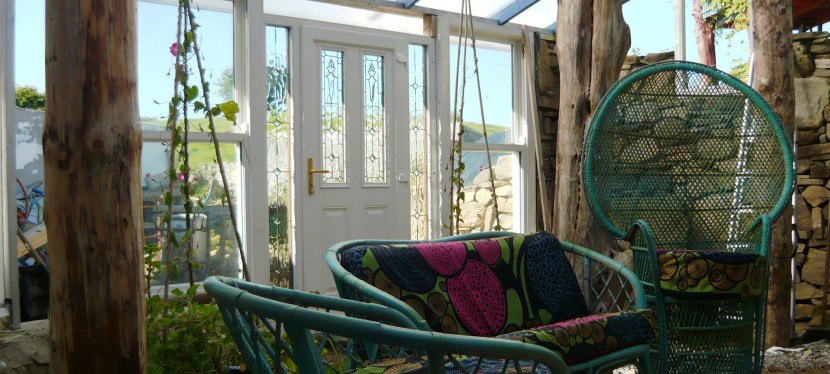




 thegreenerdream