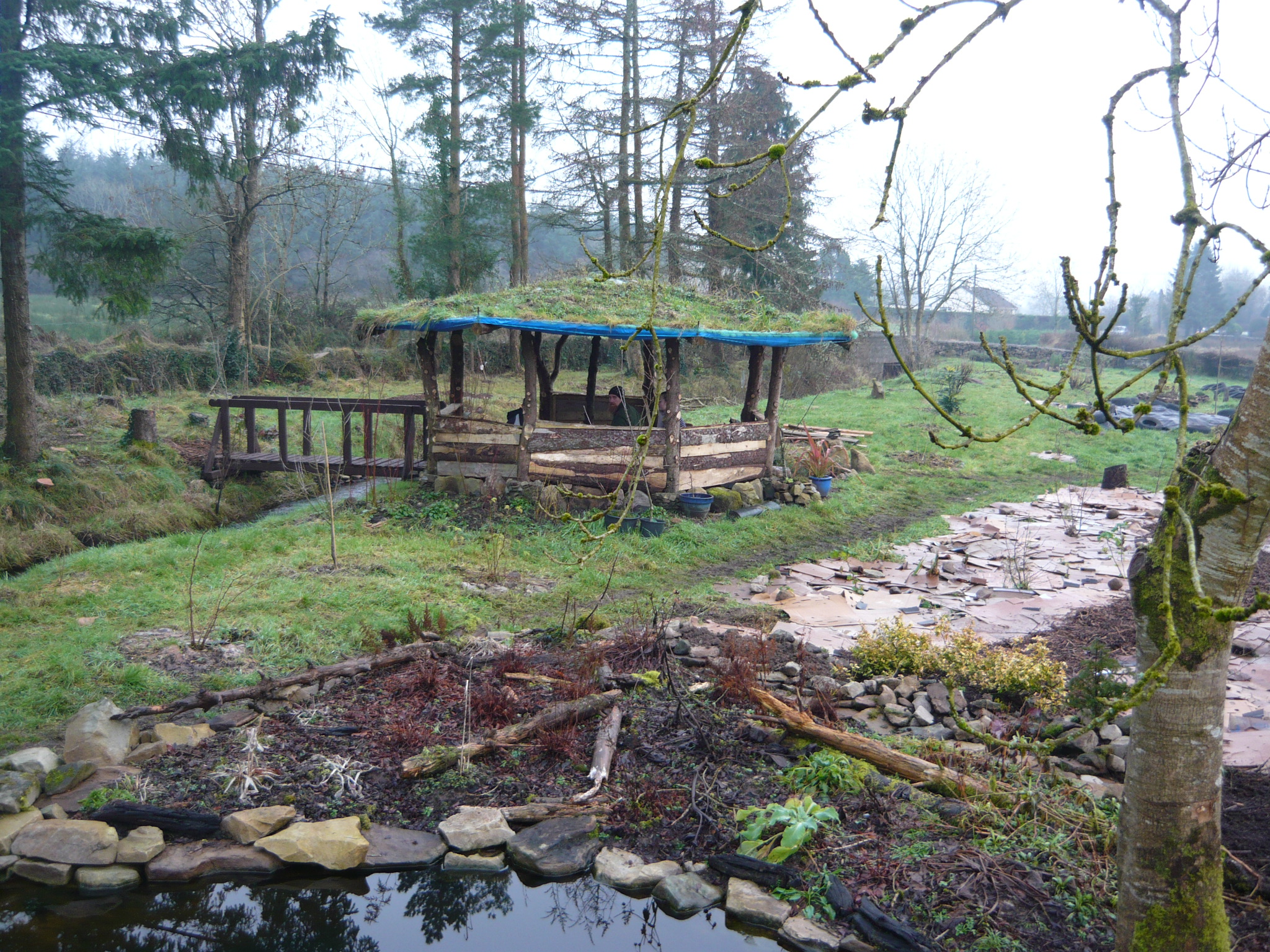
Building a Gazebo with a living roof. Part 2.

winter 2014 259

Following on from our last post, with all the henge pieces nailed to the uprights we moved on to the roof. The easiest way to do that was to make a reciprocal roof. For this design you need an upright post called a ‘deadman’. The formula for the deadman = height of henge + ( diameter of roof beams (thin end) x number of roof beams ) this should stand on a block of wood that is easy to remove. With a reciprocal roof there is a hole in the middle where the beams do not touch. The smaller the hole the steeper the roof, the larger the shallower. We decided we wanted a 70 cm. diameter hole, so we put our deadman 35 cm. from the centre. The first roof beam goes from the top of one of the posts and leans on the deadman. The second roof beam leans on the first and we temporarily tied them together before nailing, to allow for some adjustments. We worked our way through to the last beam which is the tricky one as it goes over the previous beam and under the first. So all the beams are sitting on the one before. The following two pictures are from another roof but show the process clearly.
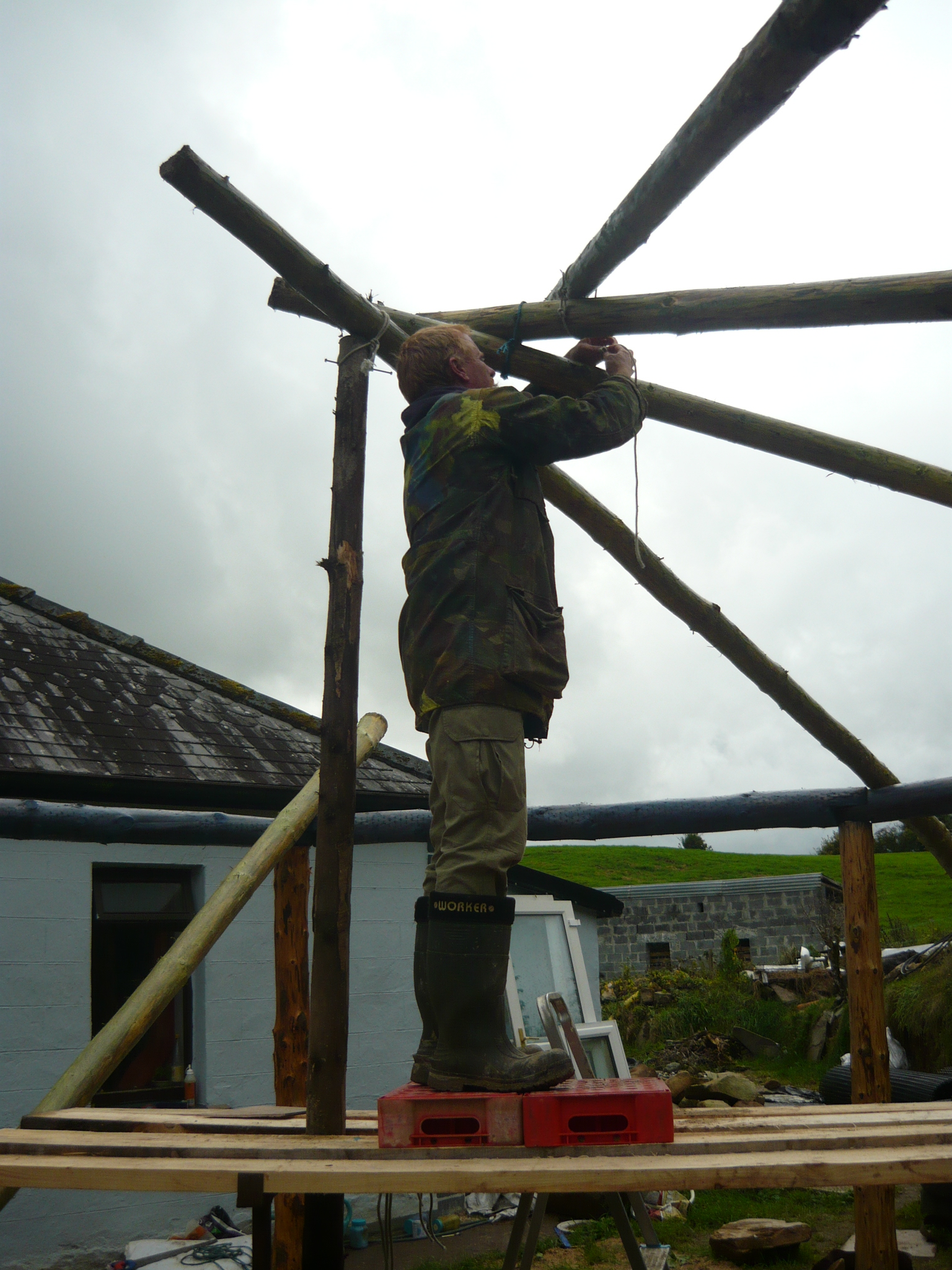
reciprocal roof.

Roof beams.

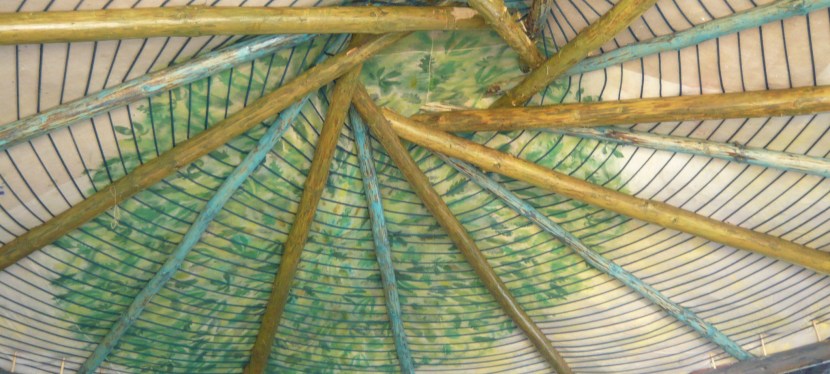
You can remove your deadman safely once all the beams have been nailed together and nailed to the top of the henges. Pre drilling the nail holes is advised to stop the wood from splitting. We left our deadman in place as the Leylandii is very springy and made a bouncy roof. We then strung polypropylene rope in a spiral to support the tarpaulin. We fixed it with wire staples to all the beams. We have not seen this technique used before but we wanted a cheap and easy way to have some support between the beams. It works well and we have since used it on our extension. The polypropylene does not break down as it is not exposed to UV light.

Roof with ropes.

Centre of roof.

The tarpaulin was draped over the ropes and cut off, leaving an excess overhanging the edges. We then rolled this around a piece of wood, in each section and nailed it on top of the beams. This makes a solid edge that stops the soil from washing away. We then covered it with a layer of material, we had been given some carpet backing that was suitable. You could use hessian, old canvas or old carpets. We covered this with a thin layer of soil and seeded it, the roots of the plants grew into the fabric and bound the roof together. We also used some bird netting to hold the soil in place while the plants were growing. It is still there and now the whole roof is very green and flowers grow all over it. We used Clover and mixed meadow flower seeds as well as the grass that was in the soil. This year we have added some Nasturtium seeds and we are hoping they will trail over the edge. We had some off cuts of wood that we used for low walls. On each upright we added a piece of wood to each side that we nailed the off cuts to.

Gazebo view.

Gazebo

For the floor we put down some quarry dust to level it and then a layer of permeable plastic weed control followed by a layer of Leylandii mulch. This has worked really well, with no weeds after nearly two years. This gazebo cost next to nothing. One bag of cement, one reinforcement-bar, tarpaulin, a coil of rope, some 4inch and 6inch nails, some 2×1 rolling pieces of wood and some flower seeds. All in all less than €100. A very low price to pay for a practical, beautiful and comfortable outdoor room. We use it all year around, for meals, playing music, having friends around and doing homework. Have a go, it is quite easy and fun. 

Gazebo in winter.

Building a Gazebo with a living roof. Part 1.

We live in the West of Ireland. It rains a lot here and we wanted somewhere to sit under cover in the garden. After we built our Gazebo, we discovered it was also a lovely place to sit in the shade on a hot summers day. When we moved in to our home it was surrounded with thick, tall Leylandii hedges. There was no light in most of the garden and the whole place felt very enclosed and cut off from the surrounding country side. We decided to replace the hedges with espalier Apple trees, Oak, Beech, Hawthorn, Hazel, Chestnut, Elder, and some other varieties. This is much better for wildlife.

Gazebo.

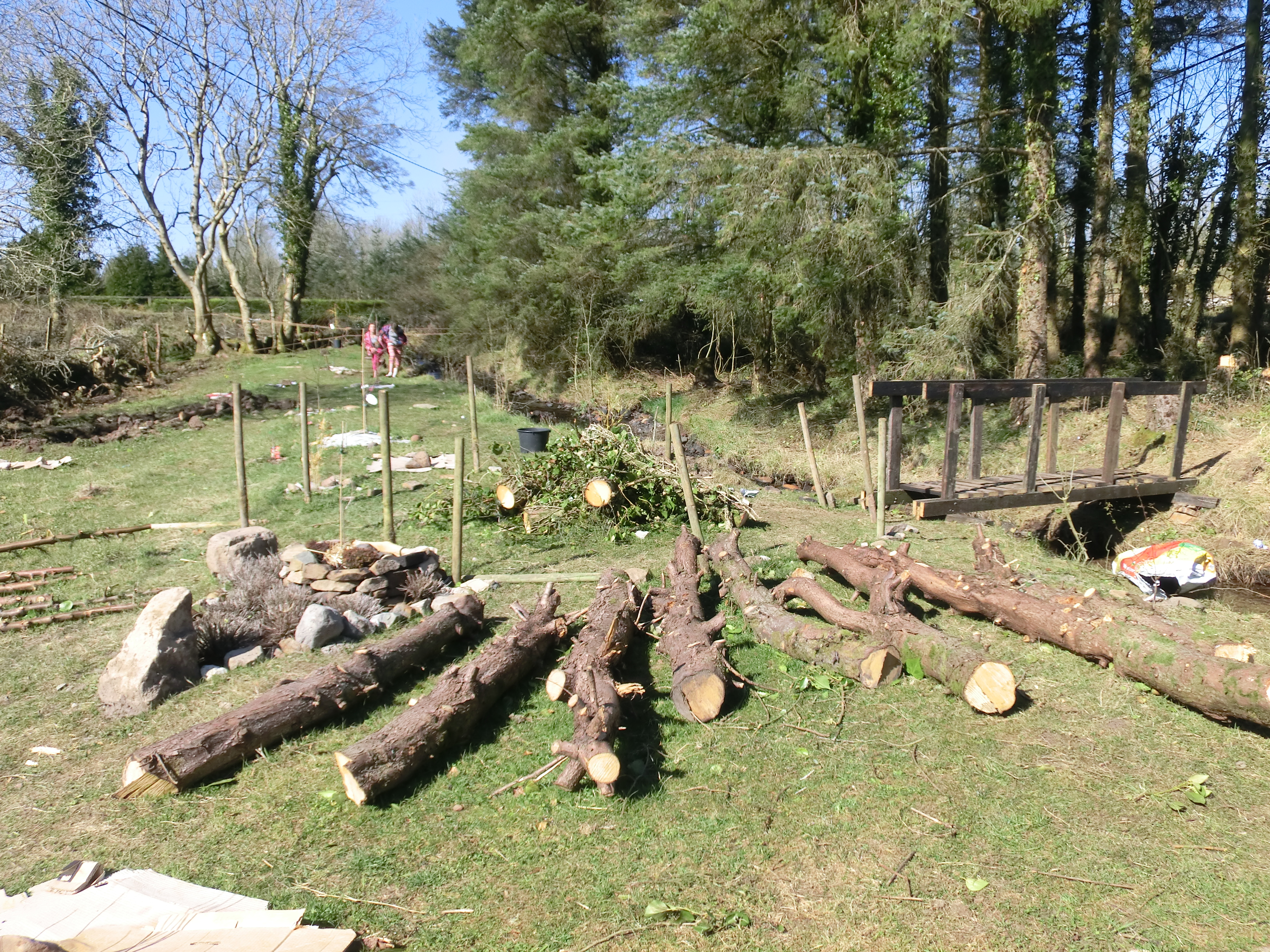
It left us with lots of cut down trunks and smaller branches. We mulched all the small bits for paths and the Gazebo floor. We used much of what was left to construct the Gazebo, choosing the most interesting shapes. This is a project much easier than it looks, so anyone can have a go. The main construction was finished in four days with only two of us working. A few of you could do it over a couple of weekends, giving you time for the concrete in the bases to set.

Start of by deciding how big you want it. Ours is about 3.5 meters across on the inside. Remember that a big Gazebo will require thicker wood. Put a stake in the middle and mark out a circle using a piece of string. Divide it into eight equal parts or any number you choose.

Construction.

Getting ready.

We put our uprights on bases as our original trees were trimmed to 1.8 meters. This left our timber a little short. You could do this or dig holes for your small concrete foundations. We put our bases straight on the ground using cardboard moulds. We lined these with stones and poured concrete in the middle with a piece of reinforcement-bar in the center protruding about 10 cm. We drilled a hole in the base of each post and just stood them on the bases. The next step is joining all the tops of the upright post with a ‘henge’ piece.

Concrete base.

In our next post we will tell you how we made our roof.

Posts up.

Beautiful edible perennials.

We have a lot of slugs in our garden. It is a problem as annual vegetables and flowers tend to be attacked when they are small. We still like to grow them, but we also decided early on to go down the perennial route as well. We do have a lot of Nettles, Dandelions and Chickweed growing wild in the garden and like to cook with all of them. Good King Henry, Turkish Rocket and Wild garlic have been added to our collection of perennial vegetables.

Perennial vegetables.

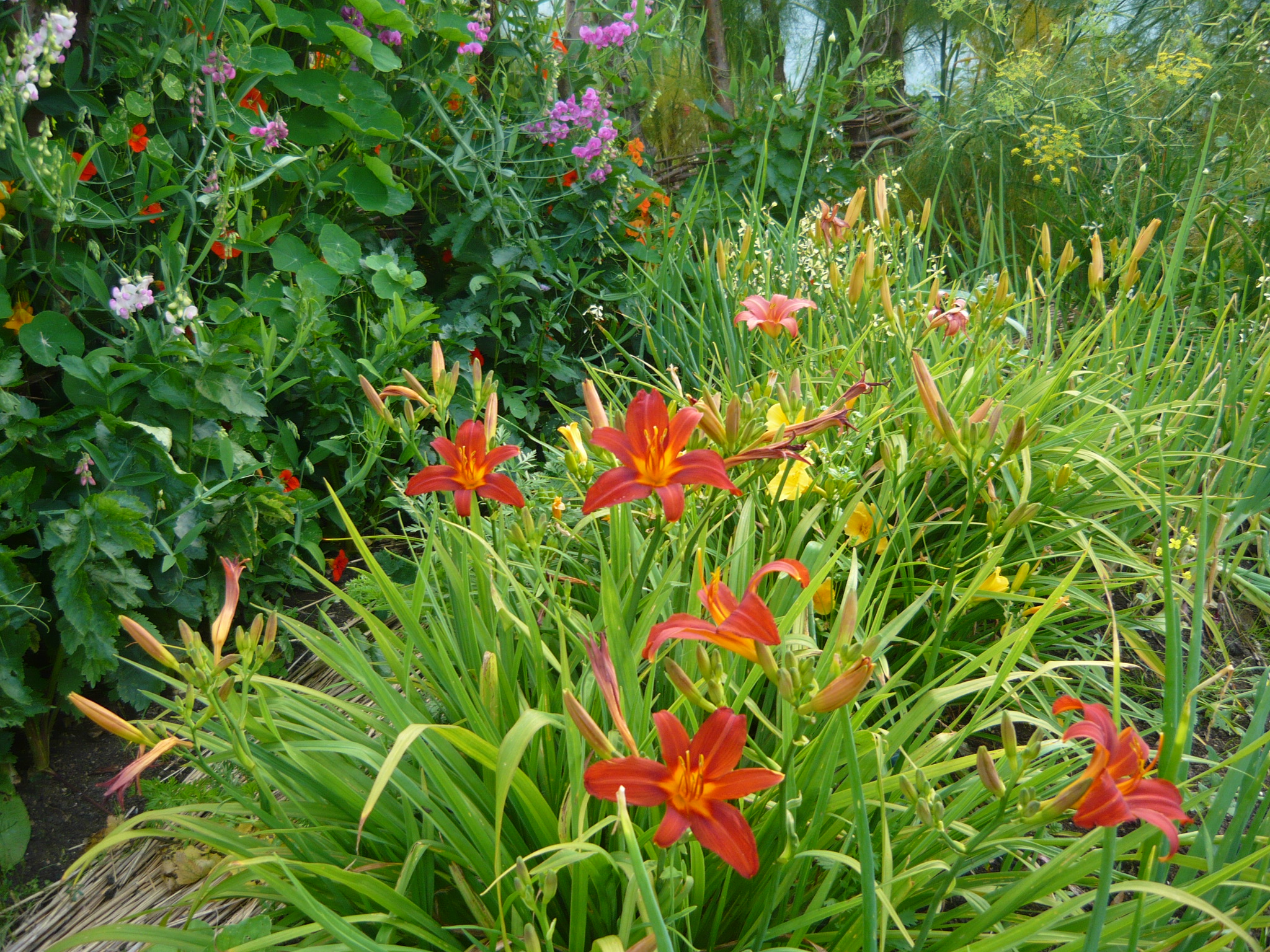
They are reliable and tasty and because they grow in abundance, very hard for the slugs to eradicate. We also like pretty flowers and sometimes they go hand in hand with food production. The Daylily, Hemerocallis is a popular perennial that grows in gardens everywhere. Many Daylilies are edible and have been used throughout China and other parts of Asia for a very long time. We love to eat them, both in salads and stir fries.

daylily

Another reliable salad plant is the Ice Plant, Sedum Spectabile, that has succulent leaves, very tasty in a mixed salad. This is a purple variety along with some Nasturtiums.

Iceplant and Nasturtiums.

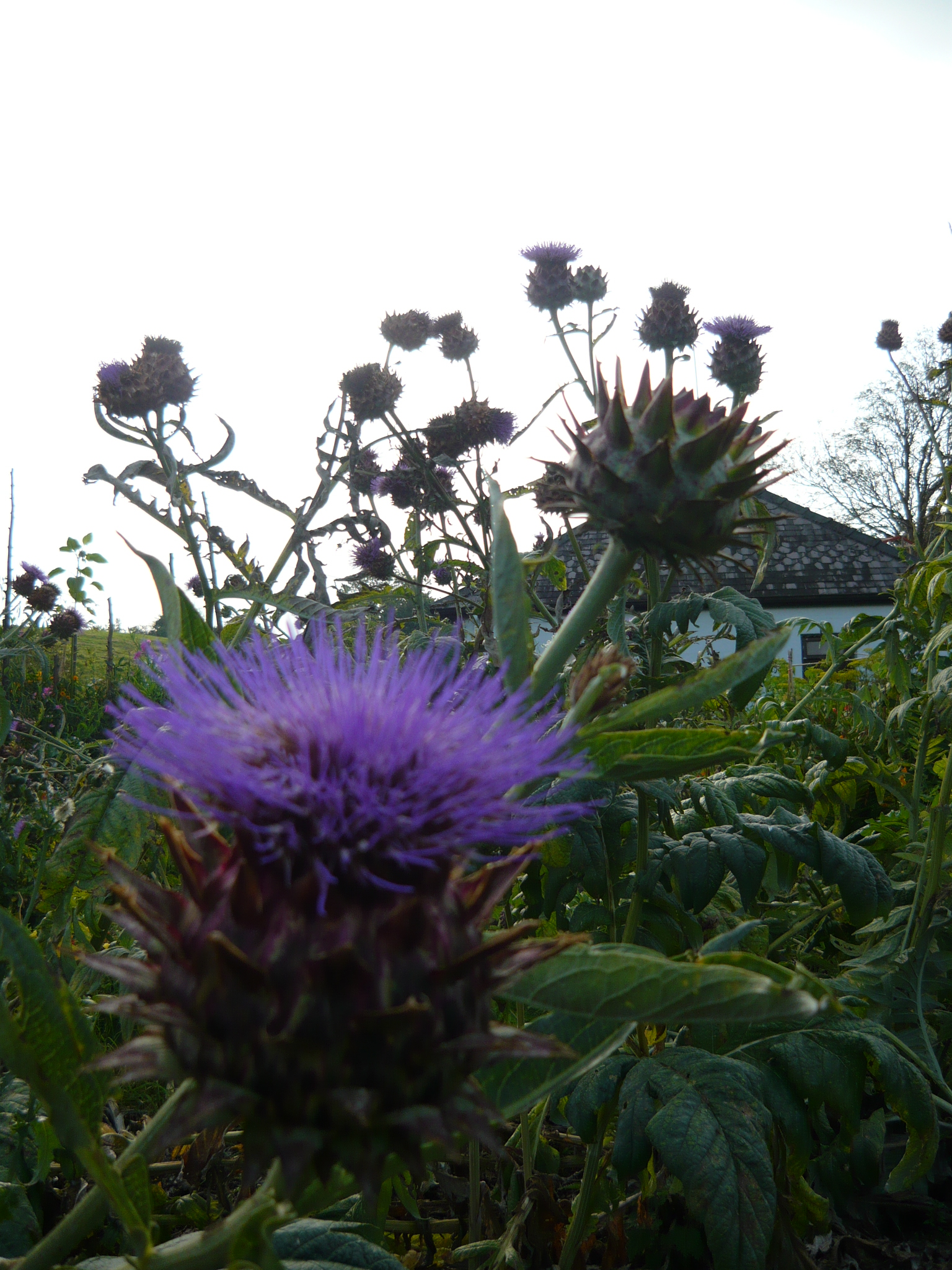
Cardoons and Artichokes bring great beauty as well as taste to the vegetable garden.

Artichokes and cardoons.

Cardoon

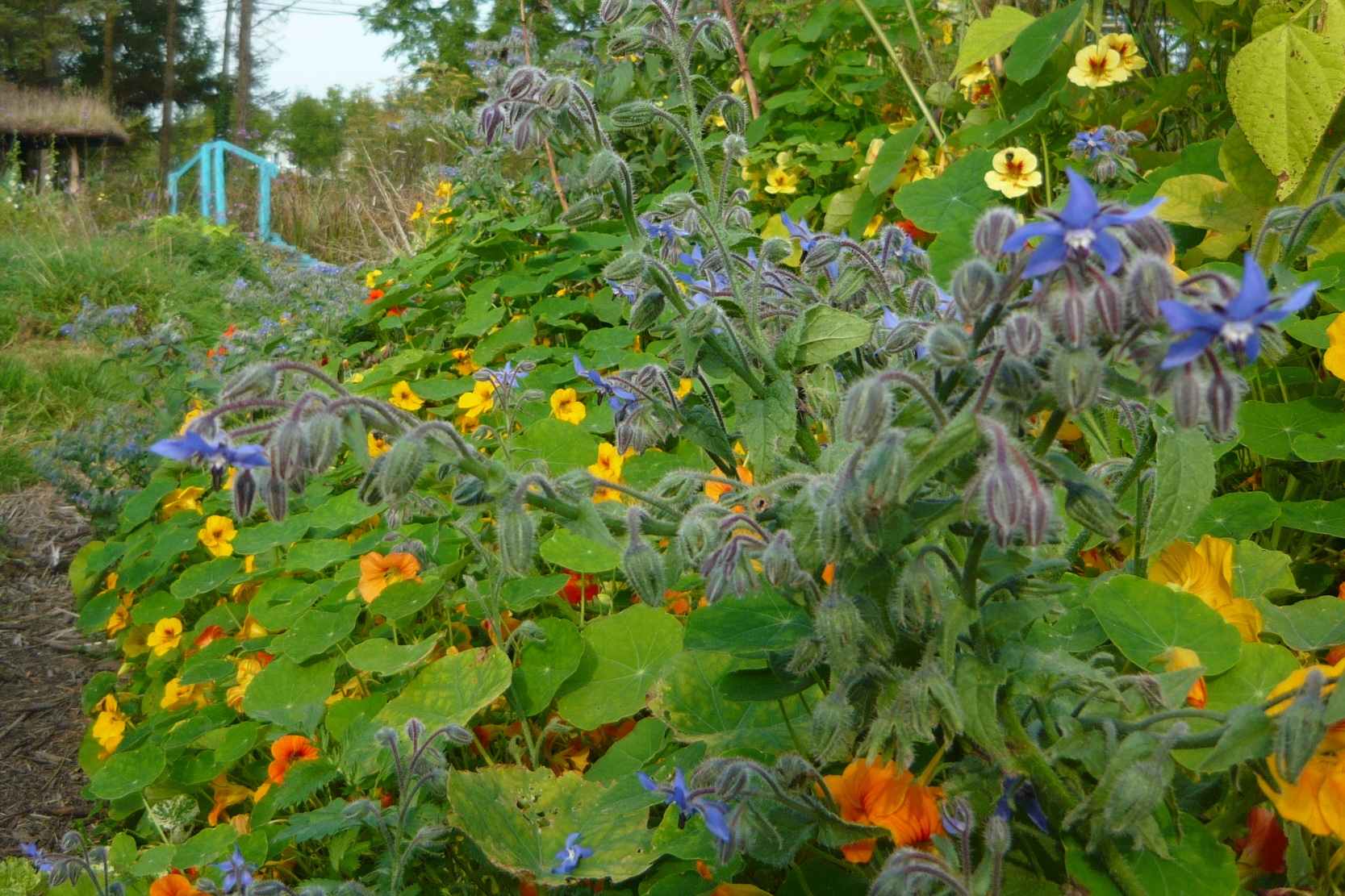
We can not exclude the Sunflowers, Nasturtiums and Borage, although they are annuals, they like to seed themselves around the place and can all be eaten as well as provide floral beauty and food for beneficial insects.

nasturtiums and borage.

It is in fact easy to create a vegetable garden full of edible flowers. We like to incorporate as many flowers as possible in our annual vegetable patch as it confuses some pests and add a lot of joy as well as taste. It is a lot of fun but please make sure you know exactly what you are growing and eating to avoid any toxic plants.

For further reading we highly recommend:

James Wong’s Homegrown Revolution

and

Creating a Forest Garden: Working with nature to grow edible crops. By Martin Crawford.

Building a wild life pond.

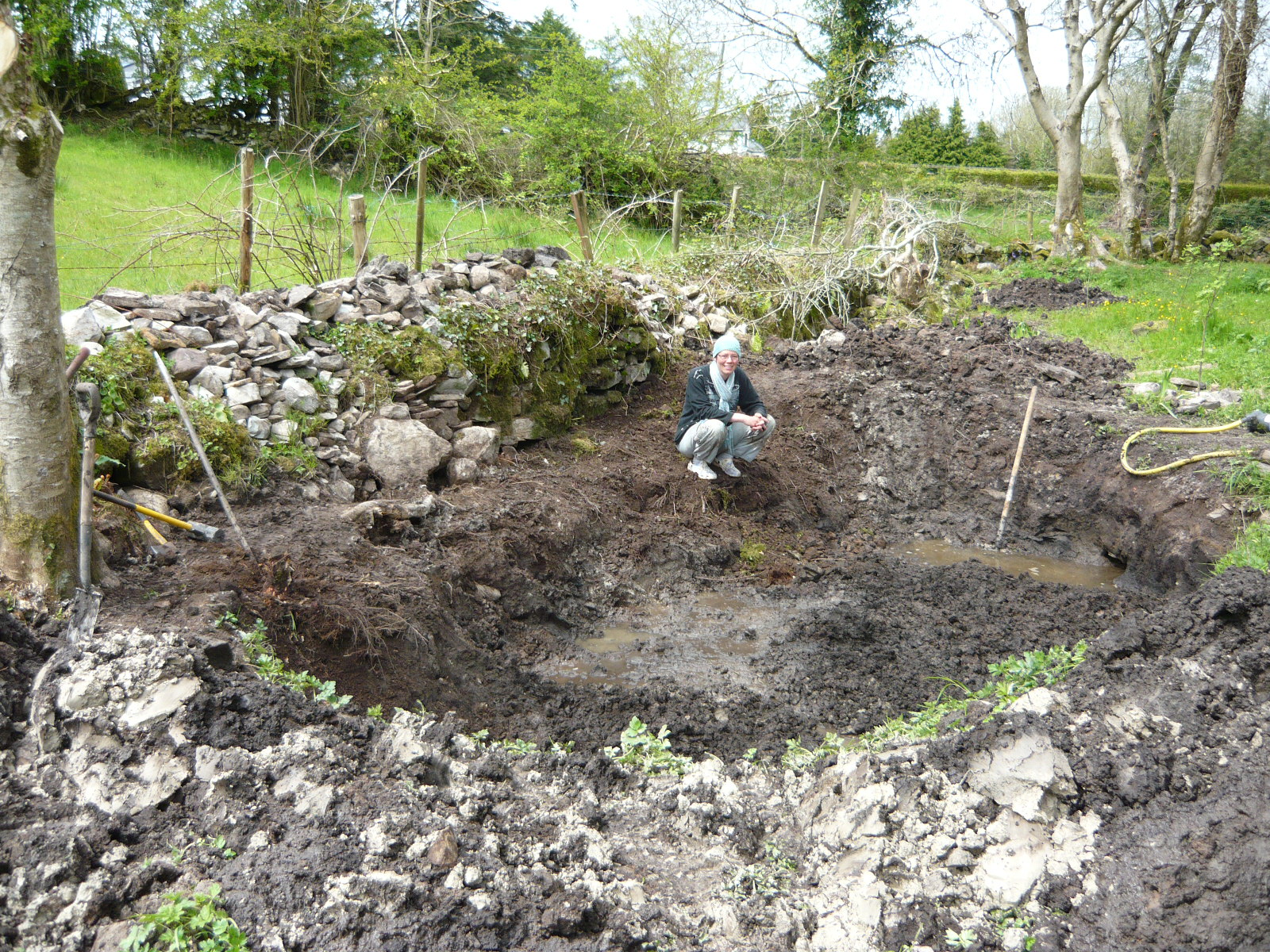
FA pond adds beauty, biodiversity and a great feeling of tranquillity to any garden. We always knew we wanted one. Our work commenced in the spring of 2013, with digging. It is good to site a pond away from trees as the leaves will fall into it, fouling the water. We made the mistake and had to cut down an Ash tree. It was sad but we have planted a couple of hundred trees now so we have somewhat made up for the damage caused.Some shade is good at least for part of the day. It is also good to make the pond as large as possible as it will help in creating a clear healthy environment. For a wildlife pond you need at least one side of it to be a gentle slope, where wildlife can have easy access in and out of the water. It is also good to have some different shelves and levels under the water for plants and animals.

Digging the pond.

Digging the pond 2

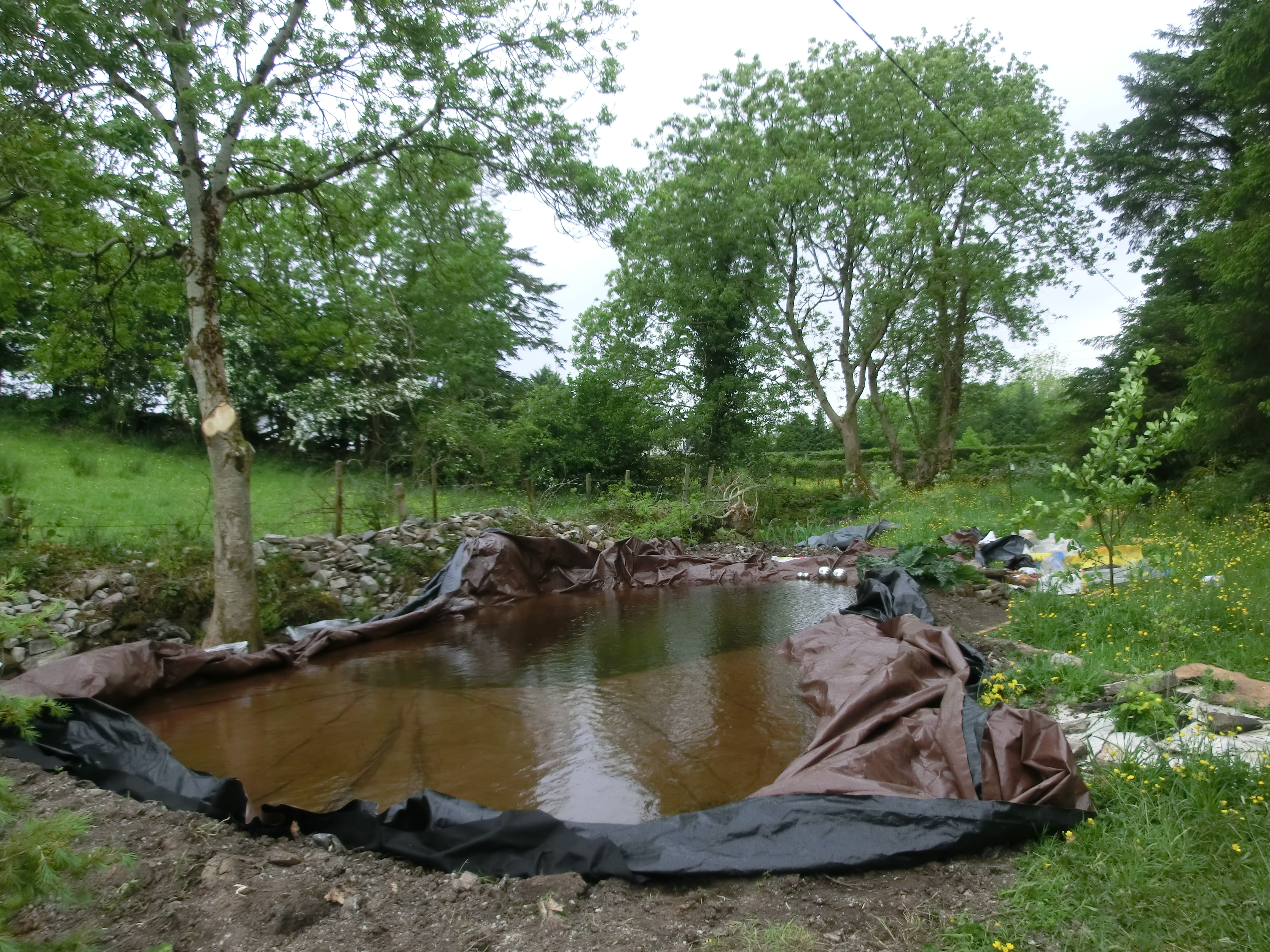
The pond-liner we used is made from Polyex and comes from Bradshaws Direct in the UK. When used with an underlay it is guaranteed for 35 years. We also wanted a bog garden and you can see it here in this photo, as the lighter shallower part.

Pondliner in place

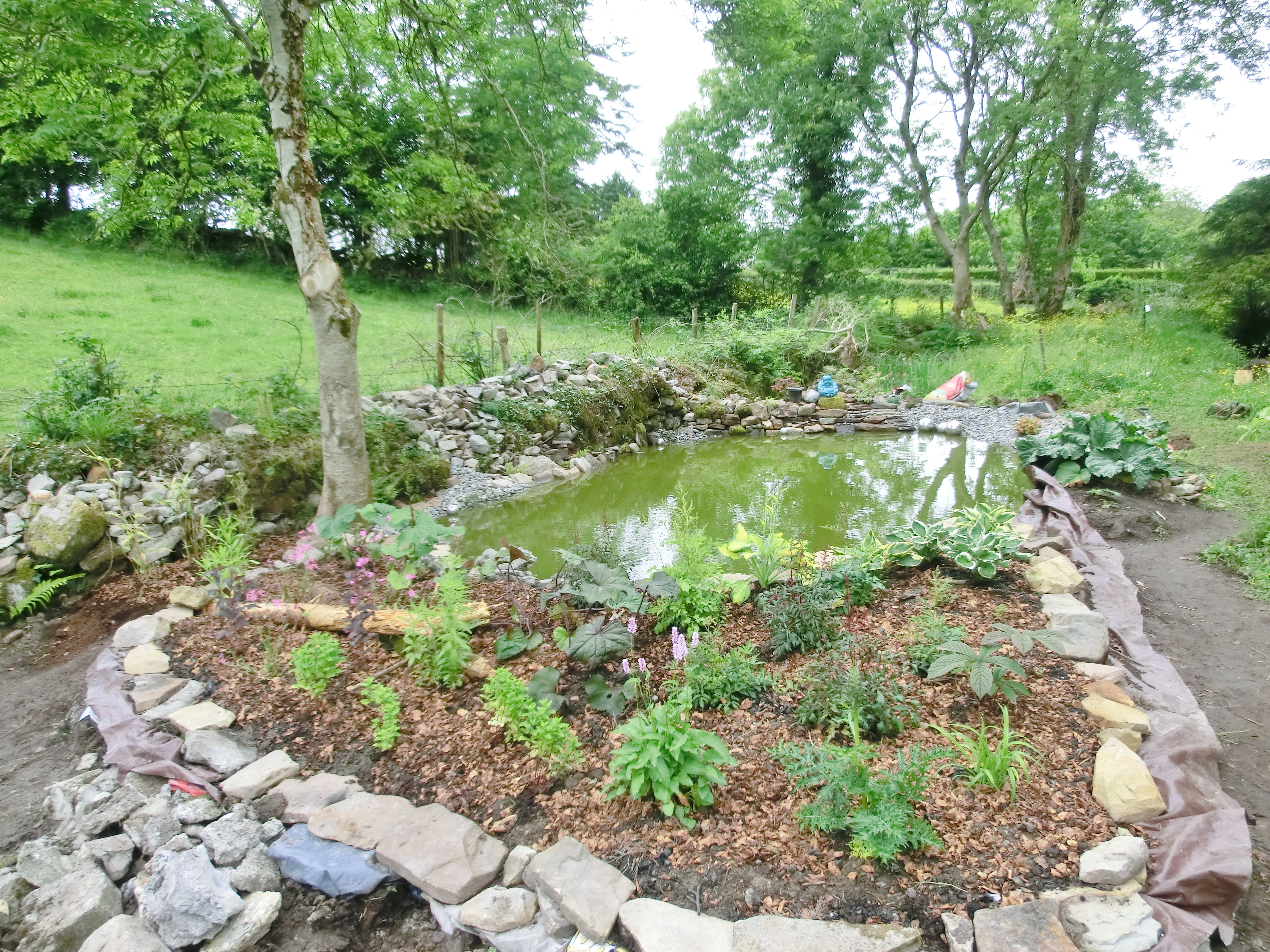
To prevent the soil in the bog garden part from entering the pond we built a small stone wall, separating the two. We filled the bog garden part with a mix of moss peat, manure, compost and garden soil and planted it up with water-loving marginal plants. We built up the edges under the liner all the way around the pond and bog garden with small stones and soil to give it an even edge. It is important to check your levels before you start digging as the ground needs to be relatively flat for the water to stay in. We then covered the edge of the liner with a small stone wall and in one part a pebbled beach, great for small creatures and larger ones too, like hedgehogs, coming for a drink.

Bog garden planted up.

We filled the pond in June 2013 partly with water from a stream in our garden and partly with rain water. It was to late for frogs, toads and newts to spawn that year but some of them moved in to the area surrounding the pond.

summer 2013

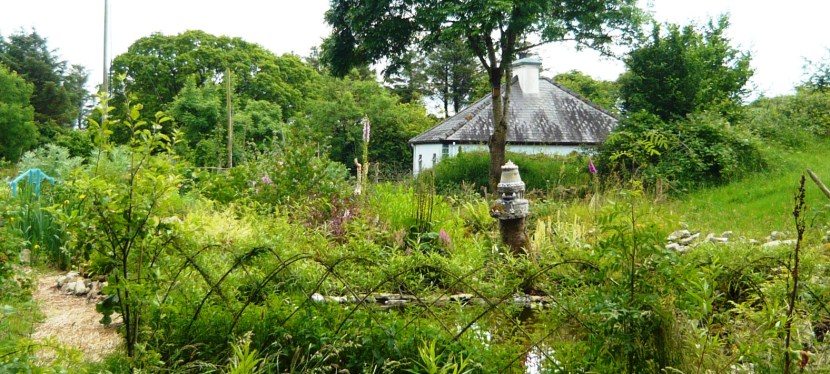
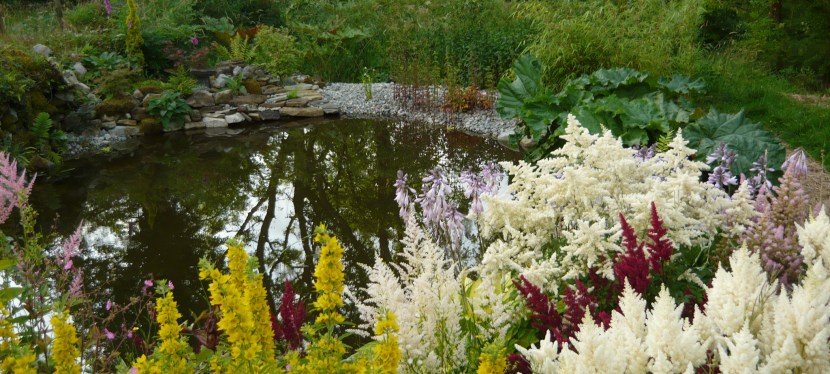
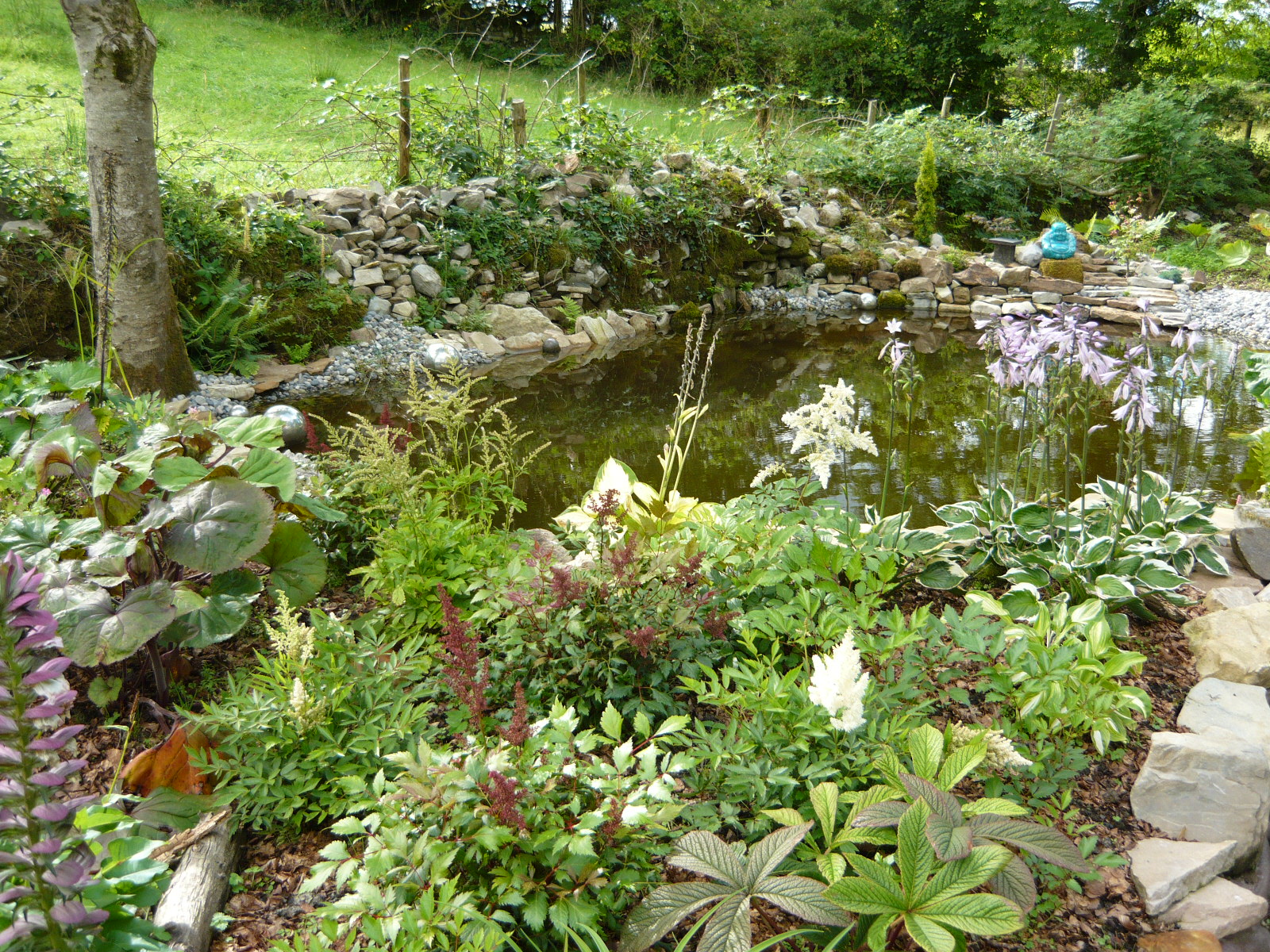
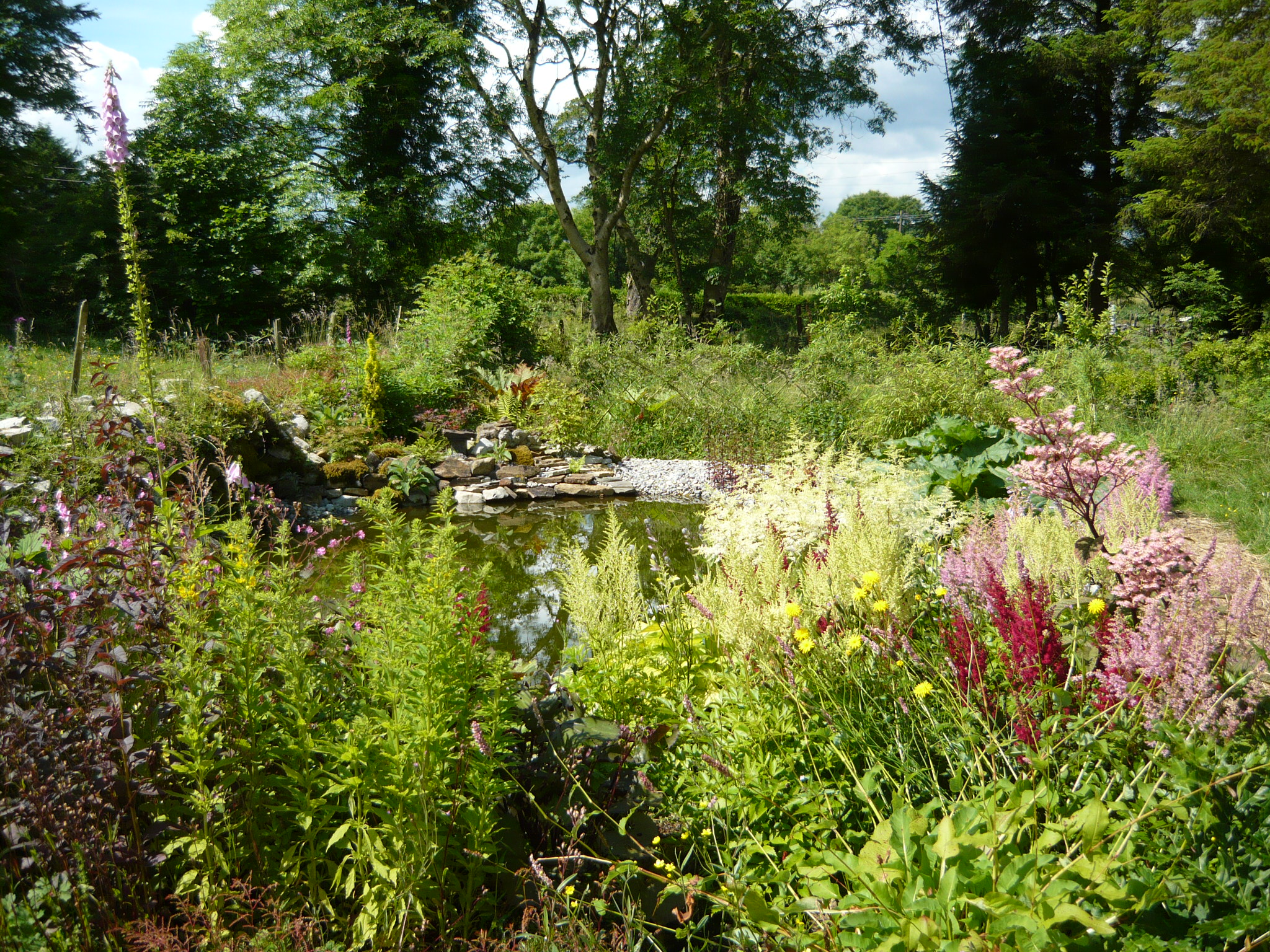
In 2014 we had hundreds of little frogs hatching as well as a good number of newts. We hope they will be a great help in keeping the number of snails and slugs in the garden under control. Water beetles, whirligig beetles and many other creatures now inhabit our pond and it is a very beautiful place to sit and observe all the wild life. The first picture below is from Winter 2014 and the following from Summer 2014. You can see how much these plants love having their roots in water. 

winter 2014

summer 2014

summer 2014 2

Building with tyres.

Before work commenced.
We have long been admiring Mike Reynolds and his Earthship designs, that started out in the 1970s in Taos, New Mexico, and has spread to many places across the world. The Earthship uses old car tyres as a major building component. When it was time to start the extension to our little cottage, we decided to build a semicircle tyre wall on the north and east side of the planned space. The purpose of the wall is to hold the earth-bank in place and protect the building from the worst of the elements. The first long, hard, but essential part of the construction was getting the drainage sorted out. We dug a ditch and added a perforated drainage pipe along with gravel and a permeable plastic sheet to protect it from clogging up. We then backfilled it with earth and levelled the whole area.

. Dranage

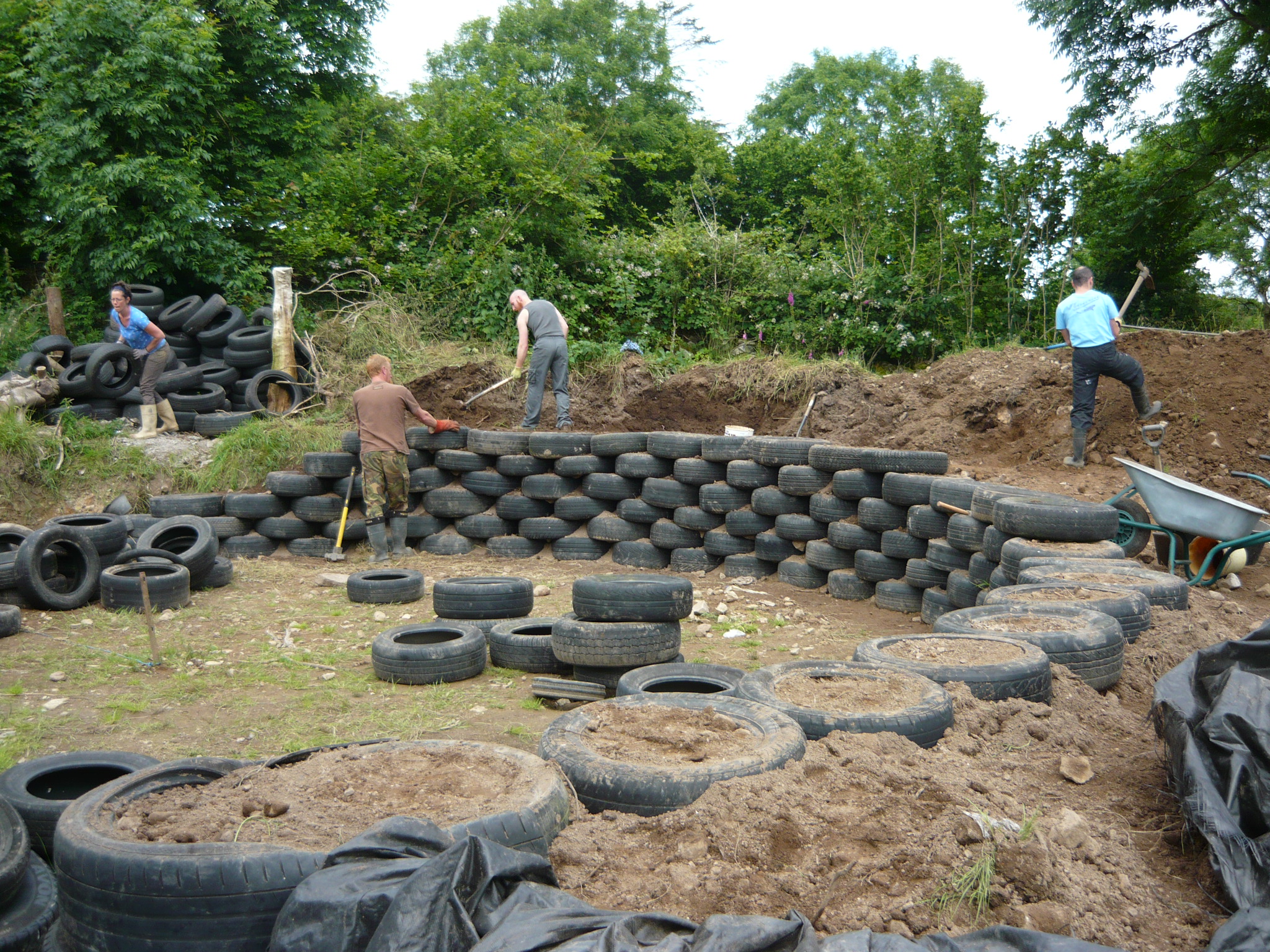
It is important to have a level and stable surface for your first layer of tyres. It takes about two whole wheel barrows of soil to fill one tyre. We had a lot of soil for this purpose as when we moved in, the area behind the house was sloping and had to be levelled out for the extension. Each layer consists of 25 tyres and we added 12 layers in total. Thankfully we had friends around for some of the backbreaking work of filling and emptying 600 wheelbarrows of soil for the wall and at least 800 more wheelbarrows of soil to fill the space behind the tyres, rebuilding the earth-bank. First few tyre layers.

The soil needs to be compacted into the tyre by pounding it with sledgehammers. You can use small lump hammers at first to get the soil into the rim and then fill it and pound in a circular motion across the top. We were not overly concerned about getting the tyres perfectly filled, as this is just a retaining wall that will be plastered over and not a part of the actual building. You do need to be careful though when choosing your tyres for each position and layer, as you are likely to have a selection of sizes. Think about your project as a giant jigsaw puzzle where you want each row to be as uniform as possible.

Getting there.

It is very rewarding to use a material that is a by-product of our modern society in a constructive way. Getting tyres is easy. If you go to ask at a tyre changing place, remember that you are in a position to bargain a bit. The place is likely to have to pay quite large amount of money to dispose of their tyres, so you asking for them is going to save them a lot of money. Ask politely if they can deliver them for free. They may even pay you a little bit to take them. We do not like to think about how much it would have cost us and the environment to build our wall out of a more commonly used material, like concrete blocks and cement.

Started roof construction.

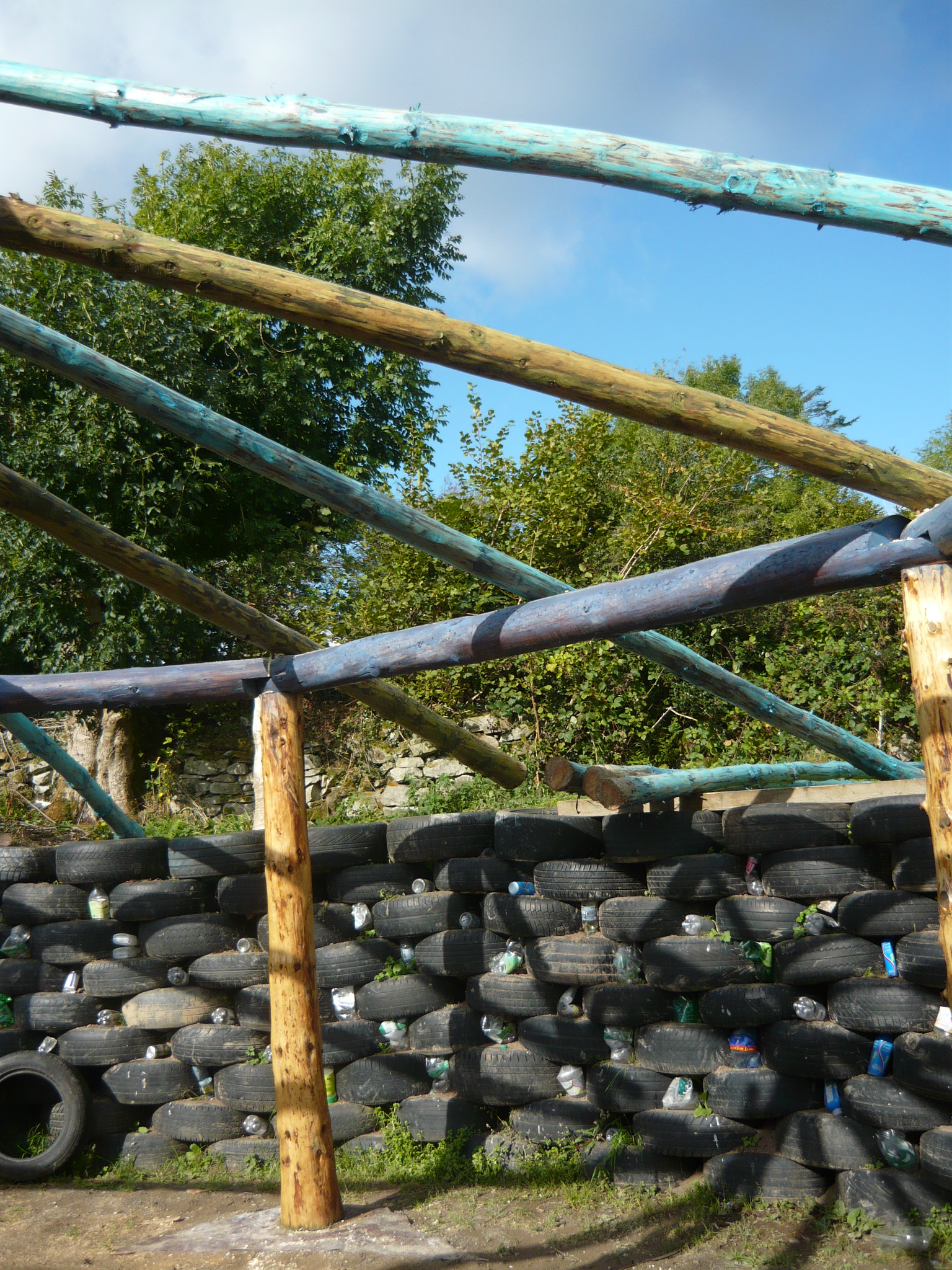
The spaces in the wall are filled with old plastic flowerpots, drinking cans and plastic bottles etc. to save on the amount of render we are planning to use.

Wall with infill.

How to increase your bird population.

When we moved into our home, in late January 2013, there were not a lot of birds to be seen around the place. Since then things have changed dramatically. We now have a thriving population of many different species of wild birds. In part this can be put down to us putting nesting-boxes up, creating two wildlife friendly ponds and growing thousands of flowers and vegetables in a place that up until then was just a field of creeping buttercups. But the biggest contributing factor must be providing food for the birds. We have planted a lot of shrubs and trees with berries, like the native Hawthorn, Rowan, Holly and Elder along with Teasels, Fennel and Sunflowers. We leave the berries and seed-heads in place all winter and they are proving very popular with the birds.

We also wanted the enjoyment of seeing the birds close up so we created some birdtables close to the kitchen window. All that was needed was two old round cheese-boards, some chopsticks and a couple of cheap old cymbals from a drum kit. We tried without the roofs for a while and just stuck the cheese-boards to the top of the branches, but we have some very hungry jackdaws about that came and hacked the food to pieces very quickly so something had to be done. The cymbal roofs also keep the rain away, something that is quite important in the West of Ireland.

Bird table in snow.

Because buying fat and suet balls can be expensive, we wanted to come up with an alternative. Now we make our own economical round feeding blocks that fits nicely on the feeding tables, and last a very long time. If you would like to give them a go all you need is some cheap baking or pastry fat from the supermarket or some lard from your butcher’s shop. Melt it in a saucepan and as soon as it is liquid, remove from the heat and mix in some seeds for wild birds, (we like to buy a big bag as it is cheaper), some oats, breadcrumbs, left over porridge or rice or any other suitable ingredients. We made to much cranberry sauce for Christmas, and our birds were happy to feast on some slightly pink blocks for weeks… Once you have a fairly solid mix, pour it into some old plastic plant pots, lined with plastic bags so the mixture does not escape through the holes. Press down slightly, we like to stand the pots inside each other, and the bottom of one pot flattens the mixture underneath it. Let set for a few hours or overnight, pop on your table and enjoy watching your feathered friends. We have two hanging peanut-feeders as well and most birds like alternating between the feeders and the table.

Great tit looking for a meal.

It might take a while before your population picks up, but be patient and you will be greatly rewarded. It has sometime been suggested that you should not feed your birds all year around, but more recent studies have shown that if you continue to feed your bird, not just in the Winter, they have bigger broods and more chicks survive. It is lovely to look at all the different birds and they will be your organic pest control, eating a lot of unwanted creatures before they get a chance to eat your vegetables.

Mosaic for free.

summer 2014 046We have always been in awe of beautiful mosaic and when we bought our home in the autumn of 2012, we were thinking about how we could afford to incorporate them into our living spaces. We needed to renovate both the kitchen and bathroom, as well as tile several floors. At first we asked friends if they had any leftover tiles and we were lucky to get a lot of tiles that way. We then went to a few tile outlets and shops in our area and bought a few especially beautiful ones and tiles on sale. All of these shops were happy for us to take a look in their skips and that is when the real adventure began. We could not believe how many tiles are being thrown out. We found the lovely sheet mosaic shown in the center of the picture. It is lovingly handmade from  natural stone, and had been chucked out because one corner had a few stones missing. We also found all the surrounding tiles in a skip. In this way we have been able to make a floor for our kitchen, several walls in our bathroom, (a project in the making) and a tiled fireplace and splash-backs for the kitchen. The next big project is a 40 square meter floor for our new extension, entirely made from salvaged tiles.

We can highly recommend a visit to a tile skip in your area. Bring along some heavy duty gloves, ask politely for permission and be careful of all the razor sharp edges, but above all have fun and dream about what you can create with your beautiful finds. You will be doing the earth a big favour in the process.

Hello world and welcome to the greener dream!

We are a family of six, realising our dream to live a greener, happier and healthier life in Ireland. This blog will be about our garden, house and all the ways we apply our creativity to our everyday lives. At the moment we are building an extension to our little cottage. It is mainly made from recycled and natural materials like old tyres, glass jars and bottles, soil, straw-bales etc. We hope you will follow our journey here…