One, two, three, SOW!

Seed packets

What better way to celebrate Saint Patrick’s Day than to plant potatoes? We have asked a few of the neighbours if it is a good time to plant them this time of year in our part of Ireland (the west) and they have all said we should be alright to put them in. For the last two weeks we have been keeping them in our porch, a cold and bright place and now the potatoes have good little shoots growing. We have not grown potatoes here before but we have opted for the tyre method where the potatoes are grown in a tyre and as they grow more tyres and soil are added to earth them up and produce a large crop. It will be interesting to see how it all turns out.

Potatoes and tyres

Planting potatoes

In between the tyres we put fluffed up sheeps wool to avoid creating a slug hotel where the slugs could hang out and go on nightly raids to the nearby just sown rows of carrots, radishes, parsnips and turnips. To avoid potato blight we are planning to make a strong nettle and comfrey tea that can be watered down and used at every watering. A friend told us about this method and he has grown healthy potatoes this way. As we are growing everything organically we would like to avoid chemicals and if anyone has other tips on how to avoid blight, please write about them in the comment section.

 Placing wool

Wool

 We also planted a lot of things today that need to be grown in pots to get off to a good start. As we have a tiny cottage and not much room inside, we invented a way last year to grow as much as possible under our circumstances. All through the year we save our toilet rolls and along with free newspapers, free plastic boxes from the supermarket and a bit of plastic wrap we create a practical, slug-proof and hygienic environment for our little seedlings. They can be planted straight in the ground in their rolls, or into a larger pot for growing on with no root disturbance.

 Seeds and boxes

We wanted to grow peas, beans, sunflowers and a variety of gourds and squashes so opted for a mix of multi-purpose and seed compost with added perlite as our growing medium. The toilet rolls can be stuffed quite full and placed on newspaper, tightly packed together for stability. We watered the full boxes and let them stand for a few hours to saturate the cardboard and let excess water run away.

 soil mx

a few rolls

full box

Planting all the seeds was great fun, with one person using the dibber to the correct depth, one person planting the seeds and one person writing down all the varieties for the different rows in the box. We then watered the boxes again to set the seeds in, let them drain off for a further couple of hours and wound the plastic wrap around the whole box a few times. Last year we let the seeds stay sealed up like this for about a month, with no water or air added. The box became a perfect micro climate and all the seedlings came out strong and healthy.

 dibber

boxes wrapped up

We keep the boxes in our gazebo and the seedlings do not seem to mind the frost, even when the ground is white and frozen in the mornings. The boxes and the gazebo keep them snug and they get enough light to not grow weak and straggly.

Plants for less.

grasses

 We, like most gardeners love to cram in a lot of shrubs, trees, perennials and grasses into our garden. Unfortunately we do not have the means to pay for full priced plants in the garden centre, but over the last couple of years we have found out that it is not so unfortunate after all. At certain times of the year we visit the sales at our local garden centre. Especially in spring, we have been very fortunate as they sell out a lot of last year’s perennials and grasses at as much as 75-80% off the original price. These plants may look a bit worse for wear, but when you get them out of the pot you almost always find that they have a great root system and are just perfect for planting out in the garden. We have bought almost all our plants in this way and have had very few casualties.

 root close up

sale label

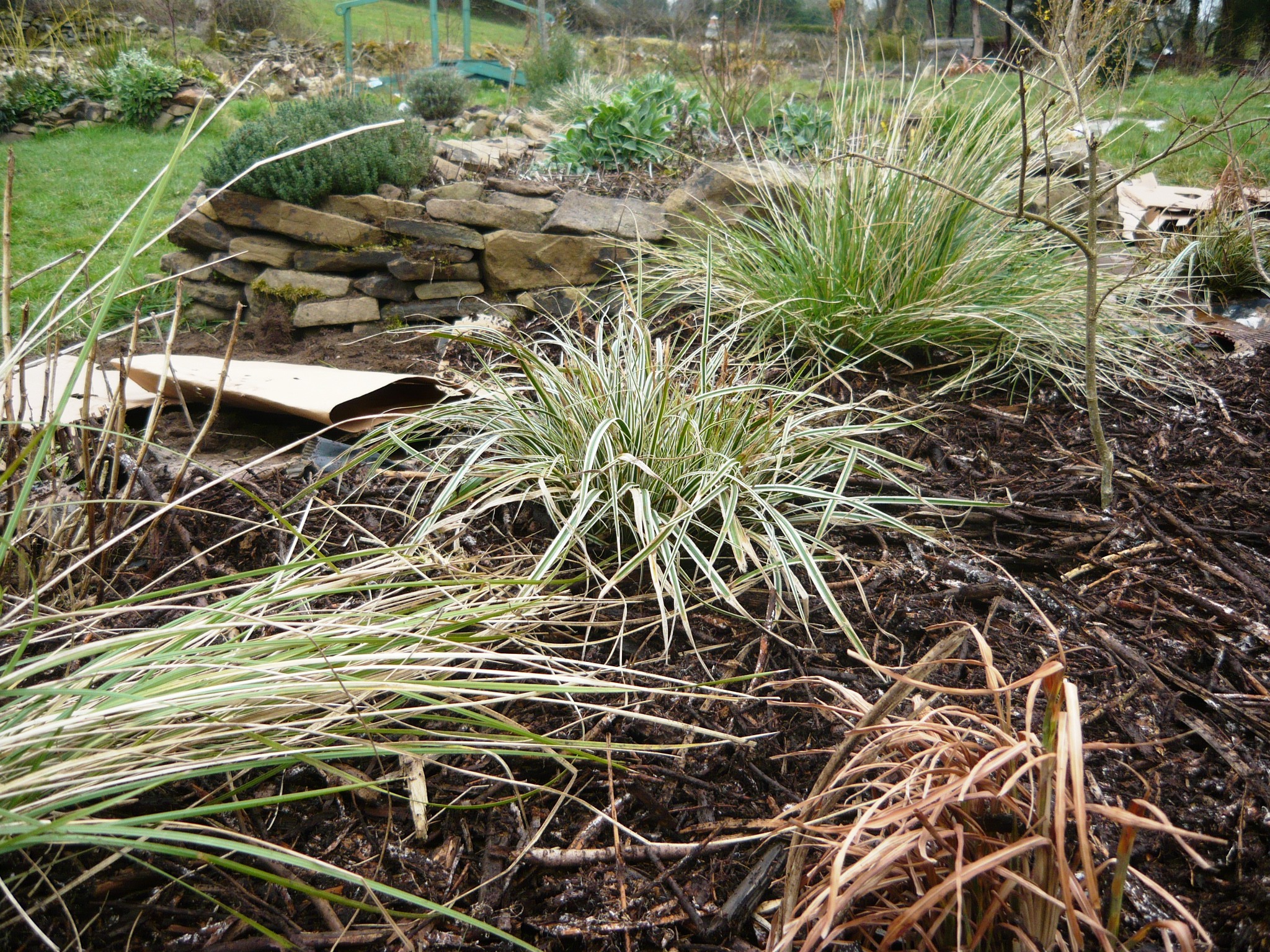
A couple of weeks ago we picked up five potted grasses at a sale and we only paid €15 for the lot instead of the full €75. Today we finally had a bit of time to plant them. We started by forking the ground over lightly to remove all the couch grass that unfortunately has a tendency to creep across and root on any bare piece of land in our garden. We had some shrubs and grasses from last spring’s sale growing in this area and just wanted to add some more grasses to make for a beautiful and hopefully easily maintained part of the garden.

bed with cardboard

wheel barrow

bed half done

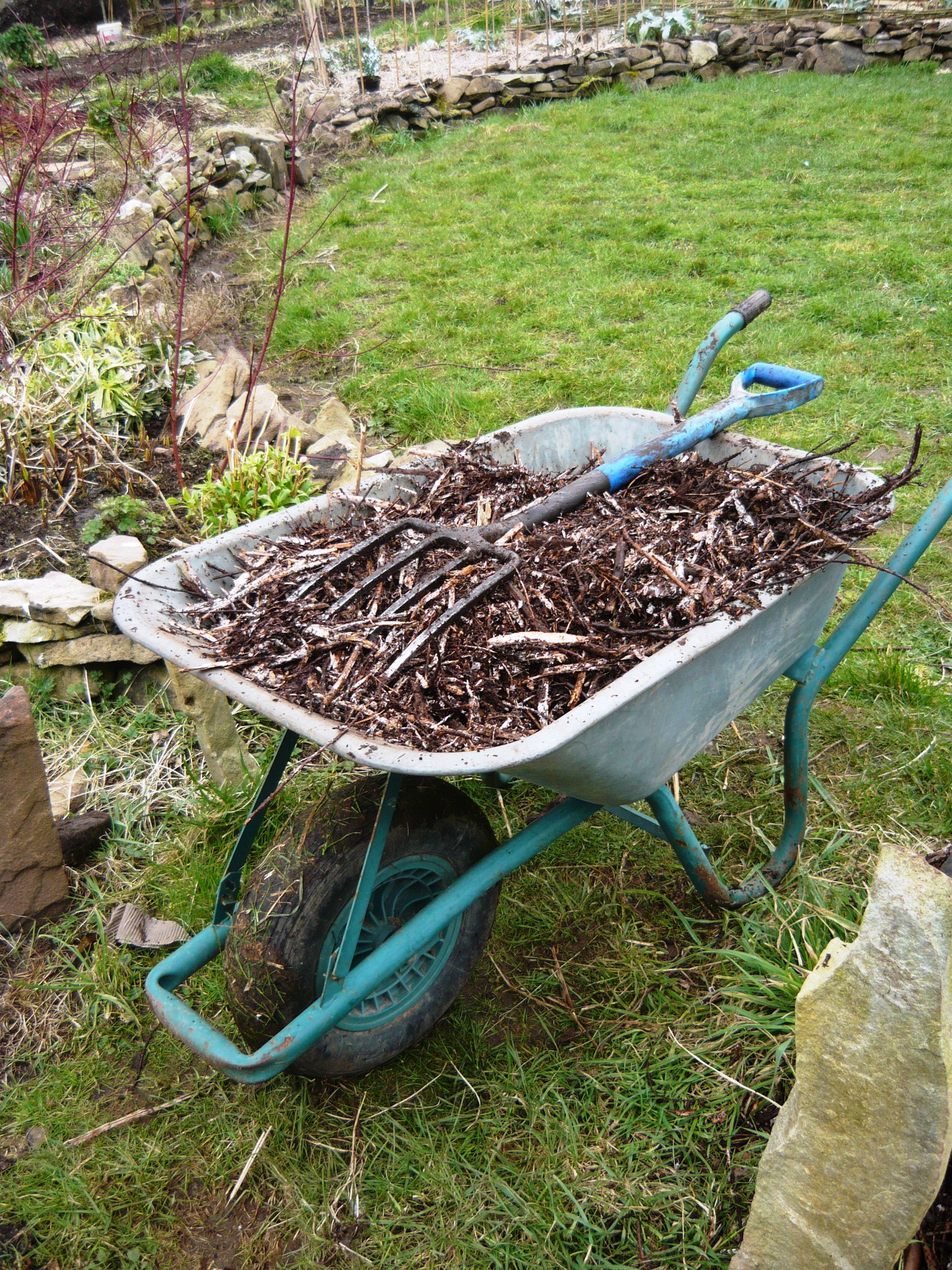
We planted all the grasses, adding a lot of well rotted manure to the planting holes and put down a double layer of cardboard boxes, to suppress the weeds and help with moisture retention if we get a warm and dry summer. We always put down cardboard and mulch on top of it around all small trees and shrubs as without the competition from weeds, they grow up to twice as fast. Our local supermarket is happy for any boxes we take away as they have to pay to recycle them. We have picked up many thousands over the last couple of years. We use them on all our paths as well, under the wood-chip mulch. As mulch for our newly planted grass area we put on a 15 cm layer of shredded Laylandii and we hope this will be enough to work as a weed suppressant for this year and hopefully by next year our ornamental grasses will have taken off and can handle the competition better.

 grass from circle

We do think it looks pretty, as the dark colour of the mulch contrasts beautifully with the golden and variegated grasses. We are so much looking forward to see how it will turn out in the summer.

Wish upon a star mosaic.

whole wall

We have been hard at work for the last two days, tiling another wall in the bathroom. We had a lot of small mosaic tiles, about half of them found in a tile shop skip, and we wanted to incorporate some of them into the design on this wall. We also had some hexagon mirrors bought at IKEA and a round mirror with a shell mosaic around the edge. We played around with these components until we decided on a shooting star design.

 shooting star

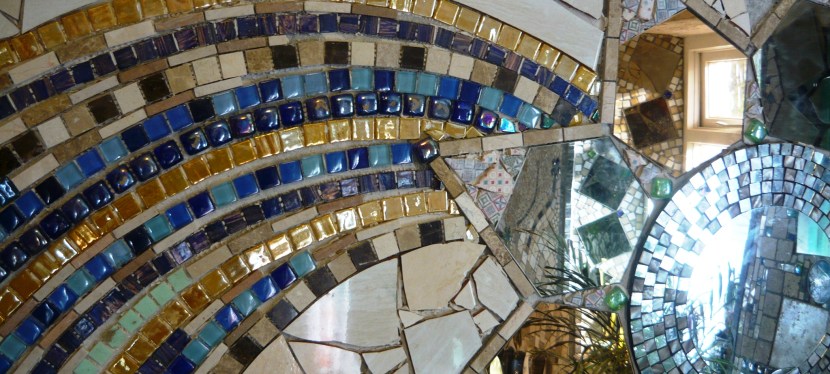
The trail of the star was perfect for adding the small tiles to in curved lines, alternating colours and structures. We added a sections of mixed light coloured tiles each side, as a contrast to the busier colours and tomorrow we will do a slightly darker area of tiles all around the star. We are hoping this will make the star stand out in a pretty way. The entire wall will be grouted in a medium grey grout and it should bring all the areas together and create a beautiful whole. If you wish to see more of our mosaics just go to the mosaic category on the right hand side.

star mosaic start

star mosaic half way

A shooting star is very practical to have around as every time life gets a bit difficult or sad you can make a wish.

star mosaic wish

star and mirror

Bathroom Mosaic.

 bathroom mosaic

As part of our extensive bathroom renovations, we have now reached the tiling stage. Two days ago we started knocking all the old tiles and plaster of the walls, and yesterday it was time to get tiling. If you have read any of our other posts in the Mosaic category, you will know that we always keep an eye out for old, thrown away and salvaged tiles and mirrors. Most of the tiles for our bathroom come from free sources and saves us money as well as being good for the environment. For this project that has a lot of small pieces, it is easiest to use the ready mixed tile adhesive in a tub. It stays flexible for a long time and makes for easy positioning and a smooth surface. When digging in the garden we have found a lot of turquoise patterned old tile pieces. Our guess is that they were once in the house, perhaps in the very same room we are now tiling, as it used to be a small kitchen and not a bathroom originally. It feels good to put them up on the wall again, in a slightly different way.
bathroom old tiles

 It is important to have a design idea and here we started with the round mirror, building outwards with different tiles, like a mandala. Most of these components came out of a tile skip behind a shop.
bathroom mirror

For the bottom part of the wall we went for a swirl pattern. At first we tried just sticking the pieces on in a random design, but it looked quite ugly and had to be redone. We are looking forward to finishing this mosaic up today and have it grouted in a couple of days. It makes a huge difference to any design once it is grouted, bringing all the elements together.

 bathroom swirl

bathroom mosaic

This is the mirror above the sink,that we tiled and grouted a while back. It casts a great shadow on the wall don’t you think?

Mirror reflex.

Our house was built in 1924 and the bathroom bit was added at a later date, we think sometimes in the 1950’s or 1960’s. When we took all the tiles of the wall and knocked away the plaster we found a lovely old sash window. This was the original outside wall and we will now use the window as a feature in the bathroom, adding some shelves to it for both beauty and practicality. We had to knock out the glass as it had been glued over with old Christmas wrapping paper and painted at some stage. The window frame is in perfect dry condition, with no sign of woodworm, so we will build the shelves in a box behind it.

Knocking through.

Sash window

Natural plant supports.

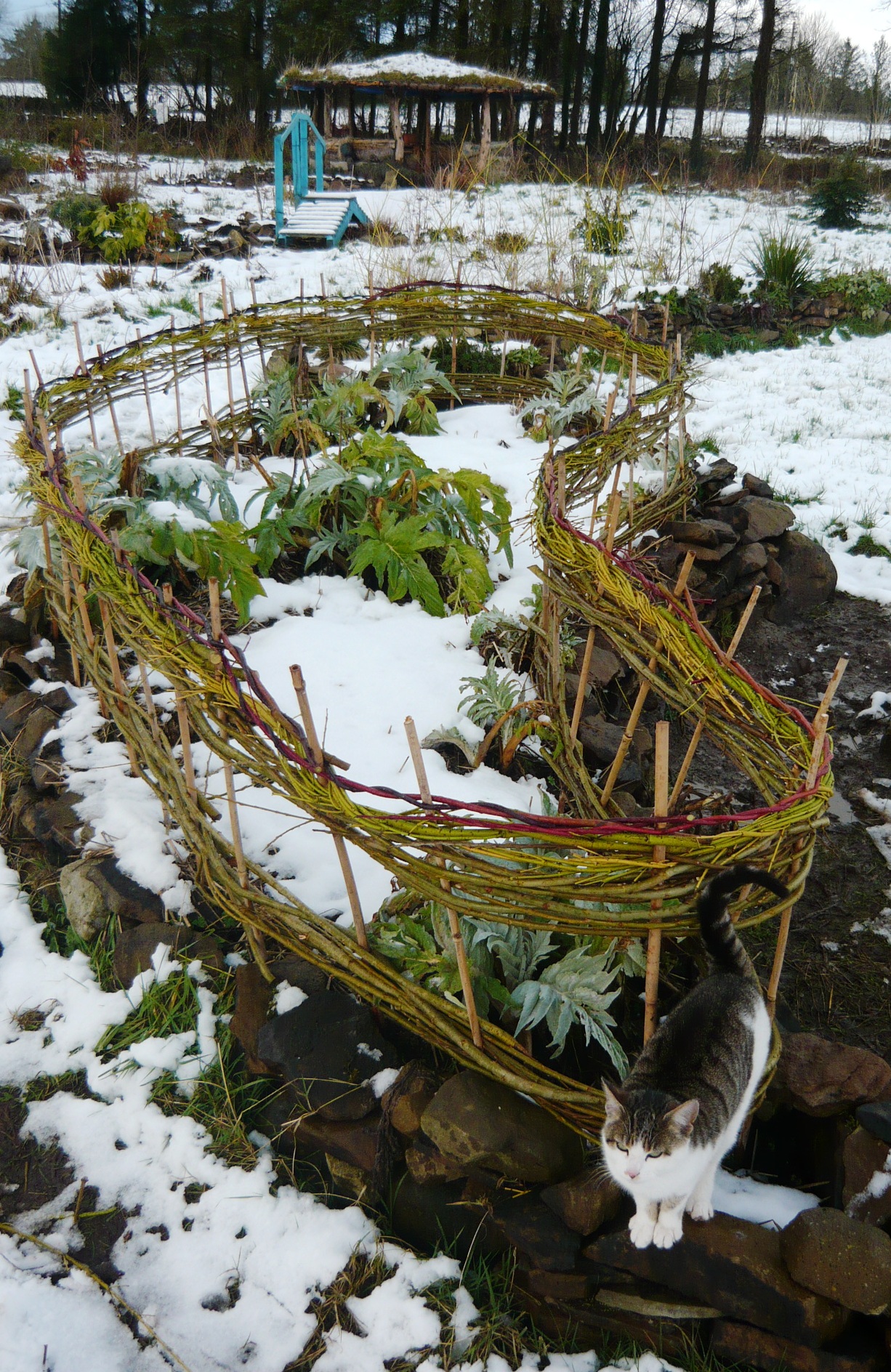
Fence for Artichokes

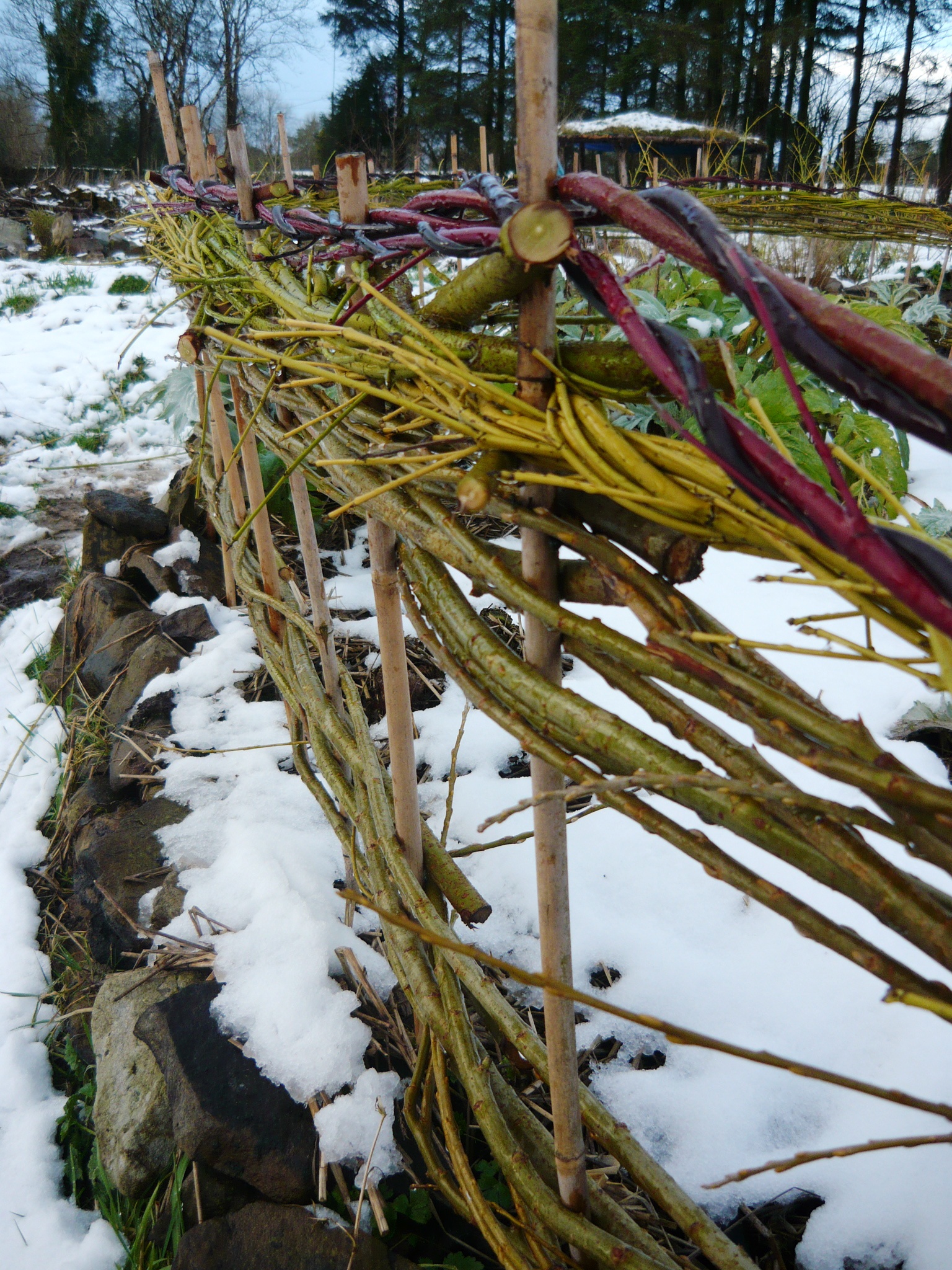
It is that time of year again when a lot of Willows and Dogwoods need pruning. As we like to use as many natural and local materials as possible, we decided to use the prunings to make plant-supports. Our Artichokes and Cardoons grew very big last year and some of them blew over on a windy day. So a low, strong fence to go around the bed was on our wish list.  As we wanted it to last for more than one year, we used Bamboo canes as the uprights. Last year we made a few supports and used willow for the uprights, but even turned upside down, they rooted and had to be moved in the autumn. We put the uprights in quite close, about 20 centimeters apart. You need an uneven number of uprights. We then wove long straight Willow rods round and round for about 8 centimeters, left a space and wove another section higher up.

Willow fence

Fence.

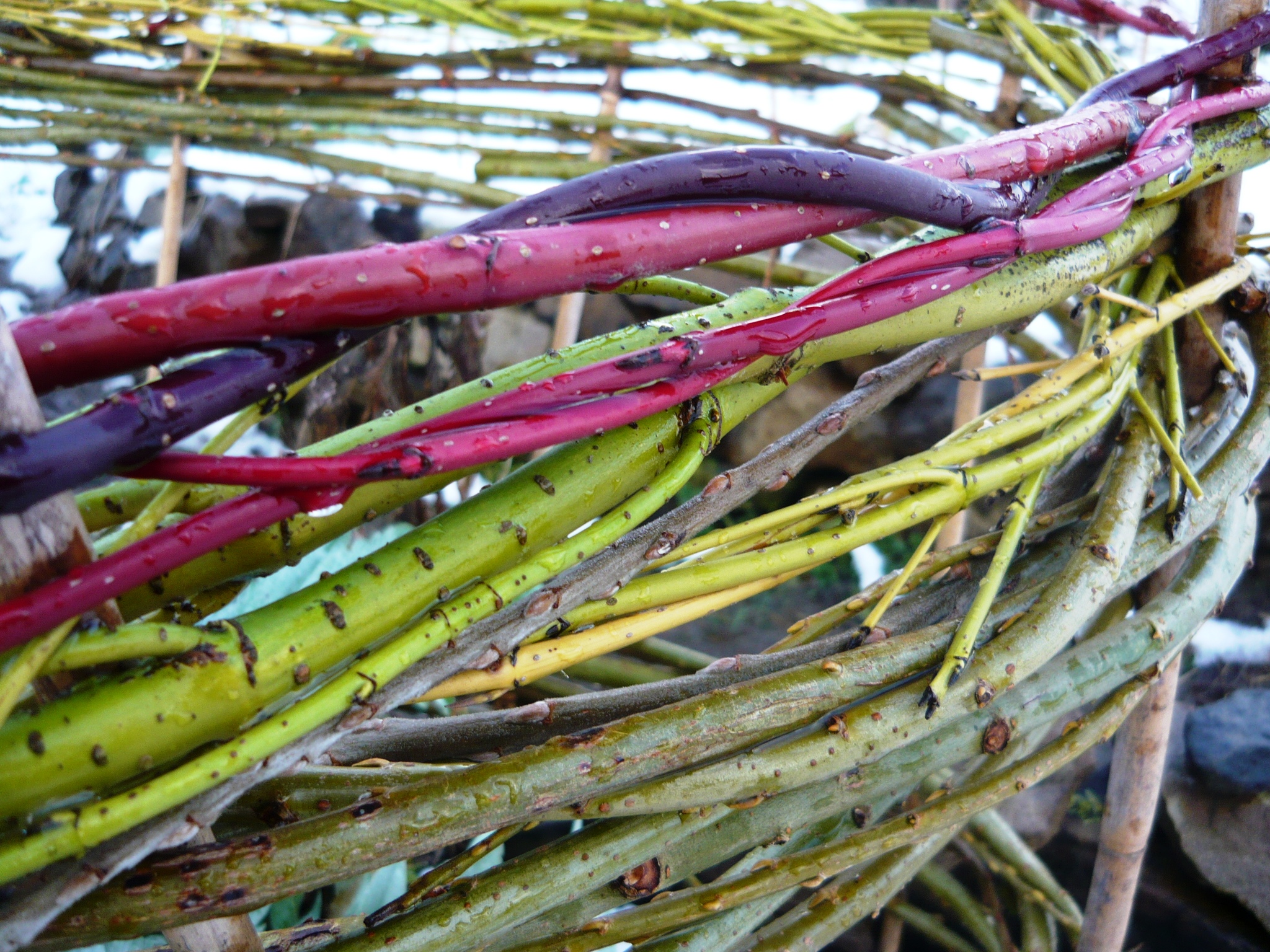
To finish off the top and make it extra strong, we used a slightly different technique, using two rods at a time and twisting them together as many times as possible between each upright. The Dogwood has very pretty colours so we used them as both a decorative and practical edge.

 Fence detail

For our perennial flower borders we decided to use some bushier prunings of Dogwood as natural plant-supports. If they root, we will end up with a lot of new plants in the autumn, ready to give away to friends or plant elsewhere in the garden. If they don’t root they will still have served us well as supports and can go on the compost heap at the end of the season.

planting and willow

planting and willow 014

We also planted some evergreen spring flowering Clematis recently, that we picked up in a sale. As clematis love sun but like to have their roots in shade we made a small basket like willow structure to go around the base of each one.

Clematis support.

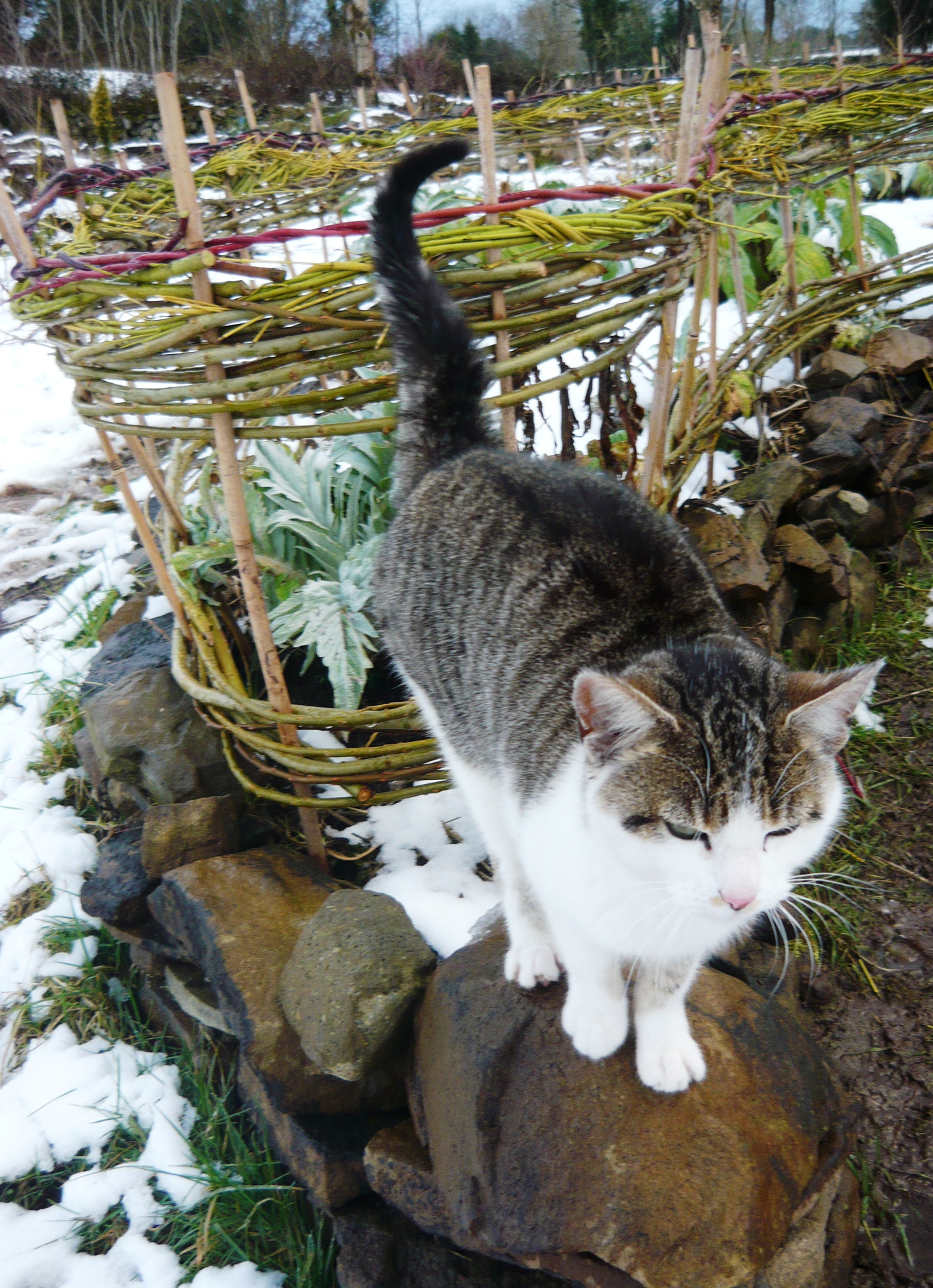
 One of our cats was adamant to be included in today’s photographs so here goes…

Tea at fence.

Whole bed and Tea.

Tea in action.

Fifty shades of Green.

 Sprouts close up

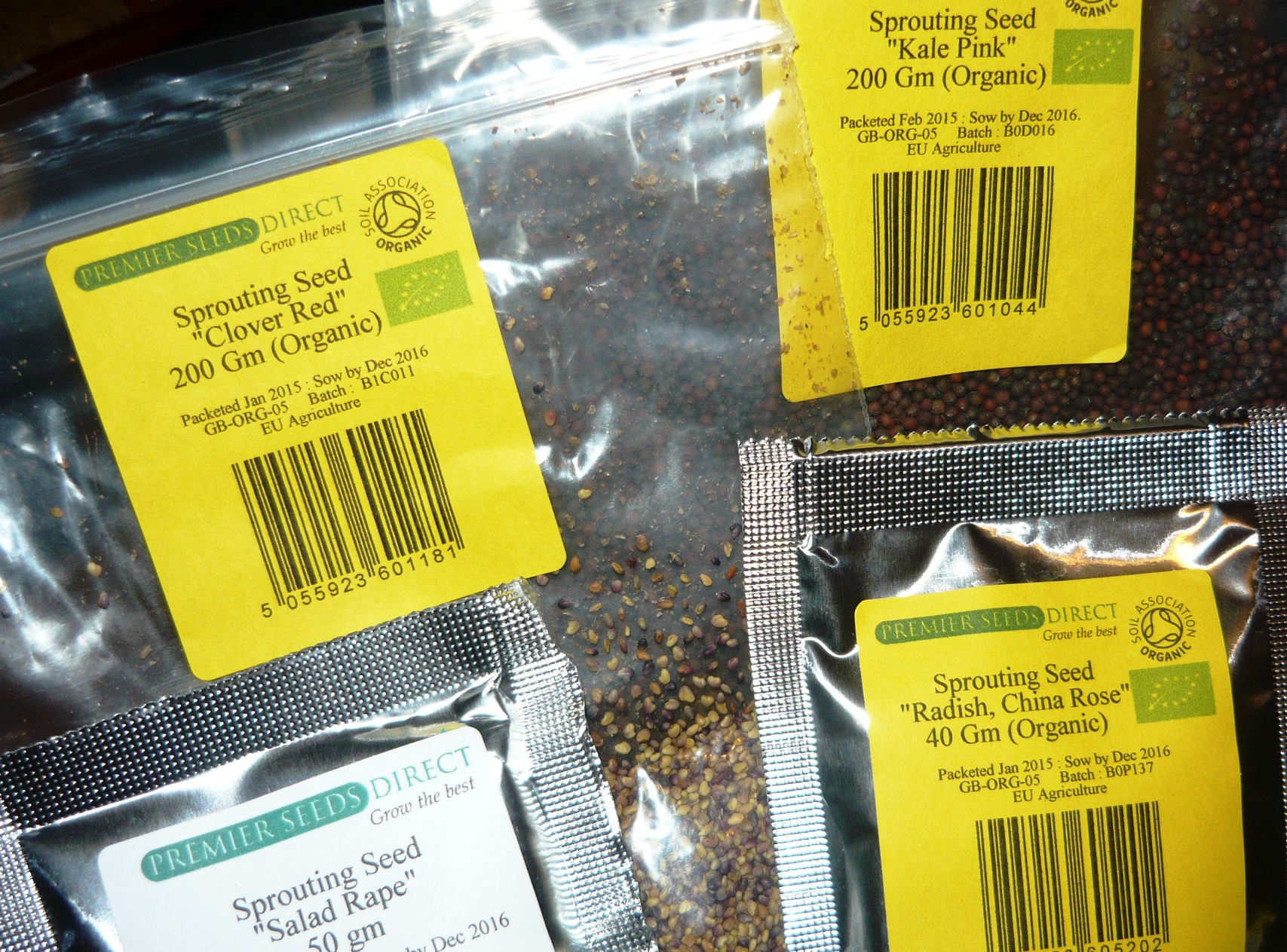
You do not need a garden to produce your own tasty greens and salad ingredients. We love sprouting. We can highly recommend it even if you do have a garden. It is so satisfying to have fresh, tasty and nutritious food growing in just days, right in your kitchen. It does not cost a lot to get started, for example, you can buy lots and lots of sprouting seeds for the price of a couple of cinema tickets. So instead of watching some film you might find boring, disappointing and degrading, you can have a lot of fun in your own kitchen.

seed packets

All the goodness of the plant is right there in the seeds. When you sprout them or grow them as micro greens, the concentration of nutrients and vitamins is much higher than if you grow them on to full size vegetables.

Sprouting seeds.

Our favourite way to grow sprouts is in a hemp fabric bag, hung over the sink. The hemp is antibacterial and does not easily get mouldy from being constantly damp. Our favourite seed to sprout is the humble lentil. Brown and Green lentils get completely transformed in just a few days from dry and hard to incredibly tasty, juicy and crunchy. We use them raw in salads and cooked in stir-fries and soups. If you buy a large bag of lentils, you will have many, many tasty meals for next to nothing. Any other slightly larger seed is also suitable for sprouting in a bag.

Sprout bag

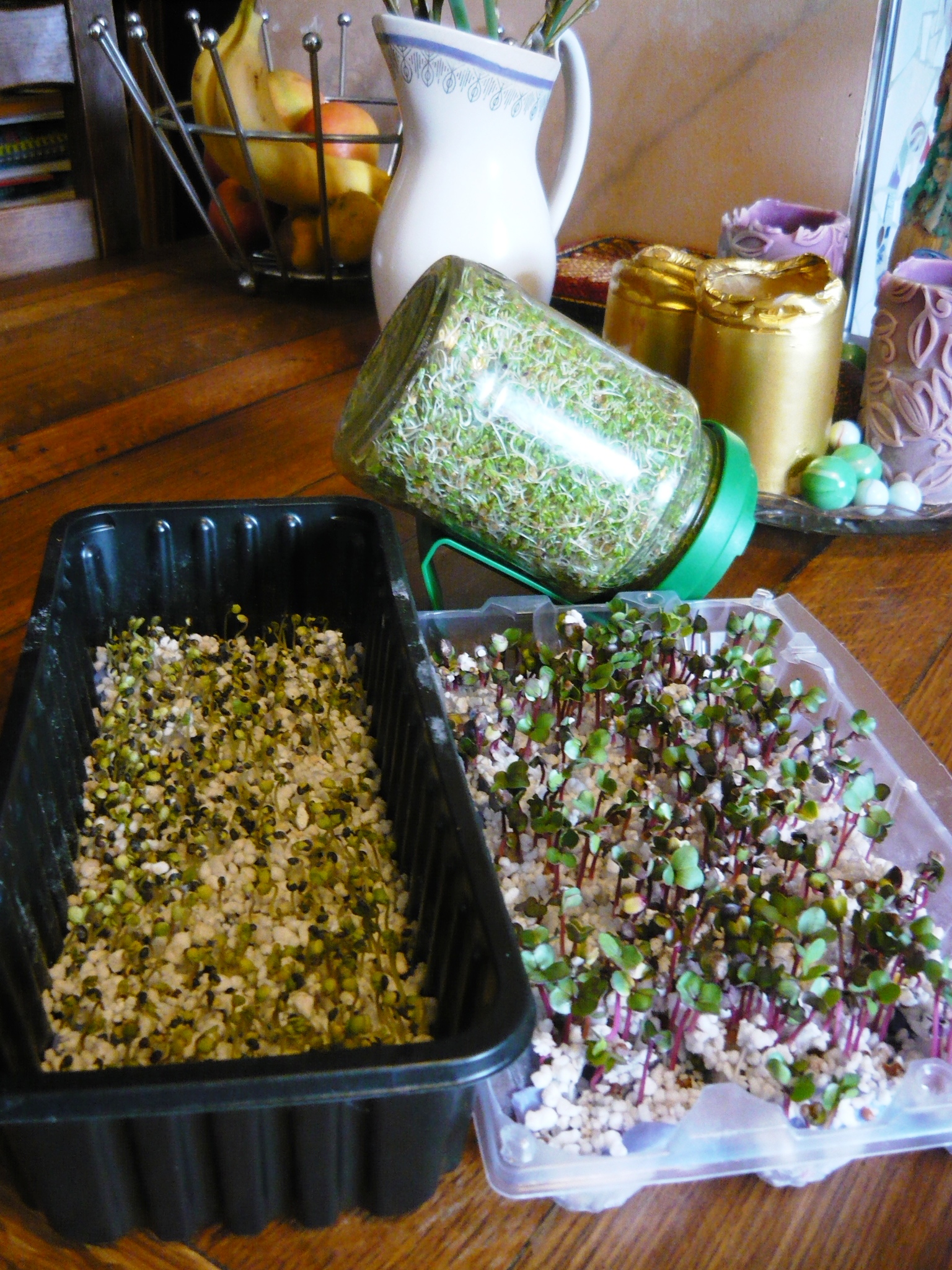
For tiny seeds like Alfalfa and Red Clover we use a jar. You can make one up from an old jar, a piece of cloth and some string or buy one like in the picture. We also sometimes use a three-tier sprouting device where the water trickles trough all the layers and collect in the bottom tray, great for watering your house plants with. It is important to soak all seeds and rinse them prior to sprouting. You will need to do your own research as different seeds need different times soaking. After that all you have to do is rinse them for two or three times a day.

 sprout jar

Almost everyone has grown some cress or mustard on a piece of damp kitchen paper as a child. We like to grow radishes and members of the cabbage family in this way. A week from planting you end up with a forest of small seedlings, jam-packed with flavour to use as a garnish on your food. If you use a bit of soil as well, the seedlings can grow slightly larger and be harvested as micro greens.

Pink Kale

This time of year we usually end up with some garlic sprouting in the kitchen before we have had a chance to eat it. If this happens to you, don’t throw them out. Plant all the cloves packed close together in a little soil in a pot and you will soon have lovely Green, cut and come again garlic shoots. We hope you will try some or all the things we have written about here. Sprouts are delicious, very good for the planet as they do not require transport, chilling in the shop etc. as with bought vegetables and they are very cheap to produce. We can promise you that once you get started, you will not want to stop.

Garlic sprouts

Helping our endangered bees.

Christmas rose

We always knew we wanted an organic garden brimming with wildlife. Unfortunately one of the most important assets to any garden, the bees, are under threat all over the world. There are many different reasons for this but we believe the biggest one is the use of pesticides, mainly insecticides containing neonicotinoids that are used by many gardeners and industries alike. Other causes are the extensive loss of natural floral habitats, due to modern farming as well as climate change and disease.  Recent wet summers, have made it difficult for bees to find pollen and the Varroa mite is a parasite that attacks bees, spreads viruses, and often cause the collapse of entire bee colonies. Honey bees and bumblebees are dying on a catastrophic scale and this is affecting every other living creature on the planet. Loss of the bees will lead to crop failure and starvation.

 The good news is that we can all do our bit in slowing this process down. By using no pesticides in our gardens and by providing plenty of flowers for pollen we can give the bees a better chance of surviving. Early in the year, there are not a lot of flowers around and planting some trees, shrubs and flowers that flower at this time of year, can be tremendously important to the bees. It is a good idea to use native plants, as the bees seem to prefer them and they are well suited to the area. We encourage the spread of dandelions, wild primroses and lesser celandine in different parts of our garden.

primrose

lesser celandine

We have planted mahonia, commonly called oregon grape, forsythia, magnolia and gorse. All of these trees and shrubs have winter or early spring flowers. Other useful additions include, hellebore, commonly called Christmas rose, heather, garden primrose and daffodils. We always favour single, old-fashioned varieties of flowers. Some modern plants are bred for showy, double blooms without much consideration for pollinators.

Hellebore detail

 Heather

daffodils

In the future we are planning to keep our own bees, but at the moment we are providing all the bumblebees and other local bees with the best possible habitat, all year around. It is a lovely feeling when you see the first bumblebees of the year, awoken by the spring sunshine and warmth, fly around in search of pollen and you know they will find it in the garden.  The more bees you can attract to your garden, the more of your fruits and vegetables will be pollinated, so everybody wins.  We believe it is the single most important thing any gardener can do. All of the photos were taken in our garden today.

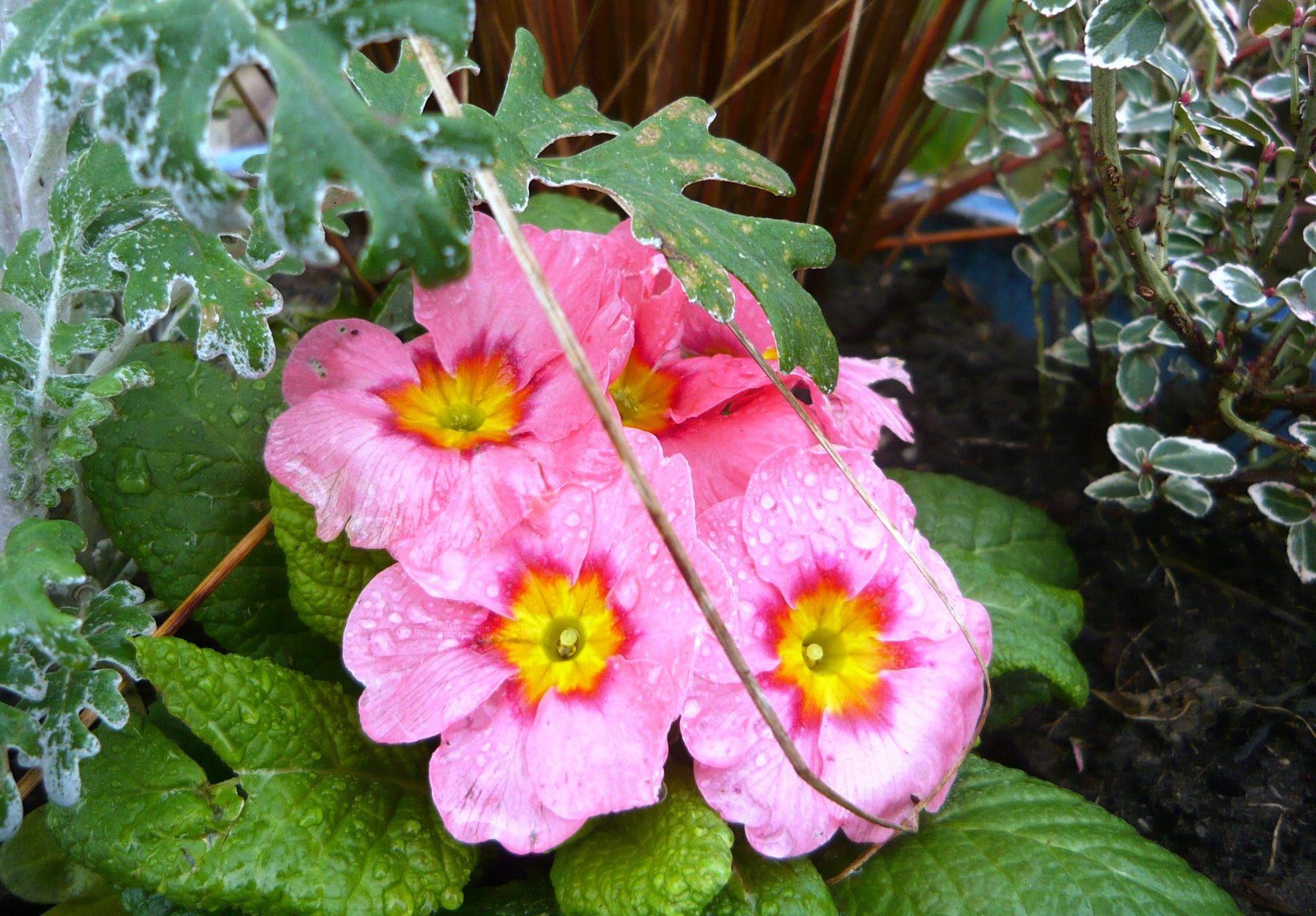
 Garden Primrose.

A bottle wall with a difference.

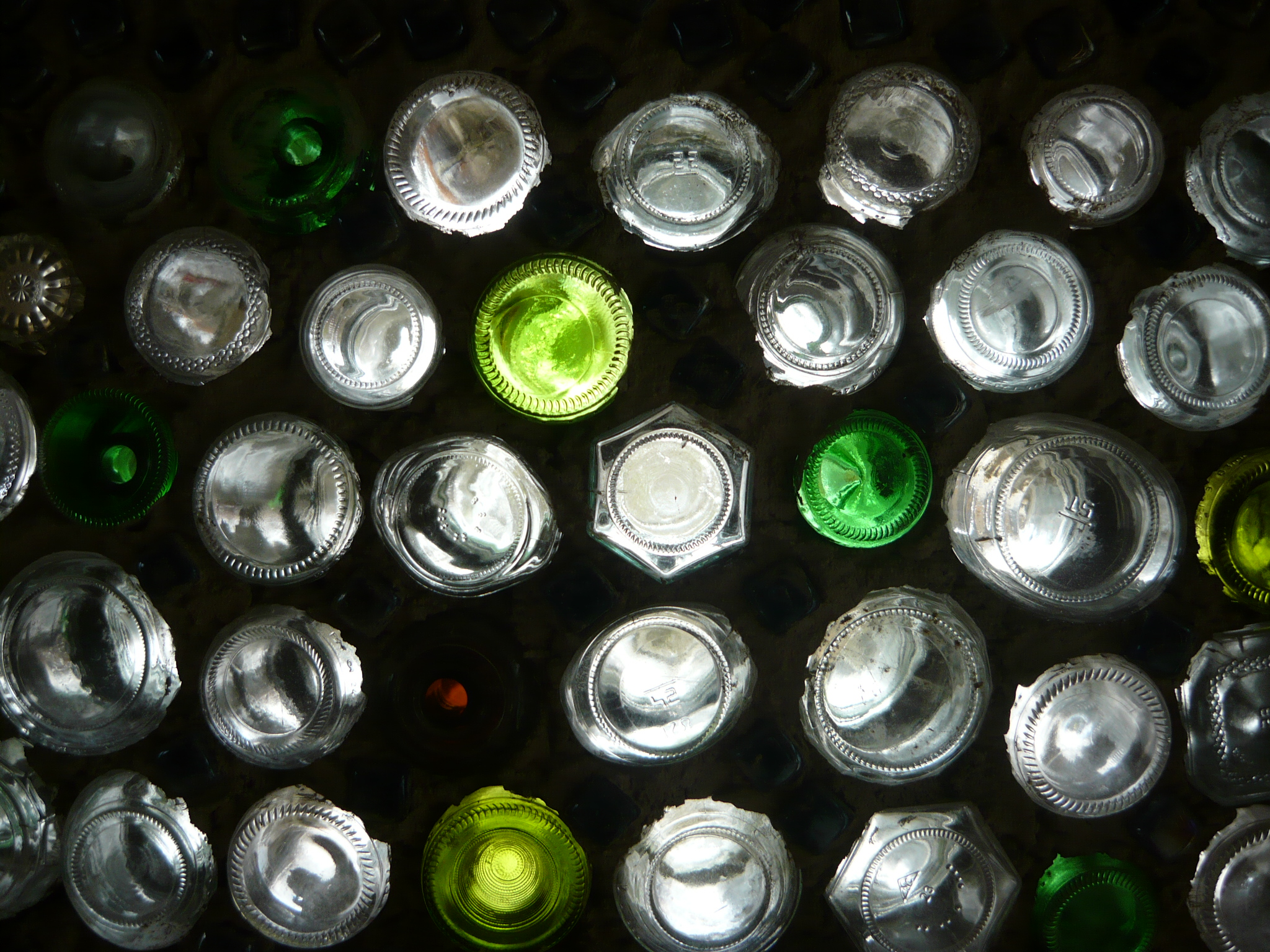
 glass wall

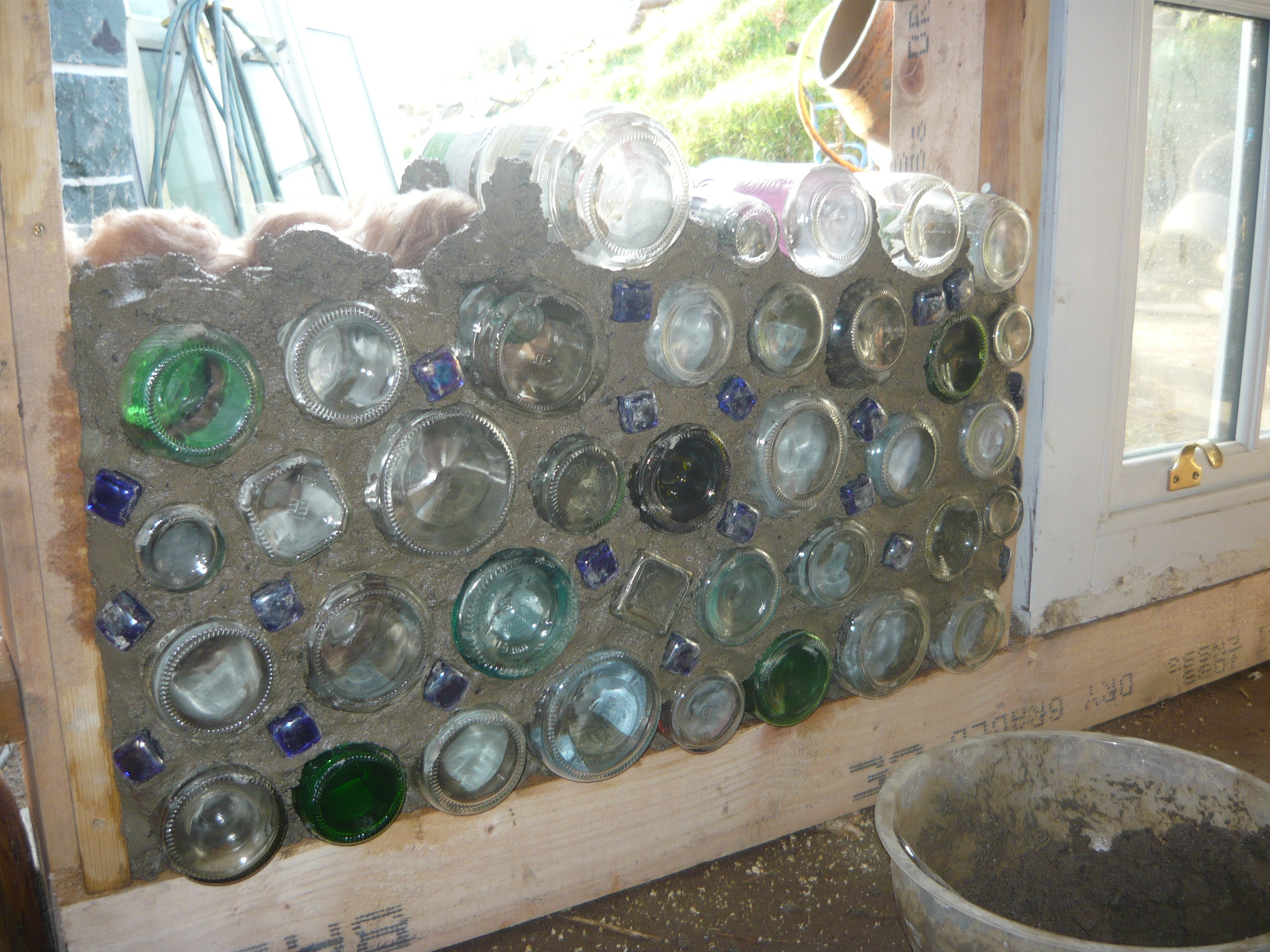
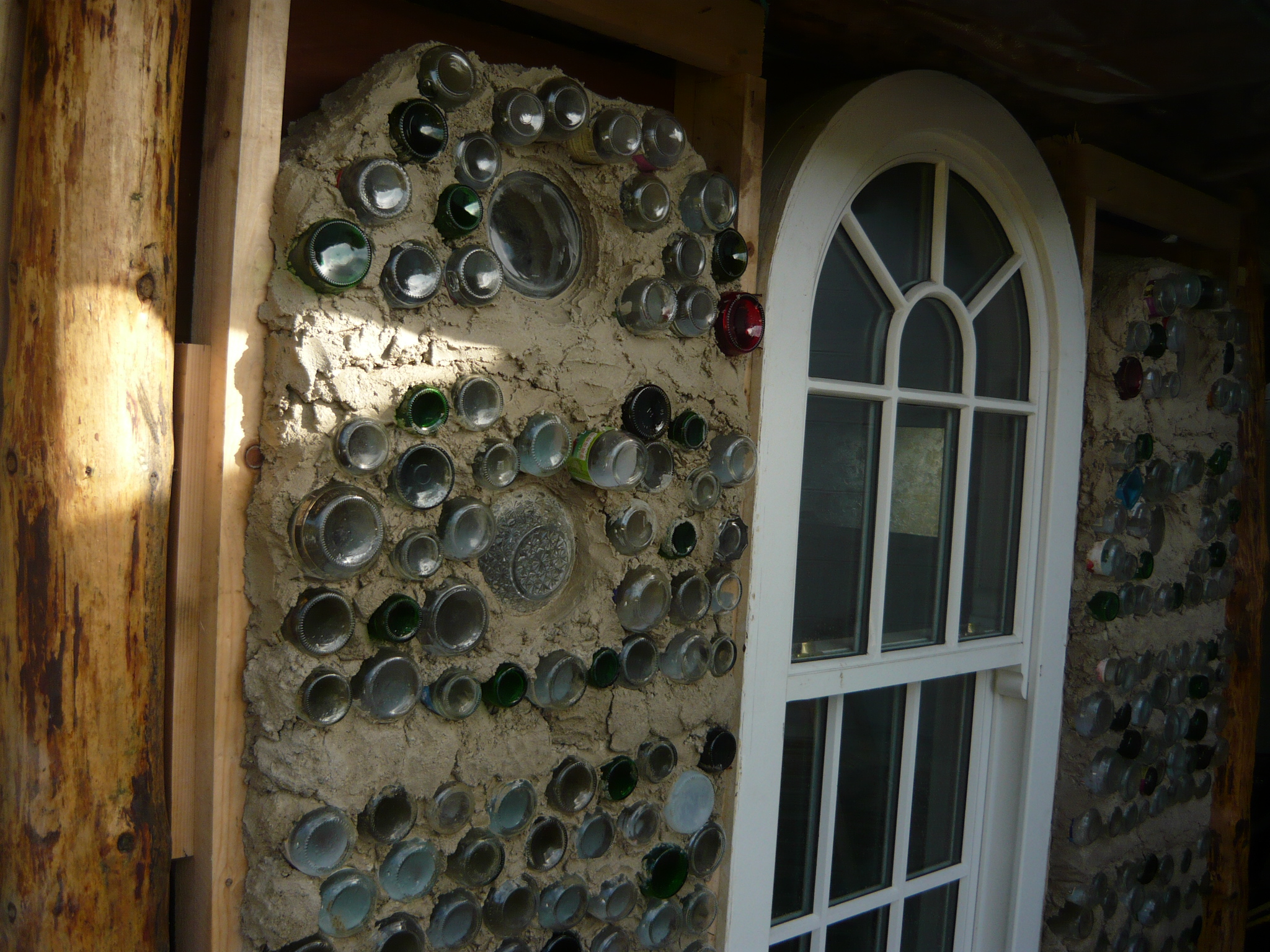
We have always been fascinated by all the beautiful pictures of glass bottle walls on the internet, and have known for a long time that we wanted to incorporate some into our home. In fact, we started collecting bottles and jars and making up bottle bricks years before we had the chance to purchase our house.  When planning our extension, we went to a local joinery and looked at window seconds. There were a lot of PVC- windows and we were measuring away, considering how we might be able to fit them into our design, when the owner said; ‘Those sash windows are for sale as well’.

glass wall with cat

We were delighted as we had not even dreamt about coming across solid wood, double glazed sash windows, complete with traditional weights. We were able to buy the windows for less than a tenth of the original price, as they had been ordered to measure, but it turned out the measurements given had been wrong and they did not fit. One of the windows had a lovely arch at the top and we decided to complement the design with two arches of bottle walling.

 glass wall arches

We built frames out of 4” by 2” timber as you can see in the picture. We added crosspieces ever so often to stabilize the wall and make each bottle wall section into a manageable size. The construction was easy, we started by putting on two rows of cement mortar, with some insulation in the middle and put down our first row of bottles.  Any old jars, small bottles and glasses can be used. If you want to use wine bottles, you need to score and cut them first with a glass cutter.  Sometime it works to put a jar on top of a bottle and sometimes you need to put two jars together. We made up a bottle brick out of two cut wine bottles, and used it as a measure when we constructed all our bricks. For sealing the bottle bricks we used brown parcel tape and duct tape. When our first row was down, we put on more cement mortar, some insulation in the middle and more bricks, staggered in relation to the first row. It is very important to add small nails into the timber on the sides and into all the cross pieces to hold the cement mortar. We kept building in this manner, filling each section with  bottle bricks.

wall base

first layer

nails

wall half way

To give the wall a beautiful finish on the inside, we added blue glass mosaic tiles in between all the bottle bricks and across the spaces where the crosspieces are. We smoothed out the cement mortar and all that is needed now is a final layer of grout on the inside walls and a good clean of all the bricks.

 glass wall detail

We wanted lots of light so decided to incorporate some old cut glass bowls into our walls. When the sun light hits the bowls it refracts in the cut glass. We have never seen this done before but we are very happy with the sparkling, bright result. We made these bricks by taping two similar size bowls together. They end up not as deep as the others, but this adds textural interest to the wall.

 glass wall bowl

On the outside we still need to finish up, by adding some more cement mortar and smooth out the wall. We are thinking about tiling the spaces in between the bottles and grout, for a durable, maintenance free wall.

glass wall outside

Cushions for pennies.

sofa cushions 1

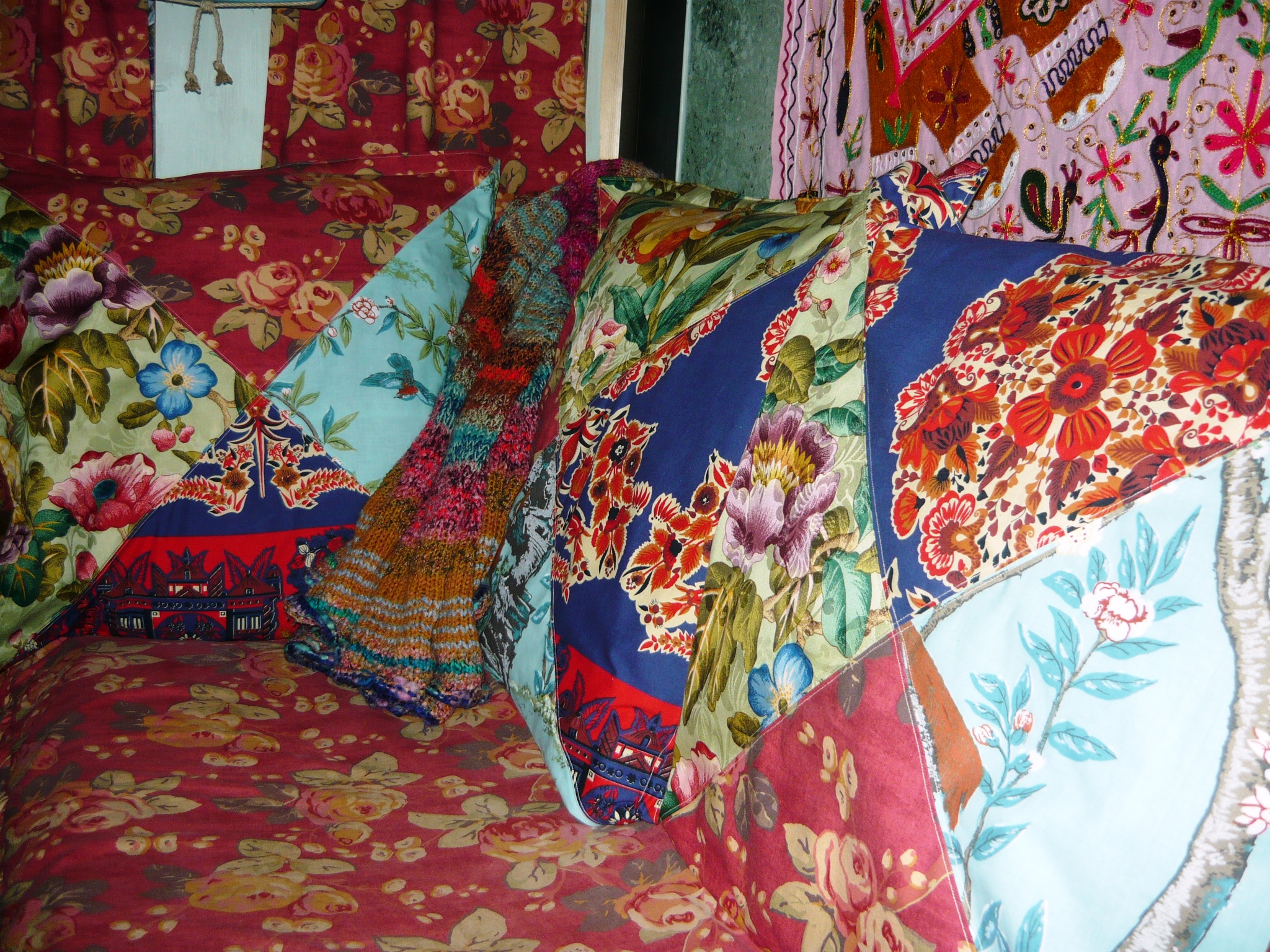
Just before Christmas, on one of our common Charity shop rambles, we came across some lovely fabrics. The first was a light green, American screen printed fabric from Braemore Design, the second a turquoise design with branches and birds from Design Edition Limited, 1981 and the third an unknown dark blue and red, Eastern European looking fabric. We got them for the bargain price of circa €1 each. The question was what to do with these as there was not enough of any one fabric for a large project.  We are planning a sofa built into the wall in our extension and the choice fell upon using our lovely finds, to make large cushions  for it. We already had some Laura Ashley rose printed fabric, a gift from a neighbour,  that fit nicely into the design.

 sofa cushions 3

Patchwork has been used for hundreds of years to make use of smaller pieces of fabric and creating a beautiful whole. We decided to do a very simple version for our sofa cushions. Anyone with basic sewing skills can manage a project like this, and you can adjust it to suit your taste and requirements. Here follows a description of how we made ours, if you would like to give it a go.

sofa cushions 12

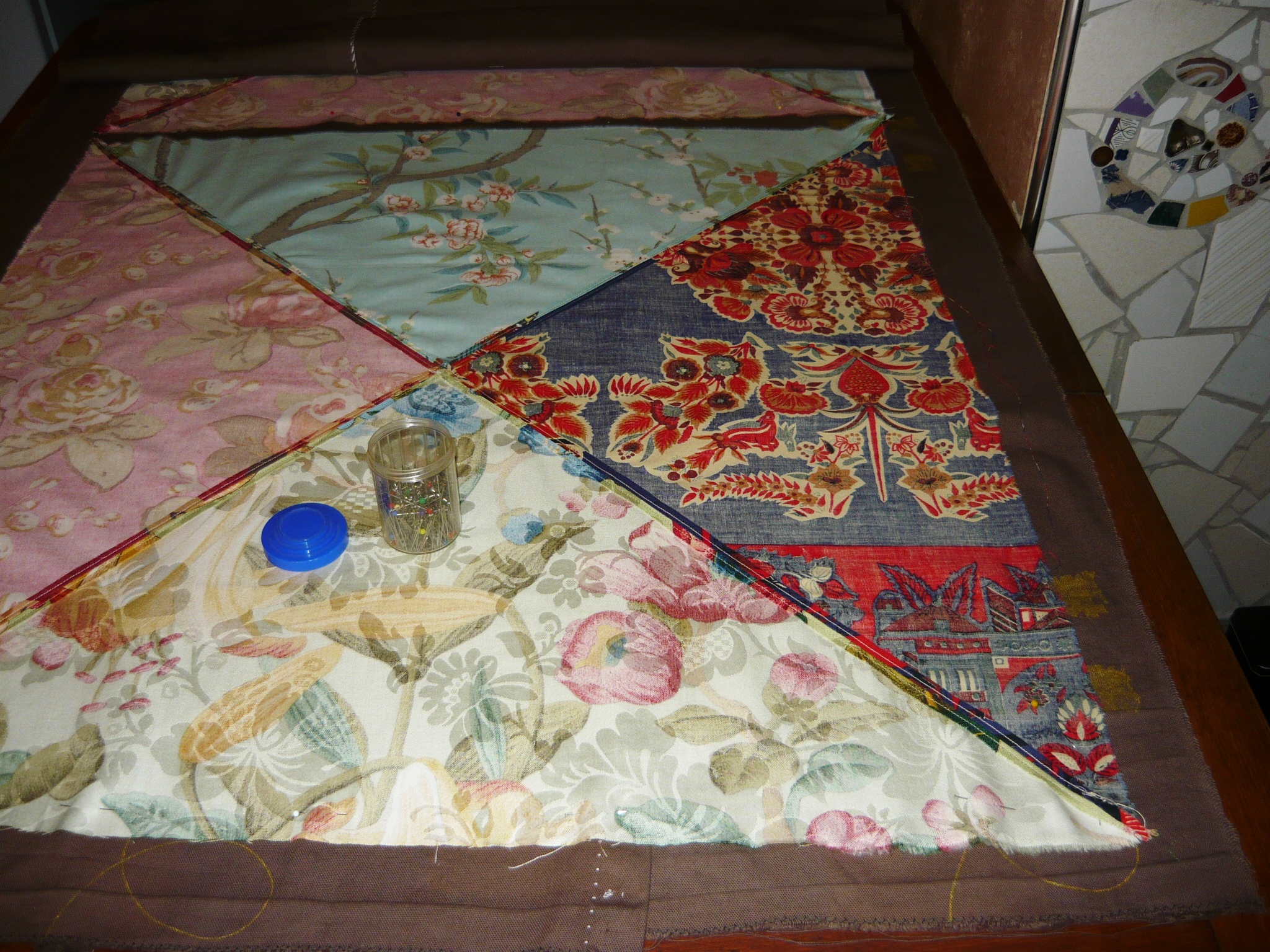
 We used some 65x65cm inner cushions from IKEA, so the squares of fabric needed to start out as 75x75cm squares. We prefer tearing the fabric squares over cutting them, as it makes for  perfect straight edges.  Fold your fabric square into a triangle corner to corner and press the fold with your iron. Cut on the fold and fold the remaining triangles again, press and cut. You will end up with your square cut up in four equal triangles.  For four cushions you need four different fabrics.  If your fabrics have an up and down in the design, you might want to keep them all in the right direction on your finished cushions.  Put them out in a line on the floor all in the same direction and take the top piece from your first square, the left piece from your second square, the bottom piece from your third square and the right piece from your forth square. Put the pieces together for your first cushion and move on to do the same thing again, but this time start with the left piece from your first square, the bottom piece from your second square and so on, until all the pieces are used up. Sew two pieces together, press the seams, sew the other two pieces together and finally sew the whole lot into a square. We pressed the seams from the back and sewed again, close to the seam. This makes for a decorative finish but also strengthens the covers and they can stand up to numerous washes.

 sofa cushions 7

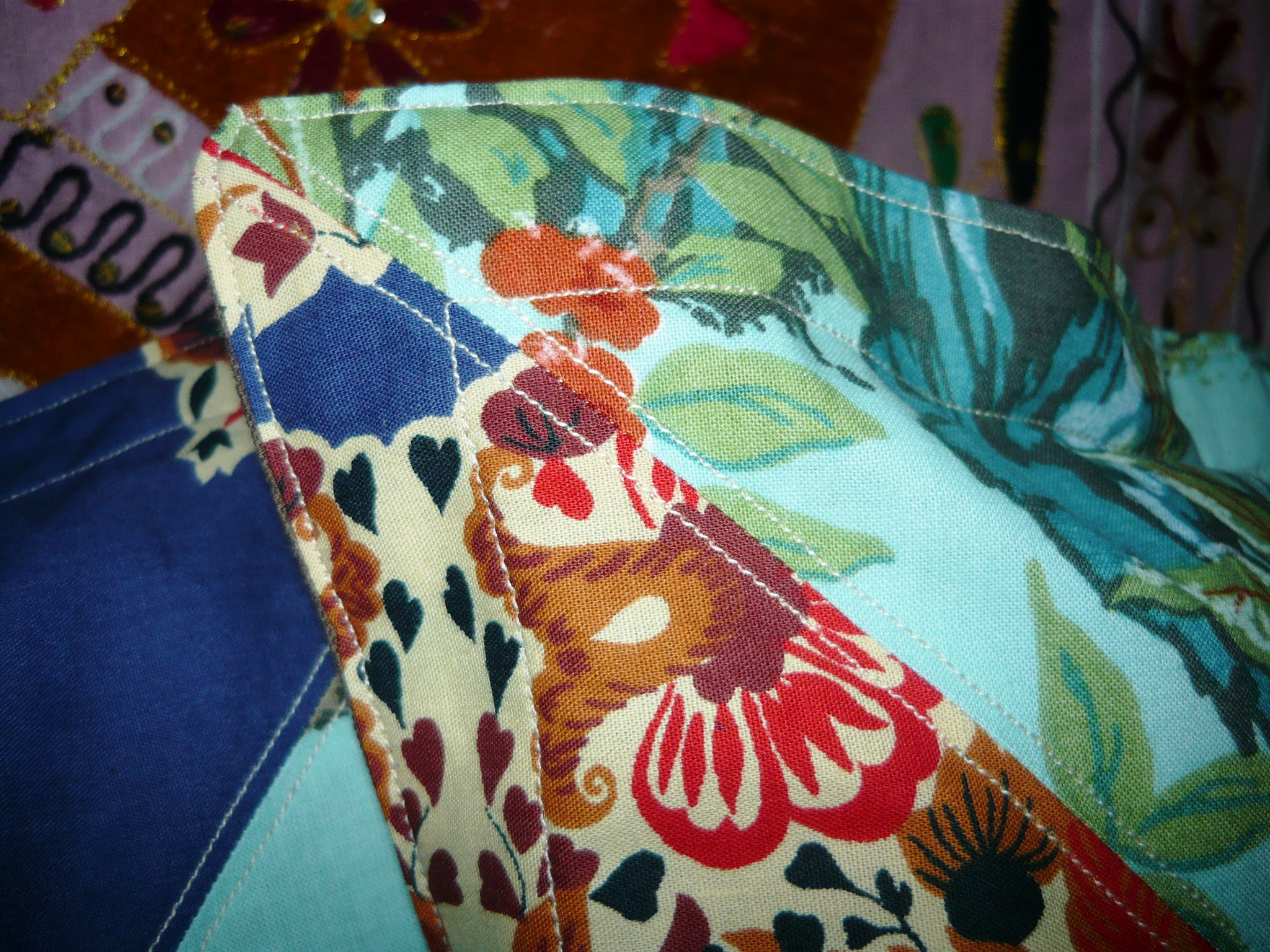
We had some old curtains that would make great cushion backs, but they were white, not a wise choice with four teenagers in the house, so we dyed them in the washing machine into a neutral brown. We tore them down the middle and turned the pieces around, overlapping each other along the middle, to make a slit opening on the back of each cushion. Place your backing fabric facing right side up and the sewn squares on top, right side down. Pin and sew around the edge. Cut the corners close to the seam [see picture] and turn right side out. Press and stitch close to the edge and then again further in, to create a wing all around the edge.

 sofa cushions 2

sofa cushions 5

sofa cushions 6

sofa cushions 8

sofa cushions 9

Using  fabrics in this way is very satisfying as you end up with a cohesive design when starting out with quite different individual pieces. Using old fabrics is economical, fun and good for the environment. We made 8 large cushion covers for a total of €13.50. In the pictures the covers are modeled on our sofa in our combined living and bedroom. We can’t wait until we have our extension finished and they can be moved into their intended place.

sofa cushions 10

sofa cushions 11

Tiling your memories.

Fireplace detail 3

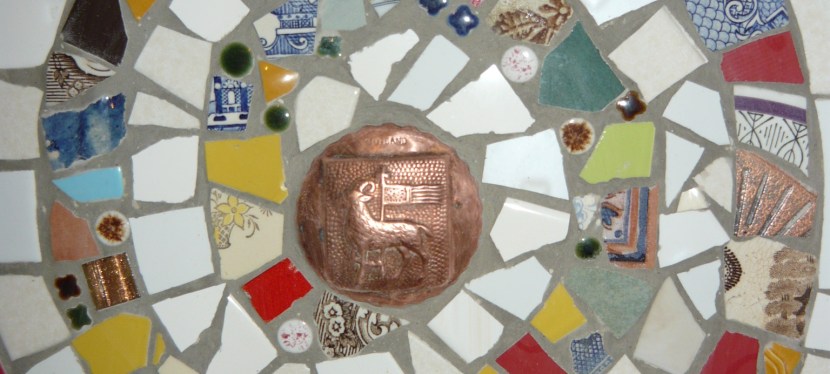
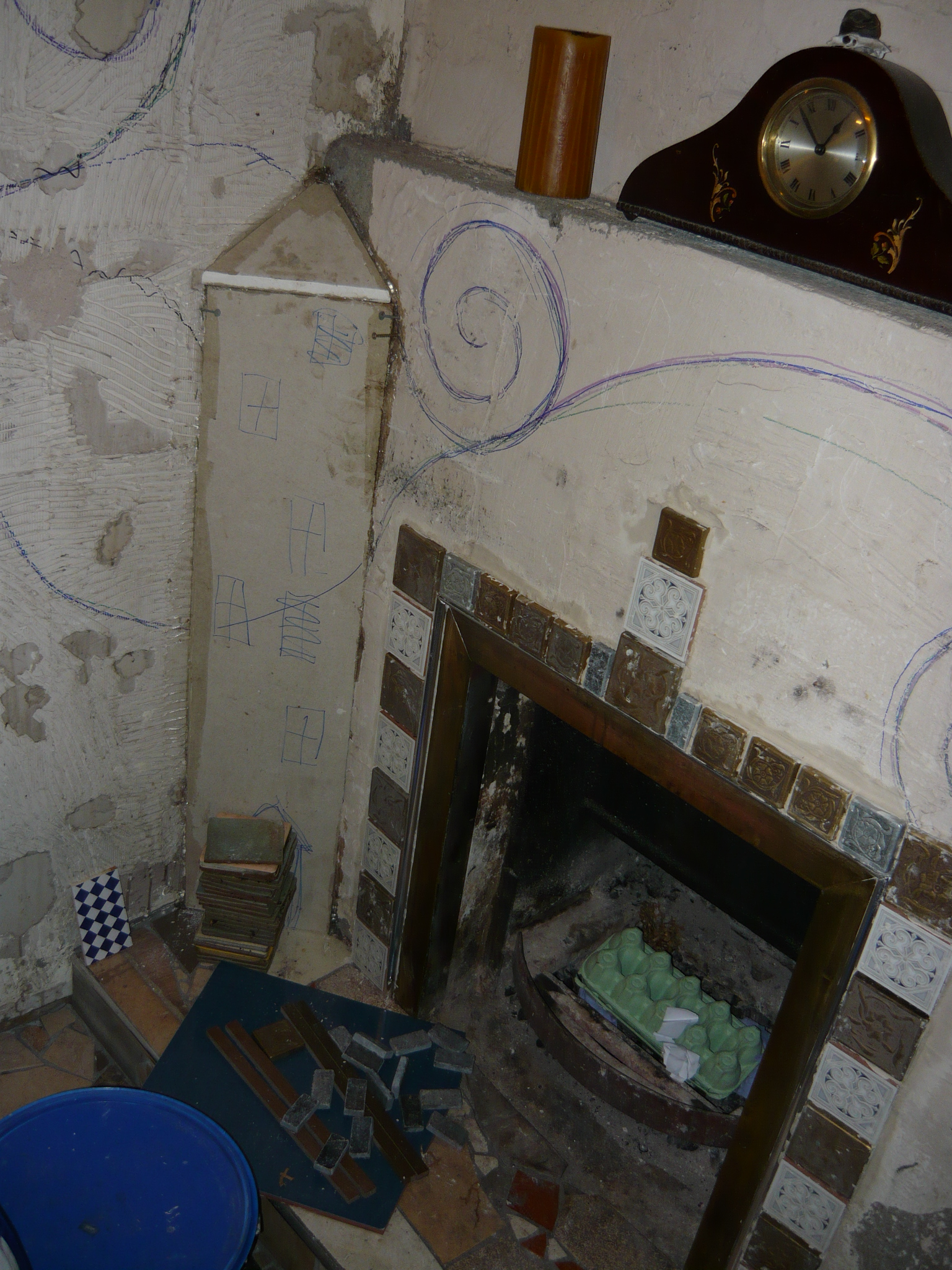
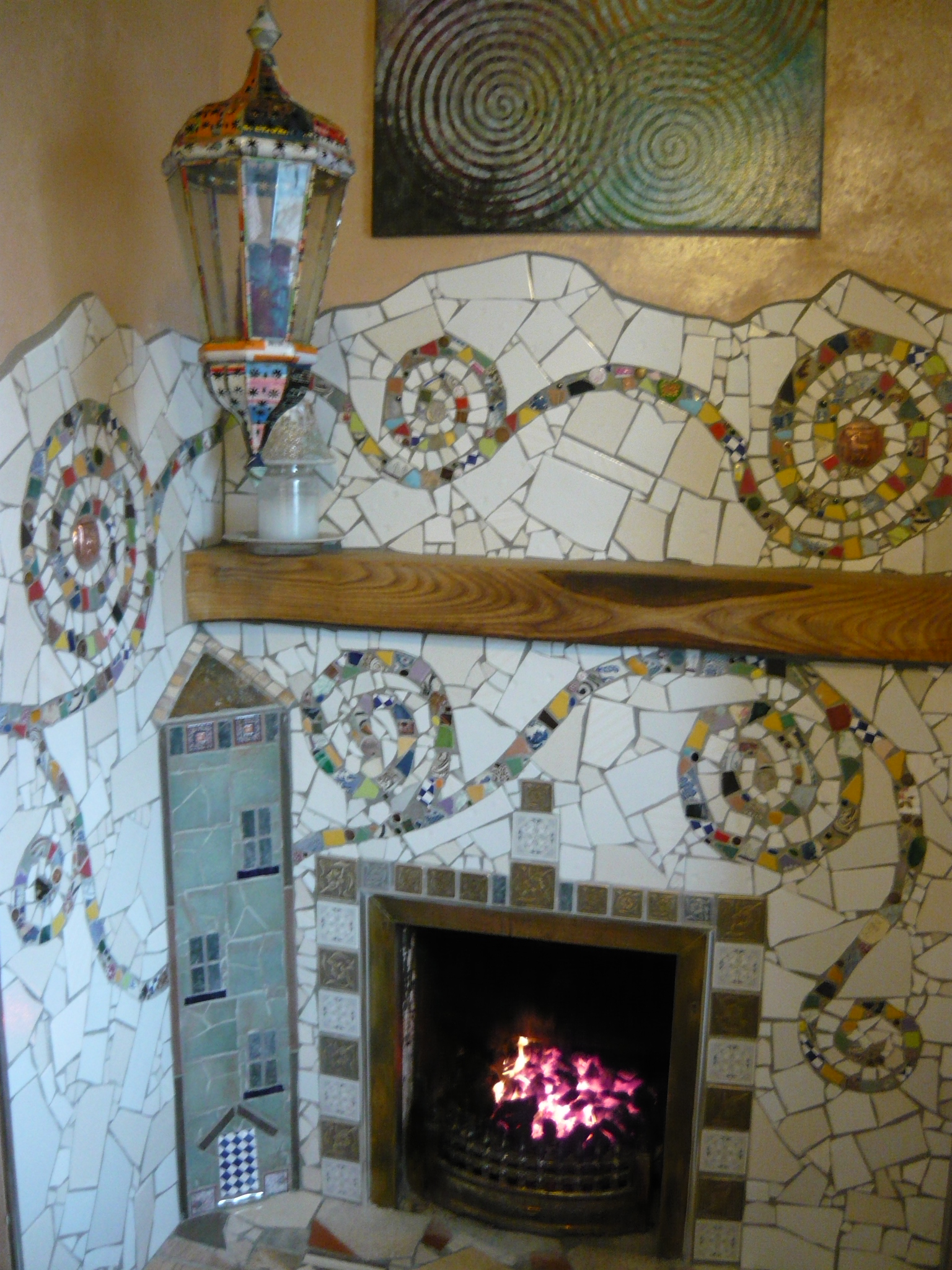
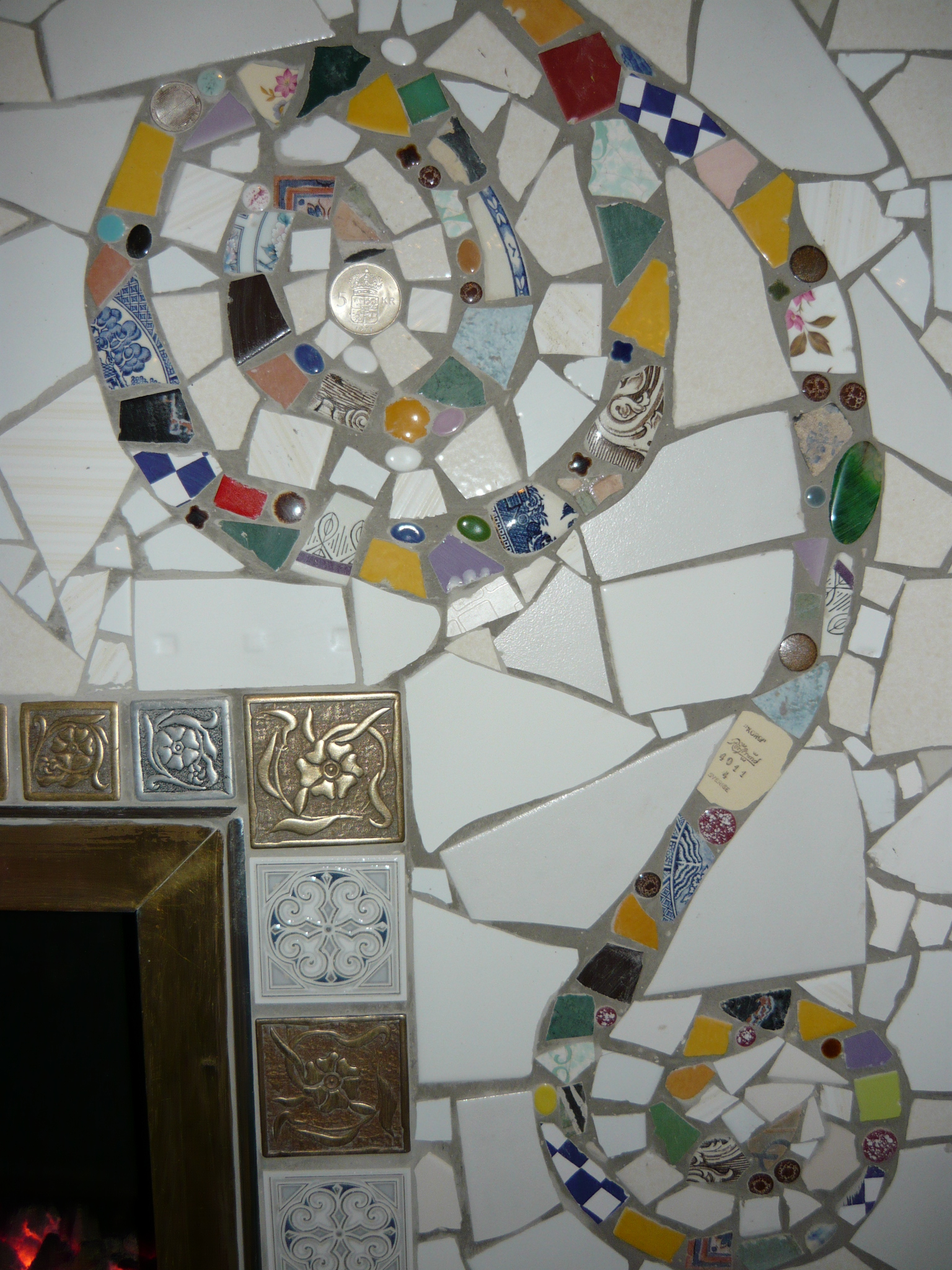
Before moving into our home in January 2013 we needed to fix the fireplace in the kitchen. It is an open fire that has a back boiler and the hot water it produces can be used for baths and to heat the radiators. Unfortunately it had not been properly installed so there was a huge cavity next to the boiler and fumes could escape into the kitchen. The fireplace was nicely tiled but all of it had to come down, due to the repairs we had to carry out. So we were left with a blank canvas. We wanted to reuse the white tiles that had been on there and the ones taken of the kitchen walls as well as some white tiles friends had given us. We also wanted to incorporate a lot of pieces of broken plates and china. Every time we go for a walk we always keep an eye open for pieces of broken crockery. We have found some lovely pieces in the garden of our house as well, when planting trees and shrubs. They are especially nice to include as they belong to the history of the house. Some of them could go back to the 1920s when the house was built. As we are a family of six with no dishwasher, we also get quite a few broken pieces of our own. In fact our dinner plates are all old, some from our parents and grandparents and whenever we see a nice old pattern in the charity shop we buy it, even if it is just one or two plates. In this way it does not matter when a plate breaks as we will be happy to recycle it in a mosaic project, and there are always replacements at the ready. Including old crockery, coins and memorabilia really makes your tiling project unique and personal. Our apologies as some images are slightly out of focus, but they will still give you an idea of the project.

 Fireplace 1

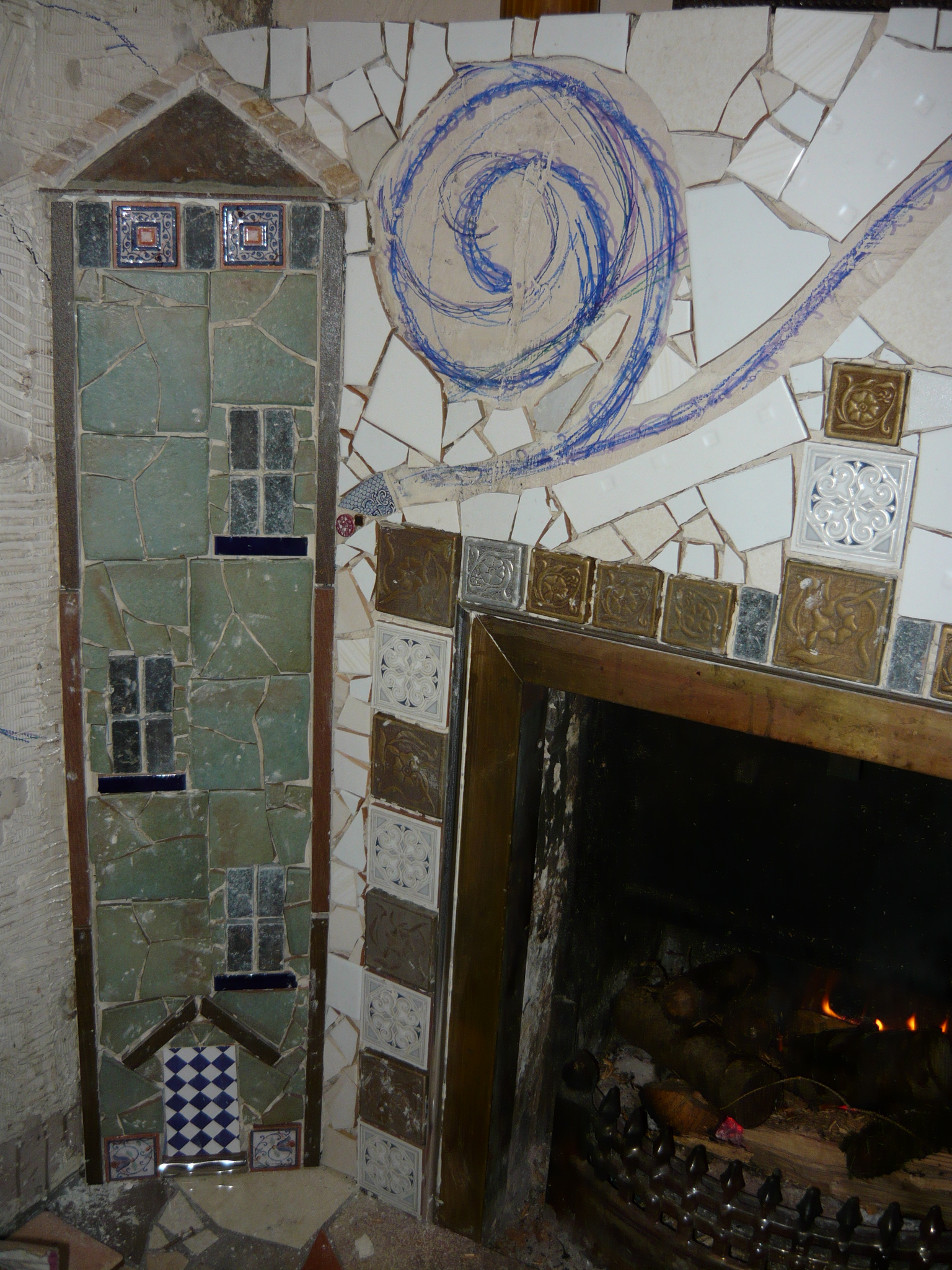
There were a couple of pipes going from the back boiler to the tank and we had to build a cover for them. When it was done it looked so much like a house, that we had no choice but to make it into one. To bring some energy into the design we decided to make swirls and spirals from all the small crockery pieces, representing movement and gusts of wind. All our white tiles were used as a calming background to the colourful swirls.

 Fireplace 2

For a job like this, the readymade tile adhesive you can buy in a big tub or bucket is the best thing. We used small plastic toothed spreaders, which you can get in your tile or hardware shop. It is a fiddly job but very meditative and rewarding. Keep checking that your work is flat by putting the palm of your hand against it. Only spread the adhesive over a small section at a time.

 Fireplace 3

When it was all set and dry we used the powdered grout, mixing some grey and white for a nice colour. Follow the instructions on the package and keep wiping all your little pieces carefully when the grout is half hard to remove it from the tops but leave it in the gaps. A second grouting might be necessary. We also added a big Ash log for a mantle piece.

 Fireplace finished.

Fireplace detail.

We found the lovely metal tiles around the frame in a tile skip outside our local tile shop. They were happy for us to take away as many tiles as we wanted, but please remember to bring gloves and ask politely if you are planning an excursion. We really hope you will get inspired to try a mosaic project of your own. A table top, flowerpot or pot stand will get you going and then there will be no stopping you.

Fireplace detail 2